
Livraison le jour même ou le lendemain

Qualité garantie

Débloquez vos offres de bienvenue: Livraison GRATUITE | Jusqu'à -80 % | 30 jours d'essai gratuits à JoyPlus
Téléchargez l'application
The high-end smartwatch market is a jungle of marketing promises and endless spec sheets. For athletes and adventurers, the right gear isn't a luxury—it's a necessity. The Apple Watch Ultra 3 has everything it takes to impress, but such an investment shouldn't be taken lightly. Before you take the plunge, it's best to know the common marketing traps to avoid costly disappointment.
As the Head of Product Recommendations at Joybuy, my mission is to cut through the jargon and give you clear, actionable advice. Here are the key things to watch out for.
The 3 Pitfalls to Avoid When Buying an Extreme Sports Watch:
To make the right choice, focus on the features that have a real impact on your activities and the watch's lifespan. Here are the three non-negotiable points to check.
For a smartwatch built for extreme sports, durability isn't an option. An aerospace-grade 49mm titanium case, like the one on the Apple Watch Ultra 3, offers the best strength-to-weight ratio. It's designed to withstand impacts, extreme temperatures, and corrosion. The screen is just as crucial: a flat sapphire crystal display is far more scratch-resistant than standard glass—a decisive advantage for climbing or mountain biking.
Dual-frequency GPS is a game-changer for outdoor athletes. Unlike a standard GPS that only uses the L1 band, this system also captures signals on the L5 band. In simple terms, this allows the watch to filter out parasitic echoes reflected by buildings or rock faces, providing a much more accurate and reliable location. It's an essential feature for anyone who trail runs, hikes in the mountains, or cycles in dense urban environments.
The Apple Watch Ultra's battery life is one of its key strengths, as long as you know how to read between the lines. The latest models promise up to 42 hours of normal use and can reach 72 hours in low-power mode. But for athletes, the key figure is something else: the watch can last nearly 20 hours with continuous GPS and heart rate tracking, enough to cover most marathons, triathlons, or long day hikes.
Different users have different needs. Here are a few recommended options, selected for their relevance to specific use cases.
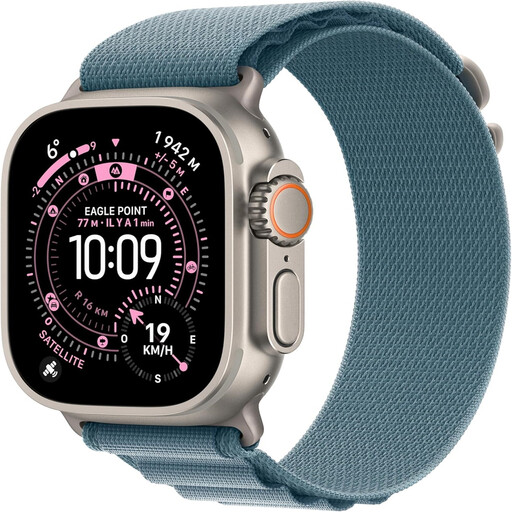
Why it's the right choice: Designed for the harshest conditions, it's a trusted partner for mountaineering, diving, and expeditions. The Alpine Loop is rugged and reliable, even when wearing gloves.
Its EN13319 certification for diving up to 40m and its dual-frequency GPS check all the boxes for precision and reliability. The battery life is clearly stated for intensive use cases.
It combines military-grade durability (MIL-STD 810H) with advanced safety features like Emergency SOS via satellite, for total peace of mind off the beaten path.
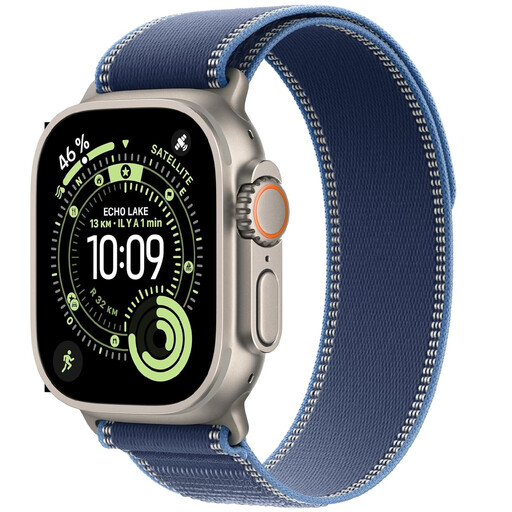
Why it's the right choice: Ideal for marathoners and triathletes. The Trail Loop is lightweight, flexible, and adjusts in a flash mid-race, ensuring optimal comfort over the long haul.
The extended battery life in GPS mode (up to 20 hours) directly addresses the concerns of endurance athletes. The dual-frequency GPS ensures incredibly reliable distance and pace tracking.
The customisable Action button lets you start a workout or mark a lap instantly. Advanced metrics like running power and heart rate zones are directly accessible.
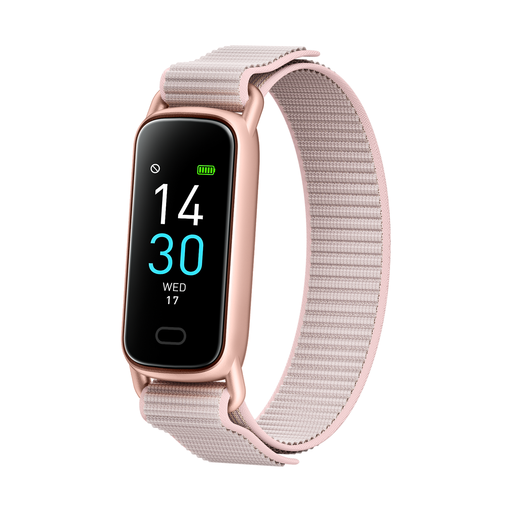
Why it's the right choice: For those who want reliable health and activity tracking for the gym or running, without the extreme features (or price tag) of the Ultra.
It plays it straight with an IP68 certification—perfect for daily wear and sweat—without pretending to be a dive watch. Its 7-day battery life is a concrete figure for standard use.
It offers excellent value for money, with continuous heart rate, SpO?, and sleep tracking, plus 16 sports modes for comprehensive and accessible monitoring.
Discover our complete selection of watches that meet these demanding criteria, for every profile and budget.
In real-world conditions, for an event like a marathon or a long bike ride, you can count on about 20 hours of continuous tracking with GPS and heart rate monitoring enabled. For mixed usage (an office day, notifications, and a one-hour workout), the watch lasts up to 42 hours before needing a charge.
No, it's not required. The watch works perfectly by connecting to your iPhone via Bluetooth and Wi-Fi. The cellular plan is an option that gives you complete freedom to make calls, send messages, and use the internet without your phone. It's a real bonus for runners or simply for safety.
Dual-frequency GPS (L1+L5) is a radical game-changer in complex environments. In forests, mountains, or cities, standard GPS signals can bounce off obstacles (trees, cliffs, buildings), which distorts your location. The dual-frequency system allows the watch to identify and discard these parasitic signals. The result: a GPS track that is much more true to your actual path, more accurate distance calculations, and a more stable pace.