
Livraison le jour même ou le lendemain

Qualité garantie

Débloquez vos offres de bienvenue: Livraison GRATUITE | Jusqu'à -80 % | 30 jours d'essai gratuits à JoyPlus
Téléchargez l'application
With the Apple Watch Ultra 3, Apple is raising the bar even higher in the smartwatch market for extreme sports. Built for endurance athletes, adventurers, and the most demanding professionals, it is a powerhouse of durability, battery life, and cutting-edge technology. But with all the different configurations, how do you navigate the options and choose the model that will join you on all your expeditions?
This guide breaks down the key features of the Apple Watch Ultra 3 for you. The goal: to help you make the right choice, whether your playground is mountain peaks, oceans, or trail paths.
Before we get to our top picks, let's review the essential criteria for finding the model that's right for you.
The Apple Watch Ultra 3 is available with three types of specialised bands, each designed for a specific use case:
All Apple Watch Ultra 3 models come with GPS + Cellular connectivity. This feature is a key advantage for adventurers. It allows you to make calls, send messages, and use your apps even when you're away from your iPhone. More importantly, it provides access to the Emergency SOS via satellite feature in areas without cellular or Wi-Fi coverage, an invaluable safety feature in the great outdoors.
The Apple Watch Ultra 3 is much more than a sports watch: with its ECG and Blood Oxygen features, it provides valuable insights into your physical condition. The ECG app can generate an electrocardiogram similar to a single-lead reading, while the Blood Oxygen sensor measures your blood oxygen saturation (SpO?). Please note that these tools (as well as sleep apnea or arrhythmia notifications) are designed for general wellness tracking. They are no substitute for a professional medical diagnosis or advice.
We have selected three Apple Watch Ultra 3 configurations, each designed for a specific user profile.
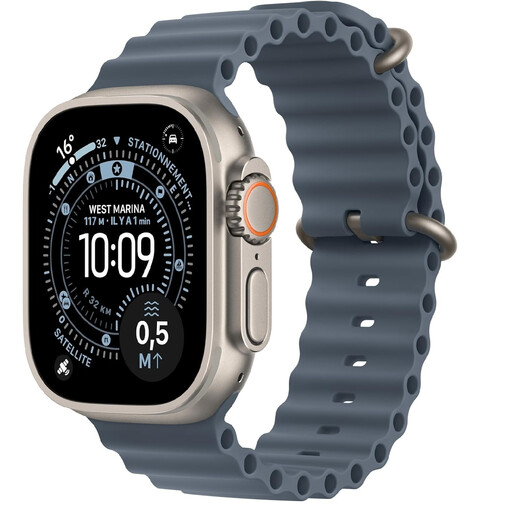
Why This Model Stands Out
This model is built for fans of the aquatic world. Its elastomer Ocean Band ensures a perfect fit during the most intense water activities. The 49mm titanium case and flat sapphire crystal give it exceptional durability and readability underwater.
Highlights
Who is it for?
For divers, surfers, swimmers, and all water sports enthusiasts. Its ruggedness also makes it a great companion for any adventure.
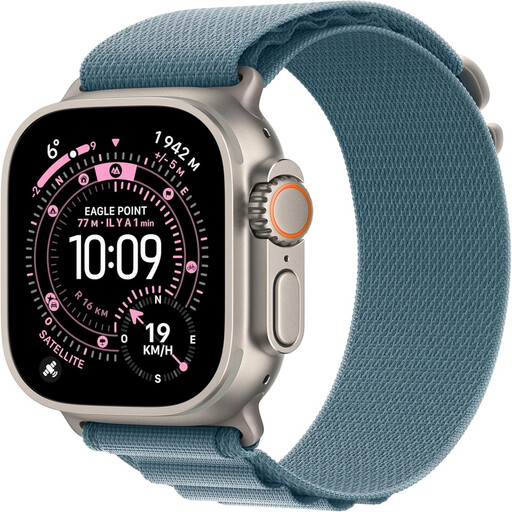
Why This Model Stands Out
With its Alpine Loop, this configuration is aimed at land-based explorers. Lightweight yet ultra-durable, its band and G-hook closure system ensure it won't budge an inch, no matter the conditions.
Highlights
Who is it for?
For hikers, mountaineers, and all adventurers looking for a foolproof navigation and safety tool on their wrist.
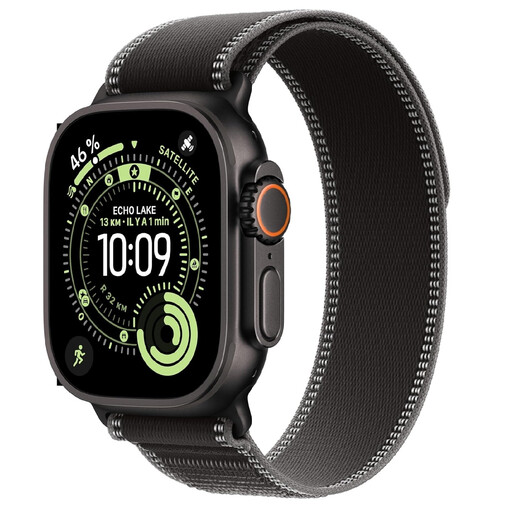
Why This Model Stands Out
This version, with its black titanium case and Trail Loop, is the weapon of choice for endurance athletes. The band's lightness and flexibility ensure optimal long-term comfort, while the pull tab allows for micro-adjustments mid-run.
Highlights
Who is it for?
For trail runners, marathoners, triathletes, and all athletes who want to optimise their performance with ultra-precise data.
Does the titanium design of the Ultra 3 not appeal to you? If you'd prefer to explore other styles, our collection of smartwatches is full of alternatives.
Discover our selection of watches with a Metal Case.
Battery life obviously depends on your usage. Apple advertises up to 42 hours with normal use. By activating Low Power Mode, you can even reach 72 hours. For athletes, the watch provides up to 20 hours of continuous GPS and heart rate tracking with this mode enabled.
Yes, the Apple Watch Ultra 3 is perfectly suited for recreational diving. Certified water-resistant to 100 metres, it is designed for dives down to a depth of 40 metres. It includes a depth gauge, a water temperature sensor, and transforms into a dive computer thanks to third-party apps like Oceanic+. However, be aware that it should not be used for dives exceeding 40 metres.
No. Important note: features like the ECG app and the Blood Oxygen app on the Apple Watch Ultra 3 are not medical devices. They are intended for general wellness and informational purposes only. They cannot be used under any circumstances for the diagnosis, treatment, or prevention of diseases. For any medical questions, always consult a healthcare professional.