
Livraison le jour même ou le lendemain

Qualité garantie

Débloquez vos offres de bienvenue: Livraison GRATUITE | Jusqu'à -80 % | 30 jours d'essai gratuits à JoyPlus
Téléchargez l'application
For athletes and adventurers, choosing the right sports watch is crucial. You need high-performance gear that can keep up with you everywhere—whether on a mountain trail, out on the open sea, or during an intense training session. The Apple Watch Ultra has quickly established itself as a benchmark in this demanding segment. But with new models joining the lineup, it can be hard to navigate the options.
This guide is here to help you make sense of it all. We'll break down the key points to consider to find the model that truly matches your activities and expectations, all without the unnecessary marketing jargon.
Before diving into model comparisons, let's review the essential technical aspects to ensure your future watch ticks all the boxes.
For a hiking watch or for trail running, battery life is non-negotiable. A multi-hour race or a multi-day expedition demands a battery that can go the distance. Apple has paid special attention to this with its Ultra range. The models offer solid standard battery life for daily use, supplemented by a low-power mode that can extend it dramatically. Think about the duration of your longest activities: while 36 hours of normal use might be enough for a marathon or a long day of hiking, the extended 72-hour mode will be essential for a weekend-long trek.
An adventure watch must be built to withstand anything. The titanium case of the Apple Watch Ultra provides a perfect balance of lightness and resistance to both impact and corrosion. This is a decisive advantage for extreme sports. When it comes to water resistance, don't be misled by common assumptions: a 100m water-resistant watch certification (ISO 22810) doesn't mean you can dive to 100 metres. However, it does guarantee excellent resistance for high-speed water sports and recreational scuba diving down to 40 metres, in compliance with the EN13319 standard.
For a sports watch with GPS, location accuracy is paramount. The Ultra models feature a dual-frequency GPS that improves signal reliability in complex environments, such as dense city centres or deep valleys. Beyond GPS, take a look at the other sensors: altimeter, compass, blood oxygen sensor (SpO?), and even a water temperature sensor. These tools are invaluable for analysing your performance and monitoring your safety.
Here is our selection to help you make the right choice.
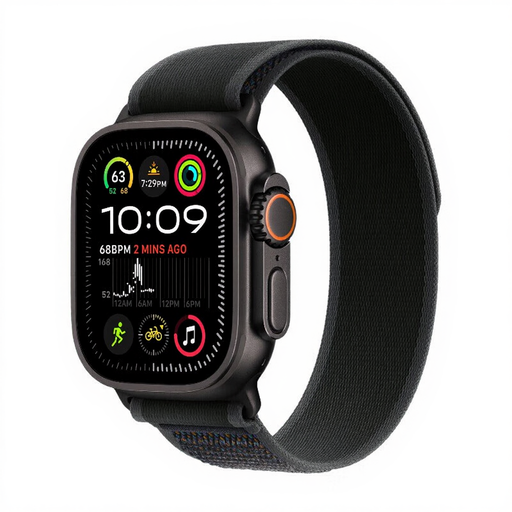
Why it stands out
This model is a powerhouse of proven technology. Its 49mm black titanium case combines durability with a discreet look. The Retina display, with its peak brightness of 3,000 nits, ensures flawless readability, even in direct sunlight. The S9 SiP introduces the "Double Tap" gesture for one-handed control, which is especially useful in the middle of the action.
Key features
Who is it for? For the athlete and adventurer seeking a high-performance, reliable watch who also appreciates the seamless experience of the Apple ecosystem. The Trail Loop band was specifically designed for runners and hikers, focusing on light weight and flexibility.
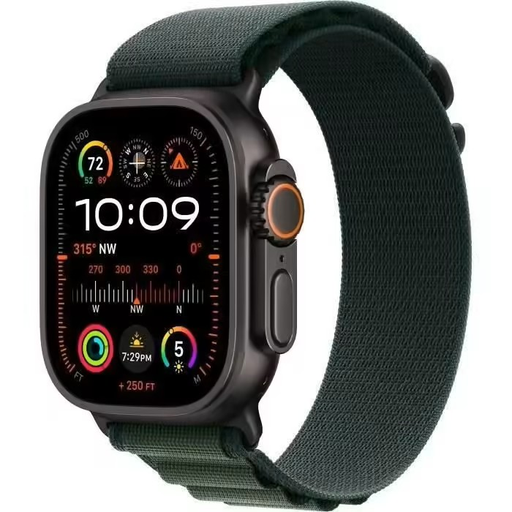
Why it stands out
This version of the Ultra 2 is distinguished by its green Alpine Loop, designed for intense outdoor activities thanks to its durability and secure G-hook closure system. It retains all the technical specifications of the Ultra 2, including 100m water resistance, EN13319 dive certification, and its military-grade durability (MIL-STD-810H).
Key features
Who is it for? Ideal for explorers who want a watch that is not only rugged but also always connected. The Alpine Loop offers extra security for activities where the risk of snagging is high, such as climbing.
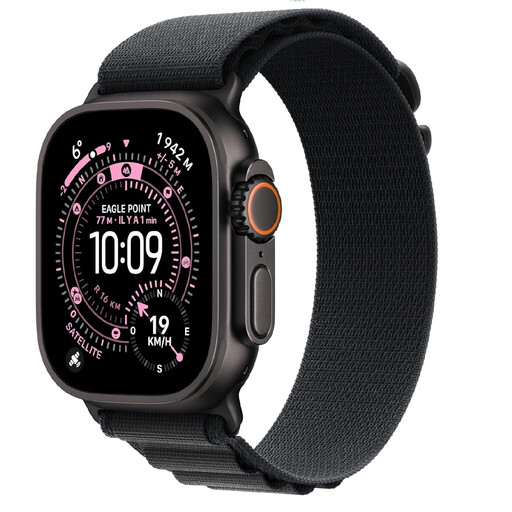
Why it stands out
The Apple Watch Ultra 3 takes things to the next level with significant improvements in safety and battery life. Its flagship feature is the integration of satellite communication for emergency messaging, giving you peace of mind even in off-grid areas. The battery life has also been upgraded, now reaching 42 hours in normal use.
Key features
Who is it for? Aimed at the most demanding adventurers and outdoor professionals who regularly venture into remote areas. Satellite communication is a game-changing safety feature that makes all the difference, especially for solo trips.
Still undecided or looking for a different design? Our catalogue is full of alternatives.
? Explore our full selection of Titanium Black Watches
1. What is the main difference between the Apple Watch Ultra 2 and the Ultra 3? The main difference is the addition of emergency satellite communication on the Ultra 3, a potential lifesaver in critical situations that is absent on the Ultra 2. The Ultra 3 also boasts better battery life (42h vs. 36h in normal use) and new health sensors, such as hypertension alerts. However, the Ultra 2 remains an excellent, high-performance option with its S9 chip and "Double Tap" gesture.
2. Is the Apple Watch Ultra's battery life sufficient for an ultra-trail? Yes, for the vast majority of events. With 36 to 42 hours of battery life in normal use (with active GPS), it covers most ultra-trails. For the most extreme races (exceeding 30 hours), you can simply activate the low-power mode. This extends the battery life up to 72 hours by limiting certain background functions, allowing you to cross the finish line without worry.
3. Can I really use the Apple Watch Ultra for diving? Yes, the Apple Watch Ultra is perfectly suited for recreational diving. It is certified for 100-metre water resistance (ISO 22810) and, most importantly, complies with the EN13319 standard, the benchmark for diving equipment. This means it can be safely used at depths of up to 40 metres. By installing the Oceanic+ app (available on the App Store), you can turn it into a full-featured dive computer.
By our Joybuy product expertsPublication date: 2026-07-05