
Livraison le jour même ou le lendemain

Qualité garantie

Débloquez vos offres de bienvenue: Livraison GRATUITE | Jusqu'à -80 % | 30 jours d'essai gratuits à JoyPlus
Téléchargez l'application
Choosing an Apple Watch in 2026 can be a complex decision. Between the Series 10, designed for everyday life, and the Ultra versions, built for adventure, the specs and prices are worlds apart. This guide is here to break down the options and help you find THE watch that fits your wrist and your budget—without the marketing fluff.
Before diving into our top picks, here are a few key questions to help you narrow down your choice.
This is the first question to ask yourself, and the answer depends entirely on how you'll use it.
All Apple Watch models include GPS. The real question is about how independent you want to be from your iPhone.
The case size, measured in millimetres, is primarily a matter of taste and wrist comfort. The Series comes in two sizes to fit all wrists, while the Ultra has a single, massive 49mm format. As for materials, aluminium (Series 10) prioritises lightness, while titanium (Ultra) is all about durability.
Let's get down to business: here are the models we recommend, each with its own strengths.
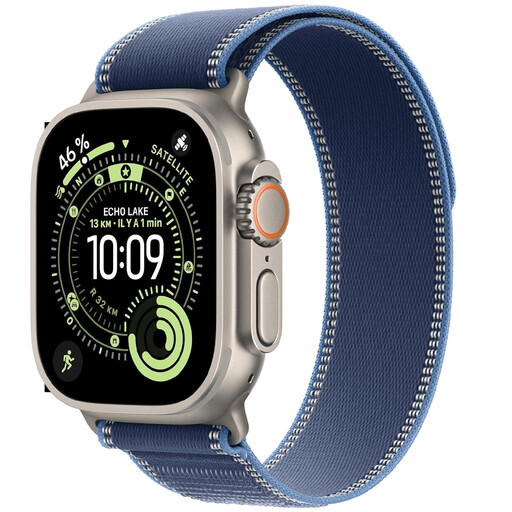
Why it's the best of the best?: The Apple Watch Ultra 3 is the ultimate smartwatch, designed for those who push their limits. Its 49mm aerospace-grade titanium case and flat sapphire crystal front give it rock-solid durability. Its secret weapon: satellite communication for Emergency SOS and Find My features, even when you're completely off the grid. Its marathon battery life can reach up to 72 hours in Low Power Mode, a decisive advantage for multi-day expeditions.
Key features?:
Who is it for?? For demanding athletes, adventurers, and professionals who need an indestructible watch, extra-long battery life, and advanced safety features for areas with no mobile coverage.
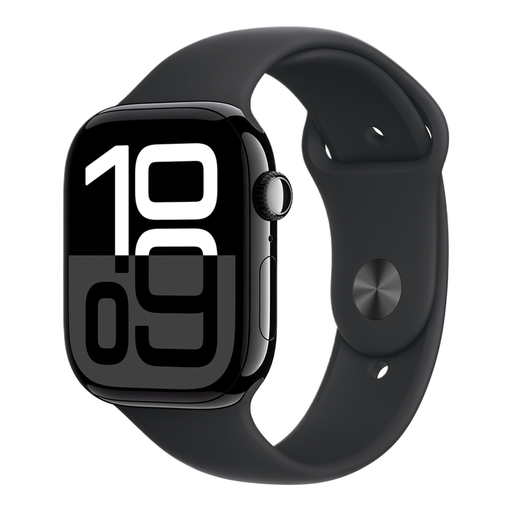
The best all-rounder?: The Series 10 strikes the perfect balance between design, features, and price. It's the smart-connected watch for the rest of us. Its stunning Always-On Retina LTPO3 OLED display reaches 2,000 nits, ensuring flawless readability even in bright sunlight. It packs a full suite of sensors for Apple Watch health tracking (ECG, blood oxygen, temperature) and vital safety features like Fall Detection. All in a lightweight and elegant aluminium case.
Key features?:
Who is it for?? For any iPhone owner who wants a high-performance smartwatch to manage their day, track their fitness, and monitor their health.
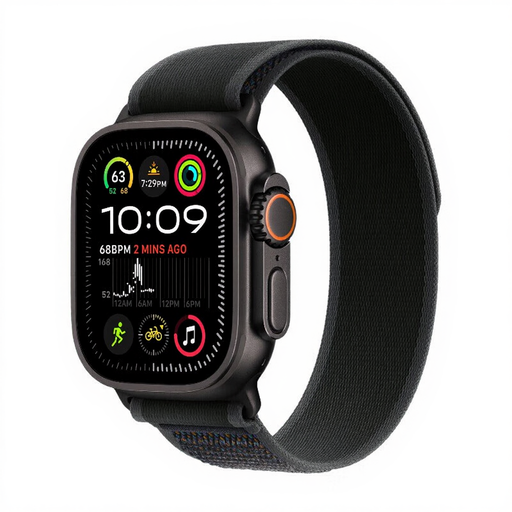
The smart alternative?: Even with the arrival of its successor, the Apple Watch Ultra 2 remains an excellent deal for heavy-duty use. Its black titanium case and incredibly bright display (up to 3,000 nits) are guarantees of durability and visual comfort. It shares the core Ultra DNA: extended battery life, high-precision GPS, and water resistance up to 100 metres, making it a great companion for recreational diving.
Key features?:
Who is it for?? For athletes and adventurers who want the power of the Ultra range (battery life, durability) without necessarily needing the very latest model.
An Apple Watch is also a fashion accessory. Don't like the original band? Want to change it to match your outfits or activities? There are hundreds of options available to you.
For a sleek and versatile look, check out our selection of compatible black bands to adapt your watch for any occasion.
1. What's the main difference between the Apple Watch Series 10 and the Ultra 3?? To put it simply: the Series 10 is the everyday watch—slim, elegant, and perfect for daily life and standard health tracking. The Ultra 3 is a tank: a reinforced, more rugged model with record-breaking battery life and exclusive features (advanced GPS, siren, dive mode) designed for extreme sports and adventure.
2. Is the GPS + Cellular model really useful?? It all depends on how much independence you need. If you want to go for a run, make calls, or stream music without carrying your iPhone, the Cellular version is for you. If your phone is never far away, the standard GPS model is more than sufficient and much more budget-friendly.
3. Can the health data from an Apple Watch replace a medical consultation?? Absolutely not. Features like the ECG, blood oxygen levels, or heart rhythm alerts are wellness indicators. They can alert you to potential irregularities, but they are in no way a substitute for a diagnosis from a doctor. If you have any doubts or symptoms, always consult a healthcare professional.
Article written by the Joybuy editorial team.Publication date?: 2026-07-17.