For a study break, don’t assume that ‘no added sugars’ means ‘sugar-free’: naturally occurring sugars still count. Compare the product description, ingredients, sugars per 100 ml and the amount you plan to drink. Not-from-concentrate juice, juice from concentrate and nectar are made differently. Manger Bouger recommends limiting fruit juice to one glass a day and choosing water as your main drink.
Who are these guidelines for?
Students looking for ‘no added sugars’
If you’re looking for a drink to enjoy during a study break, remember that no added sugars doesn’t mean there are no naturally occurring sugars. The ‘of which sugars’ figure per 100 ml will help you compare products.
Shoppers who care about ingredients
If you want a recipe made entirely from apple juice, check the product description and ingredients. Not-from-concentrate juice, juice from concentrate and nectar aren’t interchangeable.
People who like to plan their portions
If you’re having juice occasionally during a study break, compare the pack size with the amount you plan to serve. A smaller pack makes it easier to pour a single portion, but doesn’t change the type of drink.
What should you check before choosing?
For a study break, start with what matters most to you, then compare the front-of-pack claims with the product description, ingredients and nutrition information for the product you’re considering.
| What to consider |
What to check |
Who is this useful for? |
| Sugars in your drink |
Check the ‘of which sugars’ figure per 100 ml and factor in how much you’ll pour, even if the front of the pack says ‘no added sugars’. |
If I want to keep track of the sugars in my glass, the amount I actually pour matters more than the claim on the front of the pack alone. Around 36% of shoppers put this first. |
| What’s in the recipe? |
Compare the product description and ingredients. For nectar, also check the stated fruit content. |
I might prefer a recipe made entirely from apple juice, or be happy with a drink that also contains water. The recipe is the top priority for around 29% of shoppers. |
| Portion and pack size |
Check the net contents and the storage instructions for after opening on the pack you choose. |
For a single study break, I want to pour the amount I need without leaving an opened bottle for too long. Around 21% of shoppers prioritise this practical consideration. |
| Organic or stated origin |
Check the claims on the specific product, then read its ingredients and nutrition information too. |
If stated origin or an organic product is my main priority, I’ll check for that without assuming it tells me anything about the sugar content. Around 14% of shoppers put this first. |
Common mistakes to avoid
-
Taking ‘no added sugars’ to mean ‘sugar-free’
Apple juice can contain sugars that occur naturally in fruit. A no-added-sugars claim doesn’t tell you how much sugar is in your glass.
Compare the ‘of which sugars’ figure per 100 ml with the amount you plan to pour.
-
Confusing nectar with not-from-concentrate juice
The apple nectars reviewed at Auchan state their fruit content and contain water. A not-from-concentrate juice made entirely from apple juice has a different list of ingredients.
Check the product description first, then the ingredients and, for nectar, the stated fruit content.
-
Keeping juice close by as an unlimited drink
Manger Bouger recommends limiting all types of fruit juice to one glass a day and choosing water as your main drink.
Keep water handy for your study session and, if you have juice, pour yourself a set portion.
-
Choosing a large bottle without planning what to do with the rest
Once opened, storage instructions and how quickly to drink the juice depend on the product.
Choose a pack size that suits the portions you have in mind, and follow the instructions for after opening.
If you don’t finish the rest within the stated time, the drink may go to waste.
Brands and retailers to consider
Joker
Carrefour lists a 1 L Joker apple juice with a ‘no added sugars’ claim.
- This claim makes it easy to spot the feature you’re looking for on this product.
- Carrefour notes that it contains naturally occurring sugars, so check the sugars per 100 ml before choosing.
Carrefour
The Carrefour Extra, Carrefour Bio and Carrefour Classic' ranges include products such as not-from-concentrate juice and apple juice with no added sugars.
- Carrefour describes its 2 L Carrefour Extra product as not-from-concentrate juice.
- These features don’t apply to the whole range, so check the description and nutrition information for the specific product.
Auchan
Auchan offers both 1 L apple juice from concentrate and apple nectars, including a 20 cl organic carton.
- The listing for its juice from concentrate states 9,8 g of sugars per 100 ml. The 20 cl organic nectar listing specifies 75 % juice from concentrate and water.
- So the word ‘apple’ alone doesn’t tell you which type of drink it is. Check the description of each product.
Tropicana
An Auchan listing features a 1 L Tropicana ‘100 % pomme douce’ juice with no added sugars.
- The listing gives apple juice and ascorbic acid as ingredients.
- It also states 10 g of sugars per 100 ml and says to store at a maximum of 7 °C and drink within five days of opening.
Apple juice on Joybuy
These 1 L apple juices are worth comparing for a study break. Before you decide, check the description, ingredients, sugars per 100 ml and instructions for after opening on each pack.
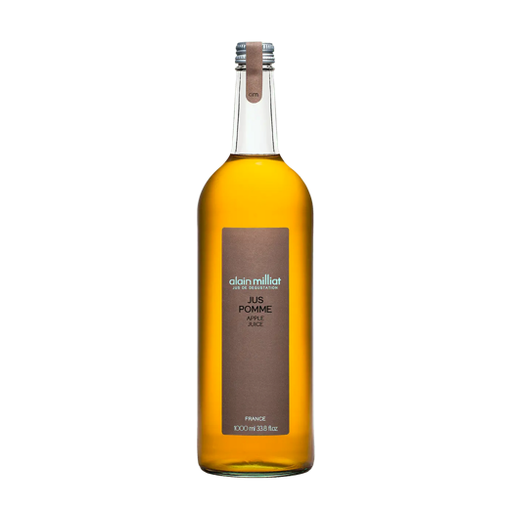 Image unavailable
ALAIN MILLIAT apple juice 1 L
If you’re looking for juice to enjoy occasionally, plan the portion you’ll pour and compare the sugars per 100 ml. Stated size: 1 L.
View on Joybuy
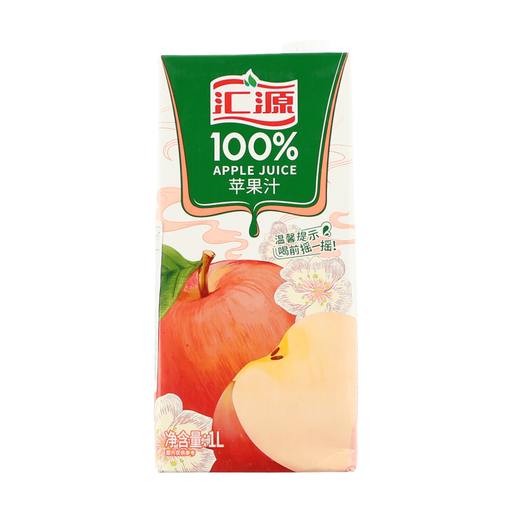 Image unavailable
Huiyuan apple juice 1 L
If the difference between juice from concentrate and nectar matters to you, check the product description and fruit content on the pack. Stated size: 1 L.
View on Joybuy
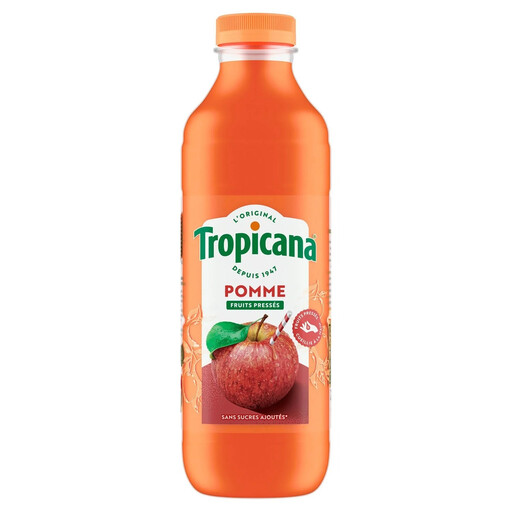 Image unavailable
TROPICANA Pure Pressed, apple juice from France 1 L
For a study break, compare your portion with the sugars per 100 ml and follow the storage instructions for after opening. Stated size: 1 L.
View on Joybuy
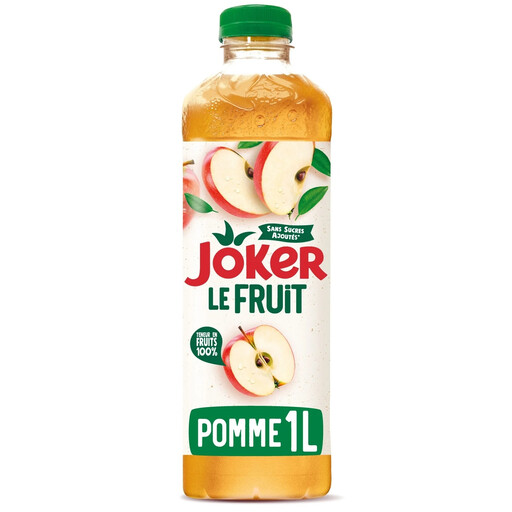 Image unavailable
JOKER apple juice with no added sugars 1 L
If ‘no added sugars’ is guiding your choice, also check the ‘of which sugars’ figure and the instructions for after opening on the pack. Stated size: 1 L.
View on Joybuy
Frequently asked questions
Is apple juice with ‘no added sugars’ sugar-free?
No. This claim doesn’t mean that the sugars naturally present in apples have disappeared. Check the sugars per 100 ml, then factor in how much you pour into your glass.
How can you tell not-from-concentrate juice, juice from concentrate and nectar apart?
Start with the product description, then read the ingredients. The Auchan listings reviewed show that juice from concentrate may list only reconstituted apple juice, while nectar may contain water and state its fruit content. Check the exact recipe rather than relying on the word ‘apple’ alone.
Can you drink apple juice throughout a study session?
Choose water if you want a drink to sip regularly while studying. Manger Bouger recommends limiting fruit juice, including not-from-concentrate juice and juice with no added sugars, to one glass a day, and choosing whole fruit instead.
What should you do with an opened bottle of apple juice?
Follow the storage instructions and the time limit after opening shown on the product you’ve bought. For example, Auchan’s listing for Tropicana ‘100 % pomme douce’ says to store it at a maximum of 7 °C and drink it within five days of opening.


