Travellers avoiding added sugars
For an occasional drink break, the ‘no added sugars’ claim meets your first requirement. It doesn’t mean ‘sugar-free’: check the ‘of which sugars’ line for the product you choose too.


For a break during a journey, choose a juice labelled ‘no added sugars’ if you want to avoid added sugar, but don’t assume it contains no sugars: Auchan lists 9.8 g of sugars per 100 ml for the 1 L Joker Le Fruit Pomme. If your priority is to reduce naturally occurring sugars, look for the ‘reduced-sugar’ designation on the product and compare the ‘of which sugars’ line. To choose between juice and nectar, check the ingredients, then pick a pack size that suits the portion you have in mind.
For an occasional drink break, the ‘no added sugars’ claim meets your first requirement. It doesn’t mean ‘sugar-free’: check the ‘of which sugars’ line for the product you choose too.
If by ‘diet’ you mean less sugar in your juice, don’t stop at the absence of added sugars. Check for the ‘reduced-sugar’ designation and look at the product’s nutritional information.
A small pack can be just right for a single break, without opening a 1 L bottle. Carrefour, for example, offers organic apple nectar in a 4 × 20 cl pack; if you’re specifically looking for juice, check its category and ingredients.
First decide whether your priority is avoiding added sugars, reducing the sugars in the juice or finding a portion that’s easy to take with you. These criteria won’t necessarily point you to the same drink.
Consider this: if no added sugars is your main criterion and you’d like an apple juice.
Bear in mind: naturally occurring sugars are still listed on the label. ‘No added sugars’ doesn’t mean ‘sugar-free’.
Consider this: if its ingredients suit you or you’re looking for individual portions, such as Carrefour Bio nectar in a 4 × 20 cl pack.
Bear in mind: according to Carrefour, this nectar contains water and 85% apple juice from concentrate; it isn’t pure juice.
Look for this: if reducing naturally occurring sugars is your priority and the product actually carries this designation.
Bear in mind: the DGCCRF states that, for products placed on the market in France from 14 June 2026, this category requires at least a 30% reduction compared with the corresponding average juice. The ‘no added sugars’ claim doesn’t establish this.
| Criterion | What to check | Who it’s for |
|---|---|---|
| Reducing sugars | Compare ‘of which sugars’ on the same 100 ml basis; if needed, check for the ‘reduced-sugar’ designation. | I’m looking for less sugar in the juice, not just a recipe with no added sugar. Around 40% of consumers would put this reduction at the top of their list of criteria. |
| A portion to take with you | Check the pack size and how many portions you plan to serve. | For a single break, I’d rather plan my portion than open a 1 L bottle. This convenience is said to be the main criterion for around 30% of consumers. |
| Category and ingredients | Read the product designation and ingredients and, for nectar, check the stated fruit content. | I want to know whether I’m buying juice or nectar before choosing a pack size. Around 30% of consumers are said to prioritise this distinction. |
Naturally occurring sugars remain in the juice: Auchan lists 9.8 g of sugars per 100 ml for the 1 L Joker Le Fruit Pomme, despite its ‘no added sugars’ claim.
Compare the ‘of which sugars’ line on the products you’re interested in. If you’re looking to reduce naturally occurring sugars, check for a designation that specifically indicates this.
The Carrefour nectars reviewed contain water and, depending on the product, state a fruit content of either 85% or at least 75%. Their product designation and ingredients differ from those of pure juice.
Read the product name and ingredients list before comparing pack sizes or nutritional values.
A 1 L bottle and a 20 cl pack aren’t suited to the same kind of break during a journey. Pack size alone doesn’t tell you about the ingredients.
Work out how much you want to serve, then compare the products’ nutritional labels on the same basis.
This word doesn’t tell you the product category or its sugar content. In France, the DGCCRF distinguishes the regulated category of reduced-sugar juices from claims about added sugar.
Base your choice on the product designation, its ingredients and its nutritional declaration.
These products illustrate differences in category and pack size; a brand name alone doesn’t tell you what’s in all its bottles.
Joker describes Le Fruit Pomme as 100% apple juice, available in 1 L and 1.5 L packs and made in Mâcon, according to the brand.
Carrefour offers a 1 L Classic' apple juice with no added sugars, as well as apple nectars, including an organic option in a 4 × 20 cl pack.
The E.Leclerc catalogue lists Jafaden apple juices, including pure juice and juice from concentrate, as well as a nectar, in several pack sizes.
Auchan’s range includes its own-brand 1 L pure apple juice and 90 cl pressed apple juice, alongside products from other manufacturers.
These four apple juices include one 33 cl pack and three 1 L bottles. To choose a drink to take with you, first consider the portion you want, then compare the ingredients and ‘of which sugars’ line for each product. Their inclusion here doesn’t mean they carry the ‘reduced-sugar’ designation.
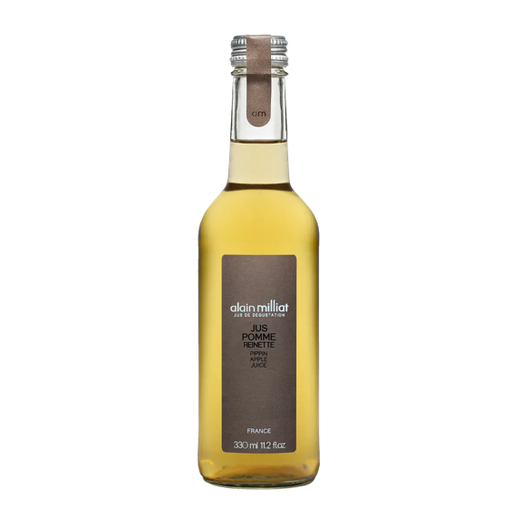 Image unavailable
The 33 cl pack could be a good choice if you’d like to take a bottle with you for a break. If sugar content is important to you, check the ‘of which sugars’ line and the claims on the label.
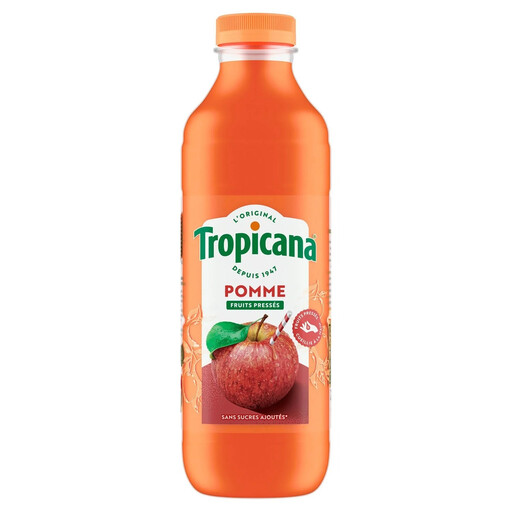 Image unavailable
The 1 L bottle is better suited to sharing out than to an individual portion during a journey. Work out how much you plan to serve and check the nutritional information for this product before choosing.
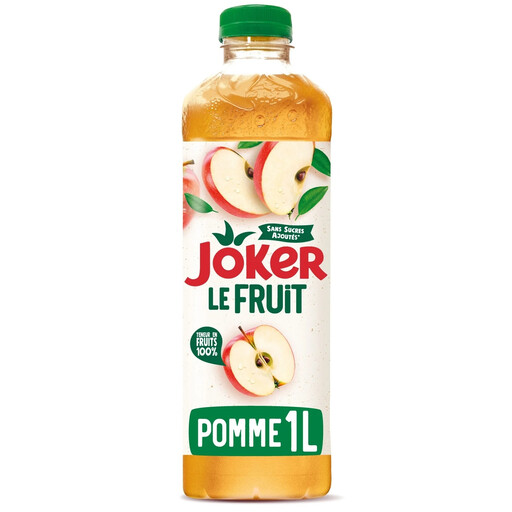 Image unavailable
Consider this 1 L bottle if you’re looking for apple juice with no added sugars and plan to divide it into portions. This claim doesn’t mean ‘sugar-free’: check the ‘of which sugars’ value on the product label.
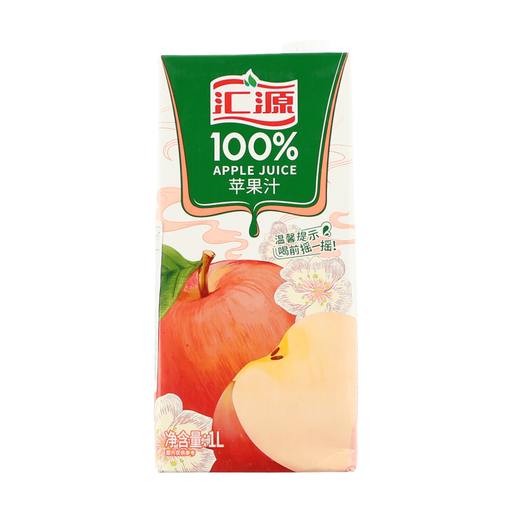 Image unavailable
If you’re taking this 1 L bottle with you, plan the portion you want to serve. If the ingredients matter to you, read the product designation, ingredients and ‘of which sugars’ line.
No. This claim relates to added sugars, not the sugars naturally present in apples. As an example for a specific product, Auchan lists 9.8 g of sugars per 100 ml for the 1 L Joker Le Fruit Pomme. Check the ‘of which sugars’ line for the juice you’re thinking of buying.
Look for this designation on the product, then check its ‘of which sugars’ value. According to the DGCCRF, the category applicable in France to products placed on the market from 14 June 2026 requires at least a 30% reduction in naturally occurring sugars compared with the corresponding average juice. The ‘no added sugars’ claim alone isn’t enough.
You can choose nectar if its ingredients and pack size suit your needs, but it’s a different category from pure juice. According to Carrefour, the Carrefour Bio nectar in a 4 × 20 cl pack contains 85% apple juice from concentrate and water. Check the product designation and ingredients before deciding.
Plan a portion rather than treating a 1 L bottle as a single serving. Manger Bouger recommends limiting all fruit juices to no more than one glass a day and choosing whole fruit instead.
No. The DGCCRF describes Nutri-Score as a voluntary system. Whether or not it appears on the pack, read the product designation, ingredients and nutritional information, especially the ‘of which sugars’ line, to compare the products you’re interested in.