People keeping an eye on sugar
You’re looking for the ‘no added sugars’ claim, without mistaking it for a drink with no sugars at all. The ‘of which sugars’ line in the nutritional information lets you check the product itself.


For a street market, choose apple juice by checking its product description, ingredients and sugar content per 100 ml: ‘no added sugars’ does not mean ‘sugar-free’. If you plan to serve it, also check the container sizes and storage instructions after opening. Pure juice, juice from concentrate and nectar can’t be compared on the ‘no added sugars’ claim alone.
You’re looking for the ‘no added sugars’ claim, without mistaking it for a drink with no sugars at all. The ‘of which sugars’ line in the nutritional information lets you check the product itself.
You need to choose containers that are suitable for serving and follow the storage instructions after opening. If you plan to sell the drinks, you should also check the rules for the location and your status before buying.
You’re deciding between pure juice, juice from concentrate and nectar. The product description, ingredients and, for nectar, fruit content matter more than a vague description such as ‘diet’.
Start with the product description and ingredients, then compare sugar content on a like-for-like basis, per 100 ml. If you’re serving the drinks at a street market, check the instructions on each pack too.
| Criterion | What to check | Who it matters to |
|---|---|---|
| Claim and sugars | Check ‘no added sugars’ and the ‘of which sugars’ line per 100 ml: these are two different pieces of information. | If I’m trying to avoid added sugars, I also want to know how much sugar is in the juice I’ll be serving; around 31% of consumers put this distinction first. |
| Type of recipe | Compare the product description, ingredients and the stated fruit content for nectar; don’t assume you know the recipe from the brand name alone. | To choose between pure juice, juice from concentrate and nectar, I need to know what the drink contains; this is the priority for around 25% of consumers. |
| Serving and storage | Check the container sizes and the instructions for refrigeration and how long the drink will keep after opening. | At a stall, I’d rather open bottles as needed than leave opened containers without suitable refrigeration; around 19% of consumers prioritise this approach. |
| Portion sizes | Consider the amount you’ll actually serve, and offer water as well. | If juice is available at the street market, I want the option of a small portion without making it my main drink; this is the main concern for around 25% of consumers. |
Manger Bouger recommends limiting fruit juice as much as possible and drinking no more than one glass a day. This recommendation also applies to juices labelled ‘no added sugars’.
The sugars naturally present in apples remain in the juice. For example, Auchan’s product listing for Joker Le Fruit states that it contains 9.8 g of sugars per 100 ml, despite this claim.
Compare the ‘of which sugars’ line per 100 ml for the specific products you’re considering serving.
Recipes aren’t necessarily the same: Carrefour describes its Planet Bio pure juice as made from apple juice, while Auchan lists water among the ingredients of a Pressade product containing 84% apple juice from concentrate.
Read the legal product description and ingredients list for the exact product, particularly if the name on the front suggests a different category.
Auchan’s product listing for its apple juice from concentrate says to keep it refrigerated and consume it within five days of opening.
Open only as many bottles as you need for serving, and follow the instructions for each product.
Opened bottles may go unused for longer than the period stated on the packaging.
According to the French Ministry of the Economy, individuals taking part in a flea market, car boot sale or street market may only sell their own used personal belongings. The DGCCRF also states that selling in a public place requires authorisation from the local council.
Before buying drinks to sell, ask the organiser and local council what’s permitted for your status, the location and the sale of drinks.
Auchan describes Joker Le Fruit in a 1 L bottle as juice from concentrate with no added sugars.
Carrefour describes a 1 L bottle of apple juice from concentrate with no added sugars.
One 1 L Auchan product is described as ‘apple juice from concentrated apple juice’.
A 1 L Pressade organic product shows why it’s important to look beyond the name on the front of the pack.
E.Leclerc’s range includes Jafaden and Bio Village products, with different descriptions for apple-based drinks.
These apple juice products come in 33 cl or 1 L containers, which you can consider depending on the portions you plan to serve. Compare their recipes and sugar content without assuming that ‘no added sugars’ means the drinks are sugar-free.
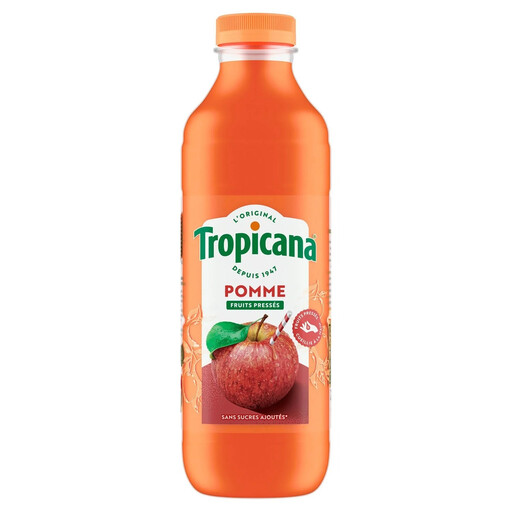 Image unavailable
The 1 L format may be worth considering if you plan to serve several portions.
The product listing describes this as pressed apple juice with no added sugars and states that it contains 11 g of sugars per 100 ml.
After opening, it should be refrigerated at no more than 7 °C and consumed within five days.
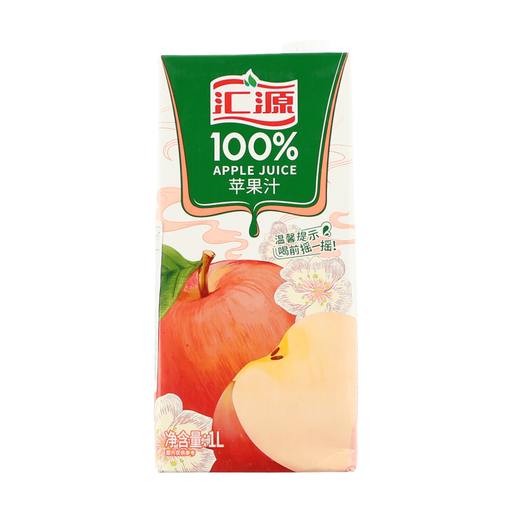 Image unavailable
This 1 L container can be compared with other formats intended for serving several portions.
The product listing describes a recipe containing water and apple concentrate, with no added sugar, and states that it contains 10.2 g of sugars per 100 ml. Check the product description and fruit content on the packaging if these affect your choice.
The product listing says to refrigerate the drink after opening and consume it within three to five days; follow the instructions on the product you receive.
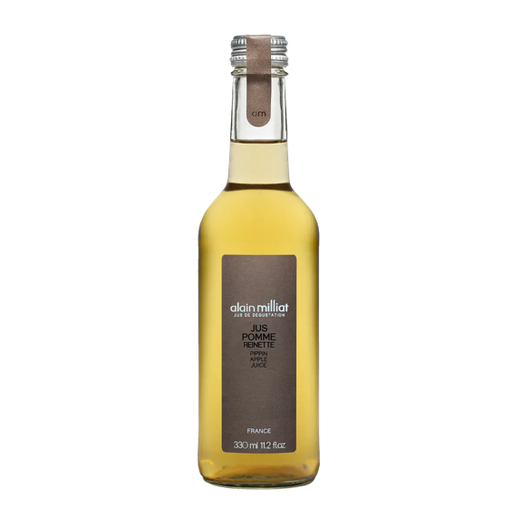 Image unavailable
The 33 cl container is worth considering if you’d prefer to open smaller quantities at a time.
The ingredients list for this product contains only Reinette apple juice; the product listing states that it has 10 g of sugars per 100 ml.
After opening, it should be refrigerated and consumed within three days.
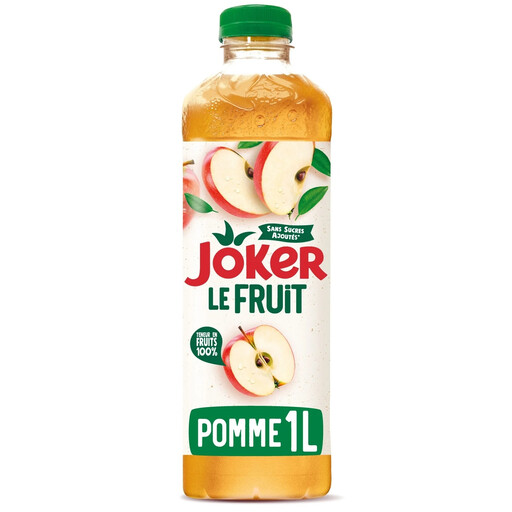 Image unavailable
This 1 L format may suit serving several portions, as long as you follow the packaging instructions after opening.
The product listing for this variant mentions lemon juice from concentrate in the recipe and states that it contains 11 g of sugars per 100 ml. Check the label for this specific product rather than relying on the values for another Joker juice.
No. Under the conditions set out in the EU regulation on nutrition claims, this label means that no sugars have been added; it doesn’t refer to the sugars naturally present in apples. Check the ‘of which sugars’ line per 100 ml for the product you choose.
Choose according to the recipe you want to serve, by checking the product description and ingredients for the exact product. Pure apple juice may list only apple juice as an ingredient; juice from concentrate and nectar have different product descriptions, and you should check the fruit content of nectar.
Follow the storage instructions and time limit on the packaging. For example, Auchan says to refrigerate its apple juice from concentrate and consume it within five days of opening; this guidance doesn’t apply to every product.
No. Manger Bouger says fruit juice doesn’t count as a portion of fruit and recommends limiting it as much as possible, to no more than one glass a day. The ‘no added sugars’ claim doesn’t change this recommendation.
Not under the rules described by the French Ministry of the Economy for individuals at flea markets, car boot sales or street markets: they may only sell their own used personal belongings. If you’re considering any other kind of drinks sale, ask the organiser and local council to clarify your status and the applicable conditions before buying; the DGCCRF states that selling in a public place requires local council authorisation.