Hosts keeping an eye on sugar intake
If the words ‘no added sugars’ catch your eye, also check the ‘of which sugars’ figure per 100 ml. The amount poured into each glass matters just as much as the claim highlighted on the packaging.


For a drinks-and-nibbles gathering, choose pure juice if fruit content is your priority. You could also consider nectars if you’re happy with a recipe that contains water and want to compare the sugar figures shown on the label. Auchan product listings show 8.2 g of sugars per 100 ml for an apple nectar and 9.8 g for a pure juice; this difference between two products does not apply to every product. ‘No added sugars’ does not mean ‘sugar-free’, so bear the serving size in mind and offer water too. Manger Bouger recommends limiting fruit juice to one glass a day.
If the words ‘no added sugars’ catch your eye, also check the ‘of which sugars’ figure per 100 ml. The amount poured into each glass matters just as much as the claim highlighted on the packaging.
You prioritise fruit content and the product’s ingredients. However, pure juice still contains sugars naturally present in apples, so the product name doesn’t mean you can skip the nutritional information.
You choose the bottle size to suit your guests and the other drinks on offer. To check whether you’re happy with keeping an opened bottle, look at the refrigeration instructions and how soon it should be consumed after opening.
Start with the sugars listed per 100 ml and the amount you plan to serve. Then compare the product name and ingredients: pure juice and nectar won’t meet the same needs if fruit content is also part of your decision.
| What to consider | What to check | Who is it for? |
|---|---|---|
| Sugars served | The ‘of which sugars’ figure per 100 ml, then the amount poured; distinguish ‘no added sugars’ from ‘sugar-free’. | If I want to keep track of the sugars I serve, a claim on the front of the pack isn’t enough: I check the nutritional information and glass size. Around 36% of consumers make this their top priority. |
| Type of drink | The product name, ingredients and, for nectar, the fruit content. | For my alcohol-free spread, I might choose pure juice rather than a nectar containing water, even if their sugar figures differ. This is the top priority for around 21% of consumers. |
| Pack size and leftovers | The bottle size and storage instructions after opening. | When there are several drinks on offer, I prefer a bottle my guests can finish, or one whose leftovers I can store as directed. Around 29% of consumers put this first. |
| Origin | The origin of the apples and the place of manufacture stated for the product you choose. | Once I’ve chosen the type of drink and pack size, I can compare products by the stated origin of the apples or where they’re made. Around 14% of consumers put this criterion first. |
The 1 L Joker apple juice labelled no added sugars still lists 11 g of sugars per 100 ml on its Joybuy product page. So the claim alone doesn’t tell you how much sugar is in your glass.
Look for ‘of which sugars’ in the nutritional information, compare figures on the same 100 ml basis and take the amount served into account.
Auchan apple nectar, listed at 8.2 g of sugars per 100 ml, contains water and at least 85% fruit. Auchan pure apple juice, listed at 9.8 g per 100 ml, suits a different preference for ingredients. These figures apply to two specific products.
Check the product name, ingredients and fruit content before choosing based on the sugar figure alone.
For the Auchan pure apple juice in question, the instructions say to keep the bottle in the fridge after opening and consume it within five days.
Choose a size to suit your plans, then follow the instructions on the bottle you buy.
A bottle that’s too large for your gathering and the following days could lead to waste.
Marketing that focuses on fruit doesn’t replace guidance on consumption. Manger Bouger recommends limiting fruit juice, whatever the type, to a maximum of one glass a day.
Offer water too, and serve juice in portions rather than making it available without limit.
The nutritional information, ingredients and pack sizes below relate to the products mentioned, not every product in these brands’ ranges.
The Joybuy product page for Joker apple juice with no added sugars, 1 L, describes a juice made from concentrate and lemon juice from concentrate. It lists 11 g of sugars per 100 ml.
Le Fourgon lists a 25 cl Pampryl apple juice made from concentrate, with 11.4 g of sugars per 100 ml.
Carrefour describes its Extra 1.5 L pure apple juice as having no added sugars. Its product page lists 45 kcal and 11 g of carbohydrates per 100 ml.
The E.Leclerc product page for Jafaden 1.5 L pure apple juice states that the apples are from France, that it is made in France and that it contains 10 g of sugars per 100 ml.
Auchan’s product pages distinguish between a 1 L pure apple juice with 9.8 g of sugars per 100 ml and a 2 L apple nectar with no added sugars. The nectar contains water and at least 85% fruit, and lists 8.2 g per 100 ml.
These apple juices and apple-based drinks are worth considering for a drinks-and-nibbles gathering. Before comparing their ingredients or sugars, check the product name and nutritional information for each one.
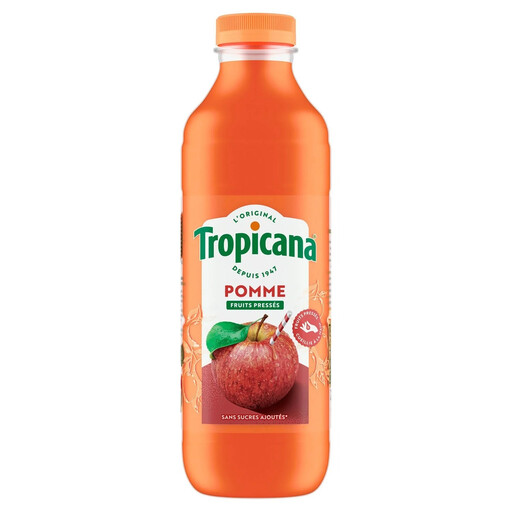 Image unavailable
The 1 L size could work for sharing if you expect to finish the bottle. To decide how much to pour, check the sugars listed per 100 ml and the instructions for after opening.
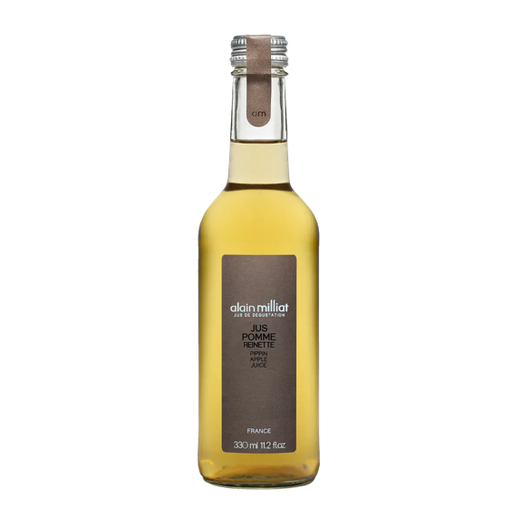 Image unavailable
The 33 cl size is worth considering if you’d prefer to open a small bottle during your gathering. Think about how many people you’ll serve, and check the ‘of which sugars’ figure per 100 ml before comparing it with a larger pack.
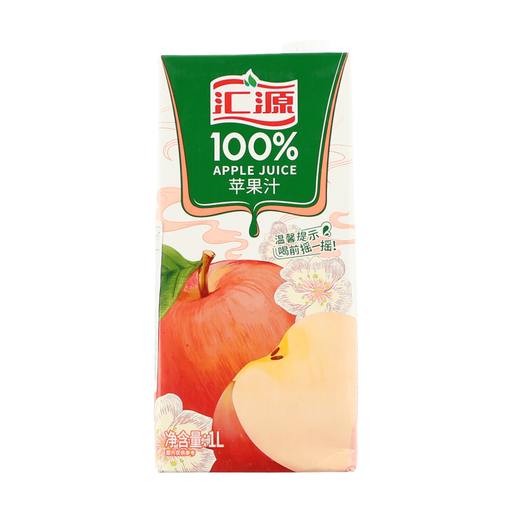 Image unavailable
The 1 L size is worth considering for sharing. To compare it with pure juice or nectar, check its product name, fruit content and nutritional information on the label.
No. This claim doesn’t remove the sugars naturally present in the drink. The Joybuy product page for Joker apple juice with no added sugars, 1 L, lists 11 g of sugars per 100 ml. Check the ‘of which sugars’ figure for the product you choose.
Serve individual portions rather than offering juice without limit, and provide water too. Manger Bouger recommends limiting fruit juice to a maximum of one glass a day; choose bottle sizes to suit the number of glasses you plan to serve.
No. You need to compare specific products on the same 100 ml basis. Auchan’s product pages show 8.2 g for an apple nectar containing water and at least 85% fruit, compared with 9.8 g for a pure apple juice. These two figures don’t apply to all nectars and pure juices.
Follow the instructions on the bottle you buy. For the Auchan pure apple juice in question, the instructions say to keep it in the fridge and consume it within five days of opening.
You could offer whole or sliced fruit as part of your spread rather than relying on juice alone. Manger Bouger recommends choosing whole fruit and limiting fruit juice.