For a conference break, start by choosing the type of drink you want to serve: pure juice if avoiding added water is a priority, or juice from concentrate if that recipe meets your requirements. If you’re happy to serve a drink containing water, check its product name and ingredients before classifying it as a nectar. In all cases, ‘no added sugar’ does not mean ‘sugar-free’, so remember to plan the serving quantities and how you’ll store opened bottles.
Who is this choice for?
Organisers looking to make serving easier
If you’re serving drinks by the glass or in a jug, the pack size helps you work out how many units you’ll need. You’ll also need to consider the number of attendees, the serving size and how much fridge space you’ll have once bottles are opened. Auchan, Cidou and Pressade product listings advise keeping the juice chilled and consuming it within five days of opening.
Buyers who prefer pure juice
You may want to distinguish juice with no added water from a drink made with concentrate and water. Carrefour’s Planet Bio listing describes it as 100% apple juice, with no water added; E.Leclerc’s Bio Village listing names organic apple juice as an ingredient.
Organisers who care about organic produce or where the apples come from
These criteria can help guide your choice, but they don’t replace checking the product name and the ‘no added sugar’ claim. Carrefour’s Planet Bio listing states that the apples are from France; Auchan’s listings include organic Cidou and Pressade products whose recipes also contain water.
What should you check before ordering?
First decide which drink categories are acceptable for your conference, then check the pack size and serving requirements. The same ‘no added sugar’ claim can appear on products made to different recipes.
Pure apple juice
Choose this if: your specification requires a recipe with no added water. Carrefour’s Planet Bio listing describes it as 100% apple juice and gives a pack size of 75 cL.
Bear in mind: a 75 cL pack means you’ll need a different number of bottles than you would with 1 L packs. ‘Pure juice’ doesn’t mean ‘sugar-free’.
Apple juice from concentrate
Choose this if: this type of recipe is acceptable and you’re looking for a 1 L pack labelled ‘no added sugar’. Carrefour and Auchan listings describe the Joker and Auchan products respectively.
Bear in mind: this option won’t meet a requirement for pure juice with no added water. Check the ingredients of the exact product you order.
Apple nectar
Choose this if: your specification explicitly allows nectar rather than juice. Check that this is the product name on the label of your chosen product.
Bear in mind: a recipe containing water won’t meet a requirement for pure juice with no added water. Also check the fruit content and the ‘no added sugar’ claim.
| Criterion |
What to check |
Who it matters to |
| Serving and storage |
Work out how many servings you’ll get from each pack size, then check the instructions for opened bottles and whether you’ll have access to a fridge. |
When I’m serving by the glass, I want to open bottles as the break progresses and be able to store any that have been started. Around 45% of consumers are said to prioritise this serving requirement. |
| Recipe and labelling |
Read the product name and ingredients, and check the ‘of which sugars’ figure per 100 ml; confirm the ‘no added sugar’ claim. |
If I need to tell attendees exactly what they’re drinking, I want to know whether it’s pure juice, juice from concentrate or nectar. Around 36% of consumers are said to prioritise this clarity. |
| Organic status and origin |
Check the organic status and origin of the apples for the exact product and pack size you’re ordering, separately from its category. |
For a conference where the apples’ origin or organic status matters, I want to be able to find that information on the product being served. Around 19% of consumers are said to put this criterion first. |
Serving mistakes to avoid
-
Presenting ‘no added sugar’ as ‘sugar-free’
Apple juice contains sugars that occur naturally in the fruit. Confusing the two claims would give attendees inaccurate information about the drink.
Use the claim shown on the product delivered and check its ‘of which sugars’ figure in the nutrition information.
-
Relying on the front of the pack to identify pure juice
The ‘no added sugar’ claim doesn’t tell you the full story about the ingredients. Auchan’s Cidou and Pressade listings specify apple juice from concentrate and water, unlike the recipe with no added water listed by Carrefour for Planet Bio.
State in your specification whether you require pure juice or will accept juice from concentrate or nectar. Then check the product name and ingredients on the label.
-
Ordering bottles without planning how they’ll be served
A 1 L pack alone doesn’t tell you how many bottles to open: the number of attendees and serving size matter too. Some products need to be kept in the fridge once opened.
Work out the number of servings and, if the break schedule allows, keep some bottles sealed as back-up. Make sure you can follow the storage instructions for the product delivered.
-
Assuming ‘organic’ means ‘no added sugar’ or ‘pure juice’
Organic status, drink category and sugar claims answer different questions. An organic recipe may also contain water.
Check each of these criteria for the exact product, along with its pack size and instructions for opened bottles.
Brands to consider by recipe
These products show some of the recipes and pack sizes worth comparing. A brand name is no substitute for checking the label of the product you order.
Joker
A 1 L bottle of apple juice with no added sugar, made from concentrate.
- Carrefour and Auchan listings show a 1 L pack with no added sugar.
- The ingredients listed by Carrefour include apple juice and lemon juice from concentrate, so don’t describe this product as pure juice.
Carrefour Classic'
A product listed by Carrefour as ‘apple juice with no added sugar’ in a 1 L bottle.
- The product name and pack size make it easy to identify if you need 1 L bottles.
- If you need to specify the recipe, check the product name and ingredients for the exact product you order.
Auchan
Apple juice from concentrate with no added sugar, in a 1 L pack.
- The Auchan listing specifies the recipe and pack size, and shows 9.8 g of sugars per 100 ml.
- Once opened, the listing says to keep the product in the fridge and consume it within five days.
Bio Village
A 1 L pack of organic pure apple juice for organisers who prefer this category and pack size.
- E.Leclerc’s listing names apple juice from organic farming as an ingredient and states that the apples are from France.
- If your order requires a ‘no added sugar’ claim, check that it appears on the exact product you choose.
Apple juice from concentrate available on Joybuy
This selection is for serving apple juice with no added sugar in a 1 L pack, where a recipe made from concentrate is suitable. If you require pure juice or nectar, keep the different categories in mind when making your choice.
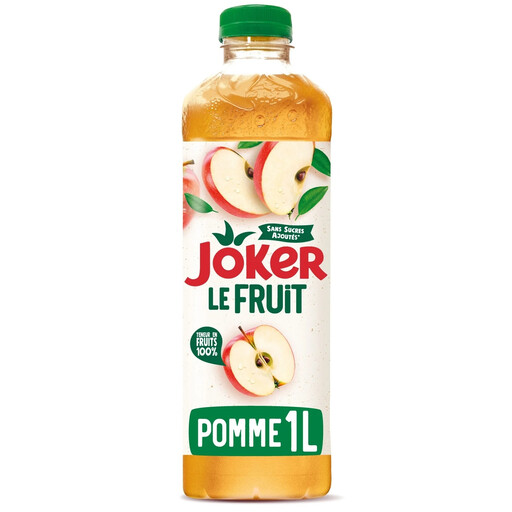 Image unavailable
Joker apple juice with no added sugar, 1 L
This 1 L pack can be counted towards your requirements for serving by the glass or in a jug, if juice from concentrate is acceptable.
The listed recipe includes apple juice and lemon juice from concentrate, so it isn’t pure juice. Before planning your service, check the label for the sugar content and storage instructions once opened.
View on Joybuy
Frequently asked questions
Does apple juice labelled ‘no added sugar’ contain no sugar?
No. This claim doesn’t mean the juice contains no sugar at all. Apples naturally contain sugars, so check the ‘of which sugars’ figure in the nutrition information to find out how much is in the product you’re serving.
What should I specify: pure juice, juice from concentrate or nectar?
Specify ‘pure juice’ if you require a recipe with no added water, then check the ingredients. Carrefour’s Planet Bio listing describes it as 100% apple juice, with no water added. If juice from concentrate or nectar is also acceptable, state this clearly and check the product name and recipe for every product offered.
How should I store opened bottles during a conference?
Follow the instructions on each bottle and, where possible, open them as you need them. Auchan’s listings for Auchan, Cidou and Pressade products advise keeping them in the fridge and consuming them within five days of opening. The Pressade listing specifies a temperature of +4 °C to +6 °C.


