People keeping an eye on the sugars they serve
You want to know how much sugar is in the drinks you serve at an aperitif. The ‘of which sugars’ figure per 100 ml tells you more than the ‘no added sugars’ claim alone.


For drinks on the terrace, choose between juice and nectar according to the ingredients you want to serve, then compare the sugars listed per 100 ml on the bottles you’re considering. Juice made entirely from fruit and nectar containing water won’t meet the same expectations. In either case, ‘no added sugars’ does not mean ‘sugar-free’.
You want to know how much sugar is in the drinks you serve at an aperitif. The ‘of which sugars’ figure per 100 ml tells you more than the ‘no added sugars’ claim alone.
You want to distinguish apple juice from nectar containing water. The product description, ingredients list and fruit content can help you decide.
You’re planning to serve several glasses, and may have an open bottle left over. The volume, storage instructions after opening and whether you can keep the drink chilled all matter when choosing.
First decide whether you want juice or are happy with nectar containing water. Then compare the nutritional information on a like-for-like basis, and don’t forget serving and storage instructions.
| Criteria | What to check | Who it matters to |
|---|---|---|
| Sugars served | Compare the ‘of which sugars’ figure and kcal per 100 ml, then consider how much you plan to serve. | If I want to keep track of the sugars I serve, I need to know how much is in the drink, even when it says ‘no added sugars’. Around 46% of consumers would put this need first. |
| Ingredients | Check the product description and ingredients, and the fruit content for nectar. | I’d rather know whether my glass contains juice made entirely from fruit or a drink with added water. This would be the main criterion for around 36% of consumers. |
| Serving and storage | Choose a size to suit the number of glasses you’re planning to serve, and follow the storage instructions after opening. | On the terrace, I want to serve the drink chilled and store any leftovers properly. Around 18% of consumers would make their choice based first on this practical need. |
Naturally occurring sugars still count. On Auchan’s apple juice product pages, the Joker and Auchan products each list 9.8 g of sugars per 100 ml, compared with 11 g for the Andros product mentioned.
Compare the ‘of which sugars’ figure per 100 ml on the bottle you choose, and take the serving size into account.
The DGCCRF distinguishes between these product descriptions. Carrefour Classic’s apple nectar listing states that it contains 75% apple juice from concentrate and water. Its ingredients are therefore different from those of a product described as 100% fruit juice.
Check the product description and ingredients before comparing nutritional values.
A bottle bought for several people may still be open after your drinks. Storage instructions after opening vary from one product to another.
Choose a size to suit the number of glasses you’re planning to serve, and follow the bottle’s instructions on refrigeration and how long it can be kept.
You may need to make room in the fridge if you don’t finish the bottle.
A brand may offer products in different categories. For drinks on the terrace, compare the specific products rather than choosing by the name on the bottle alone.
Carrefour lists both apple juice from concentrate described as 100% fruit and apple nectar with no added sugars.
The Le Fruit product listed by Auchan is apple juice from concentrate, described as 100% fruit.
The retailer’s listing describes apple juice from concentrate with no added sugars, in a 1 L pack.
Jus de Fruits Caraïbes’ brand description distinguishes between apple juice from concentrate described as 100% juice and apple nectar.
These 1 L packs could be suitable for sharing on the terrace. If you’re looking specifically for juice made entirely from fruit or a drink with no added sugars, check the product description, ingredients and sugars for each product before choosing.
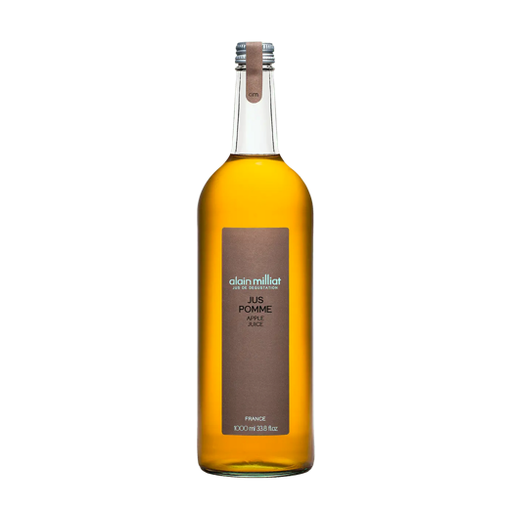 Image unavailable
The 1 L size could be a good choice if you’re planning to serve several glasses.
If you don’t finish the bottle, follow its storage instructions after opening.
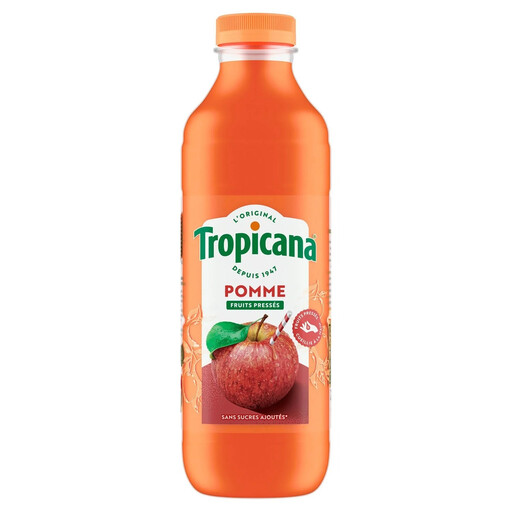 Image unavailable
This 1 L bottle of apple juice can be served to several people.
If you’re looking for a product with no added sugars, still compare the ‘of which sugars’ figure per 100 ml and check the storage instructions after opening.
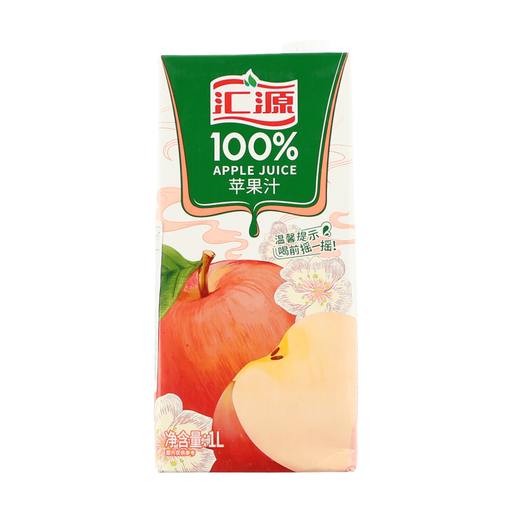 Image unavailable
The 1 L size works well for sharing, but the exact type of drink matters if you’re looking for pure juice.
Check the product description and ingredients on the bottle, particularly whether it contains water, before comparing it with 100% fruit juice.
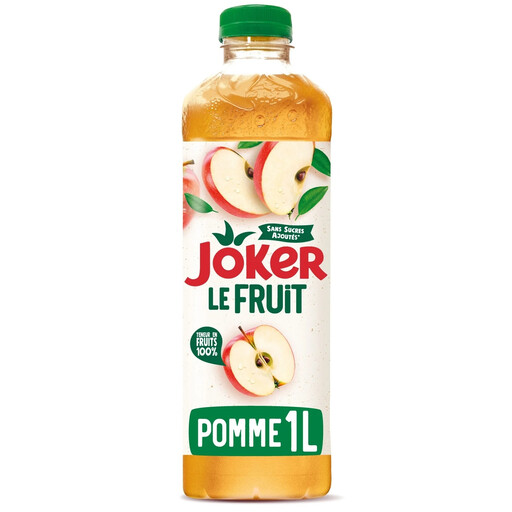 Image unavailable
This 1 L size could be a good choice if you want to serve apple juice to several guests.
When comparing sugars, check the bottle you receive: the figures listed for the Joker products featured here differ. If you plan to keep any leftovers, check the storage instructions after opening too.
No. When choosing an apple drink, check its product description and nutritional information rather than relying on this term alone. The DGCCRF distinguishes between juice, juice from concentrate and nectar, among other categories.
No. Apple juice can contain sugars that occur naturally in fruit. Check the ‘of which sugars’ figure per 100 ml. For example, Auchan’s listing for the Joker Le Fruit product shows 9.8 g per 100 ml.
No. The amount depends on the specific recipe. Compare the sugars per 100 ml on the bottles you’re considering, then check their product descriptions and fruit content. Nutritional values don’t make nectar and juice interchangeable.
Follow the instructions on the bottle, and put it in the fridge if refrigeration is required. For these specific products, Auchan’s listings for Auchan and Tropicana juices say to consume within five days of opening.