For a children’s birthday tea, keep water as the main drink and serve a limited amount of apple juice. ‘No added sugars’ doesn’t mean ‘sugar-free’: compare the ‘of which sugars’ figures, then choose between small cartons and a larger bottle, depending on how you’ll serve the portions.
Who are these options for?
Parents who want to limit how much juice is served
When cake and other sweet treats are already on the menu, you may want to keep water available and avoid serving unlimited juice. This is in line with Manger Bouger’s recommendation to limit fruit juice for children.
Hosts who need to serve up portions
If you’re serving several children, you may prefer a format that’s easy to hand out or a bottle that an adult can use to pour measured servings. Auchan and Bio Village (E.Leclerc) both offer 20 cl cartons.
Shoppers decoding ‘no added sugars’
You want to know how much sugar the drink contains, not just what the front-of-pack claim says. Joker points out that juices contain naturally occurring sugars; the figure to compare is on the ‘of which sugars’ line in the nutrition information.
What should you look for at tea time?
First decide how much juice to serve alongside water, then choose a serving format. Finally, check the recipe and nutrition information for each product.
| Criteria |
What to check |
Who it’s for |
| How much juice to serve |
Make sure water is readily available and decide how much juice to serve. Manger Bouger advises children under 11 not to have more than half a glass of juice a day, and children over 11 not to have more than one glass. |
If tea already includes cake and sweets, I’d prefer water to be the drink children can help themselves to freely; around 40% of consumers would put limiting juice first. |
| Portions and serving |
Compare 20 cl cartons with larger bottles to share. If you open a bottle, read the storage instructions. |
When serving several children, I want to portion out the drinks without having to keep topping up their glasses. Around 30% of consumers would make portion control their priority. |
| Recipe and sugars |
Read the product name, ingredients and ‘of which sugars’ figure per 100 ml; distinguish between juice and nectar. |
When I see ‘no added sugars’, I want to know what the drink actually contains before choosing it. Around 30% of consumers would prioritise checking this information. |
Common mix-ups to avoid
-
Confusing ‘no added sugars’ with ‘sugar-free’
Naturally occurring sugars are still included in the nutrition information. The apple juice made from concentrate featured by Auchan contains 9.8 g of sugars per 100 ml.
Compare the ‘of which sugars’ figure per 100 ml and consider how much you’ll actually pour, rather than choosing based on the claim on the front of the pack alone.
-
Assuming a small carton of apple nectar is the same as pure juice
According to Auchan’s product information, its 20 cl carton of organic apple nectar contains 75% apple juice from concentrate, water and citric acid. Its individual serving format doesn’t make it the same recipe as pure juice.
Choose a format that makes serving easier, then check the product name, ingredients and sugars per 100 ml separately.
Individual portions also mean more packaging to deal with during tea time.
-
Opening a large bottle without planning what to do with the rest
A bottle for sharing makes it easy to pour drinks, but any juice left over needs to be stored according to the product’s instructions.
Decide who will serve the juice and check the label for storage instructions after opening before choosing a bottle.
Brands to compare
Joker
An apple juice to compare with supermarket own-label options, particularly for its recipe and declared sugar content.
- Joker describes its apple juice as 100% fruit, with no added sugars.
- The brand points out that juices still contain naturally occurring sugars, so the claim on the front of the pack is no substitute for checking the nutrition information.
Auchan
Its different products let you compare a 1 L apple juice made from concentrate with a 20 cl carton of organic nectar.
- Auchan states that the featured apple juice made from concentrate contains 9.8 g of sugars per 100 ml.
- The organic nectar carton contains 75% apple juice from concentrate, along with water and citric acid, so it isn’t the same recipe as the bottled juice.
Carrefour Bio
A 1 L carton of organic pure apple juice, which Carrefour says is made with French apples.
- The ‘pure juice’ description and the origin of the apples are two details you can check on this product.
- Being organic and made with French apples isn’t enough, on its own, to tell you how its sugar content compares with another juice.
Bio Village (E.Leclerc)
Organic pure apple juice in a pack of 6 × 20 cl cartons, worth considering if individual containers make serving easier.
- E.Leclerc’s product information lists 10.0 g of sugars per 100 ml for this product.
- A small carton and organic ingredients don’t mean you can skip checking the serving size and nutrition information.
Pampryl
A brand where it’s worth reading the label carefully to distinguish between apple juice and apple nectar.
- Comparing the product name and ingredients helps you tell the different recipes available under the brand apart.
- For the product you’re considering buying in France, check the ingredients listed on its label rather than assuming all Pampryl products are the same.
Apple juices to explore on Joybuy
These three apple juices come in a 33 cl format or 1 L bottles for sharing. Before serving them at tea time, compare their labels and decide how much to offer alongside water.
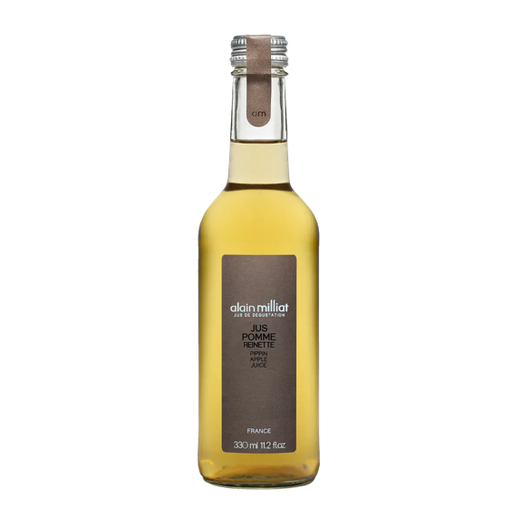 Image unavailable
ALAIN MILLIAT, Reinette apple juice 33 cl
The 33 cl bottle may suit you if you prefer to pour juice from a smaller container; it isn’t necessarily a single serving.
Check the sugars per 100 ml and decide how much you plan to serve each child.
View on Joybuy
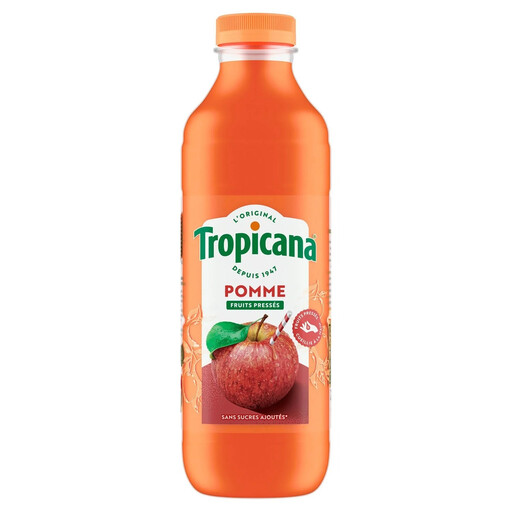 Image unavailable
TROPICANA Pure Pressed, French apple juice 1 L
The 1 L bottle is made for sharing, so have an adult pour the portions rather than leaving it out for everyone to help themselves.
Compare the sugars per 100 ml and follow the storage instructions on the packaging after opening.
View on Joybuy
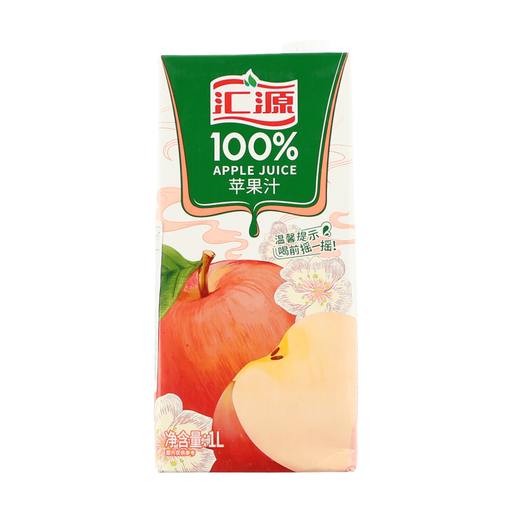 Image unavailable
Huiyuan, apple juice 1 L
This 1 L bottle can be shared if you decide in advance how much to pour into each glass.
Before choosing it, check the product name, ingredients, sugars per 100 ml and storage instructions on the label.
View on Joybuy
Frequently asked questions
Is apple juice with ‘no added sugars’ sugar-free?
No: the claim doesn’t remove the sugars naturally present in the juice. Joker points this out for its juices, while Auchan lists 9.8 g of sugars per 100 ml for the featured juice made from concentrate. Check the ‘of which sugars’ line for the product you choose.
How much juice should you serve at a children’s tea party?
Serve juice alongside water, which can remain available throughout tea time. Manger Bouger advises children under 11 not to have more than half a glass of juice a day, and children over 11 not to have more than one glass a day. Take into account any juice they’ve already had that day.
Is a carton of apple nectar the same as pure juice?
No: a carton tells you about the format, not the type of drink. The featured 20 cl carton of Auchan organic nectar contains 75% apple juice from concentrate, water and citric acid. Compare its product name and ingredients with those of the pure juice you’re considering.
What should you do with juice left in an opened bottle?
Follow the storage instructions for the bottle you’ve bought. Auchan and Tropicana product information says to refrigerate after opening and consume within five days, but you should follow the instructions for your specific product.


