People keeping an eye on sugar
You want to avoid added sugars without mistaking this claim for sugar-free. The ‘of which sugars’ value per 100 ml lets you compare products.


When stocking your cupboard, don’t choose an apple juice based only on the words ‘no added sugars’: the juice still contains sugars naturally found in apples. Compare the product description and ingredients — whether it’s pure juice, juice from concentrate or a fruit nectar — then check the ‘of which sugars’ value per 100 ml, the pack size and the instructions for use after opening. Pure juice isn’t automatically lower in sugar than juice from concentrate.
You want to avoid added sugars without mistaking this claim for sugar-free. The ‘of which sugars’ value per 100 ml lets you compare products.
You buy several bottles in advance and want a size your household can finish while following the storage instructions after opening.
Depending on your preferences, you may favour pure juice, a stated origin, an organic recipe or unfiltered juice. The product description and ingredients matter more than a vague term such as ‘diet’.
Start by checking the ingredients and sugar per 100 ml, then choose a size that suits how quickly you’ll use it. If you’re stocking up, also check the instructions for each bottle after opening.
| What to consider | What to check | Who it matters to |
|---|---|---|
| Sugars | The ‘no added sugars’ claim and the ‘of which sugars’ value per 100 ml. | If I want to avoid added sugars, I also need to know how much sugar is already in the juice. Around 31% of consumers would make this distinction a priority. |
| Storage and pack size | The volume and the instructions for refrigeration and use after opening. | When stocking up, I want to be able to finish each bottle in line with the instructions on its label. Managing pack size would come first for around 25% of consumers. |
| Type of drink | The product description, ingredients and, for fruit nectar, the stated fruit content. | I’m looking for a particular recipe and don’t want to confuse pure juice with juice from concentrate or fruit nectar. Around 19% of consumers would put this first. |
| Local availability | Whether the product you’ve chosen is available in store or through your planned collection option. | If I’m planning to buy several bottles of the same product, I need to be able to find it at my collection point. Availability would be the priority for around 19% of consumers. |
| Smaller servings | The pack size and the amount you plan to serve. | If I only drink juice occasionally, I’d rather choose a suitable amount than open a large bottle. Around 6% of consumers would put this need first. |
This claim doesn’t remove the sugars naturally found in the juice. For example, Auchan.fr lists 9.8 g of sugars per 100 ml for Joker Le Fruit.
Compare the ‘of which sugars’ value on the same 100 ml basis, rather than relying only on the claim on the front of the pack.
The products reviewed don’t follow this rule: E.Leclerc lists 11 g of sugars per 100 ml for Bio Village organic pure juice, compared with 9.8 g per 100 ml for the concentrated Joker Le Fruit on Auchan.fr.
Compare the nutrition information and ingredients on the specific bottles you’re choosing between.
For its 1 L apple juice from concentrate, Auchan says to refrigerate it and use it within five days of opening.
Check the instructions on your chosen bottle and pick a size you can finish within the stated time.
An opened bottle that isn’t finished in time may go to waste.
Le Fruit is a 1 L apple juice from concentrate, listed as having no added sugars on Auchan.fr.
Carrefour’s 1 L product is apple juice from concentrate labelled ‘no added sugars’.
Auchan’s 1 L product is apple juice from concentrate, labelled as having no added sugars.
E.Leclerc describes Bio Village’s 1 L organic pure apple juice as made in France with apples of French origin.
Carrefour’s product is unfiltered pure apple juice in a 1.5 L carton.
These options include a 1 L apple juice from concentrate and two apple juices in 1 L and 33 cl sizes. When choosing a bottle to keep in your cupboard, compare its ingredients, sugar per 100 ml and instructions for use after opening.
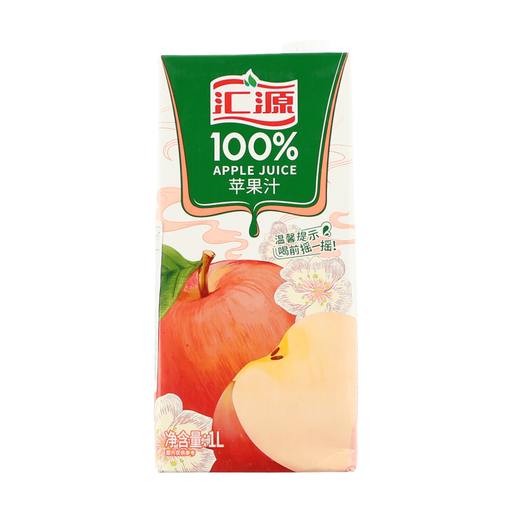 Image unavailable
A 1 L size to consider if you can use the bottle according to its instructions after opening.
Compare the ingredients list and ‘of which sugars’ value with those of other juices from concentrate.
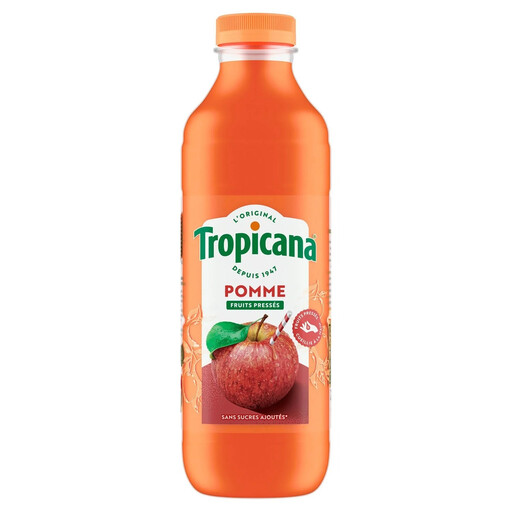 Image unavailable
This 1 L size may suit you if you can use the bottle according to its instructions after opening.
‘From France’ appears in the product name. Check the packaging for exactly what this refers to, along with the ingredients and sugar per 100 ml.
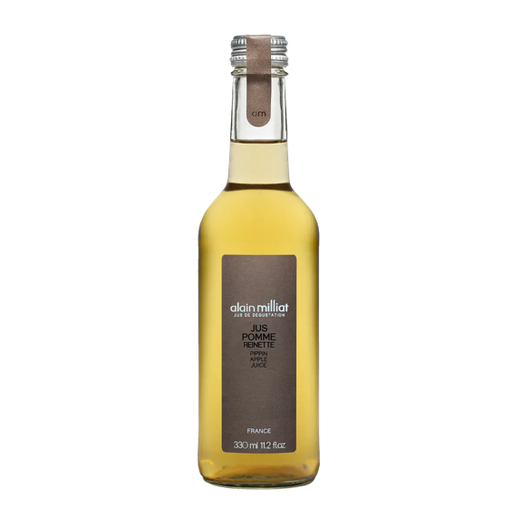 Image unavailable
The 33 cl size is worth considering if you’re looking for a smaller bottle than the 1 L options.
The name identifies the Reinette apple variety. If no added sugars is important to you, check the claim on the packaging and read the nutrition information.
No. Sugars naturally found in apples remain in the juice. Joker Le Fruit carries this claim on Auchan.fr, but the listing also states 9.8 g of sugars per 100 ml, so be sure to check the ‘of which sugars’ value too.
No. The product description alone isn’t enough to rank bottles by sugar content. E.Leclerc’s listing for Bio Village pure juice states 11 g per 100 ml, while Auchan.fr lists 9.8 g per 100 ml for Joker Le Fruit, which is made from concentrate. Compare products using the same unit.
Yes, as long as you follow the dates and storage instructions on unopened bottles. Also plan how you’ll use them after opening: for its 1 L product, Auchan says to refrigerate it and use it within five days.
A smaller pack can save you from opening a 1 L bottle for just a small serving, but the juice will still contain sugars. Choose a size that suits the amount you plan to serve and check the storage instructions for the product you select.