Managers mindful of sugar content
If your specification calls for reduced sugar, distinguish this requirement from the absence of added sugars. The ‘of which sugars’ values for the apple juices reviewed still need to be taken into account.


For a workplace canteen, don’t choose an apple juice based solely on the ‘no added sugars’ claim: it doesn’t mean the drink is sugar-free or reduced in sugar. Check the ‘of which sugars’ value per 100 ml and the product description, then choose a pack size that suits the serving volume and the storage instructions after opening.
If your specification calls for reduced sugar, distinguish this requirement from the absence of added sugars. The ‘of which sugars’ values for the apple juices reviewed still need to be taken into account.
The pack size should match the canteen’s rate of use: a large bottle that’s opened may go to waste if it isn’t used within the time stated on the packaging.
Whether it’s pure juice, ingredients, stated origin or organic certification, these details can guide your choice. Check each product individually, separately from its sugar content.
First decide whether the canteen requires reduced sugar or simply juice with no added sugar. Then choose the type of drink and a pack size suited to the way it will be served.
| Criterion | What to check | Consumers concerned |
|---|---|---|
| Sugar content | Check the ‘of which sugars’ value per 100 ml and the product description if reduced sugar is required. ‘No added sugars’ isn’t enough. | If I need to meet a reduced-sugar requirement, I can’t treat no added sugar as meaning low total sugar. Around 40% of consumers would prioritise this distinction. |
| Volume | Match the pack size to the number of portions actually served and the time allowed for use after opening. | For regular service, I want to open an amount the canteen can use. Around 30% of consumers would prioritise finding the right volume. |
| Storage | Check the refrigeration instructions and the time allowed after opening for the product you choose. | If several bottles are opened during service, I need to be able to track when they were opened and follow the storage instructions. This would be the main priority for around 20% of consumers. |
| Recipe and origin | Compare the product description and ingredients, and check the stated origin or certification if needed. | If the specification calls for a particular recipe or origin, I need to be able to find it on the label. Around 10% of consumers would put this need first. |
Sugars naturally present in the juice are still there. For example, Auchan product information lists 9.8 g of sugars per 100 ml for an apple juice made from concentrate with no added sugars, and 9.7 g for a pure apple juice.
If you’re aiming to reduce sugar, compare the ‘of which sugars’ value per 100 ml and look for a product description that confirms this characteristic.
The product description and recipe are different: Auchan’s product information for Pressade apple nectar lists concentrated juice and water. Its sugar content alone isn’t enough to qualify it as a reduced-sugar drink.
Read the product description and ingredients before comparing nutritional values.
The Auchan apple juice products mentioned here should be kept refrigerated and consumed within five days of opening. This instruction doesn’t automatically apply to other products.
Choose a volume suited to your service, date opened bottles and follow the instructions on their packaging.
Any juice not served within the stated time may go to waste.
Le Fruit is an apple juice made from concentrate, available in a 1 L bottle.
Carrefour’s 1 L product is an apple juice made from concentrate, described as having no added sugars.
Auchan’s product information distinguishes between an apple juice made from concentrate with no added sugars and a 1 L pure apple juice.
E.Leclerc’s range includes pure juices, juices made from concentrate and nectars.
Solevita is a range of fruit drinks sold by Lidl France.
These 1 L bottles of apple juice may be worth considering for canteen service. For each one, check the label against your sugar requirements and storage arrangements after opening.
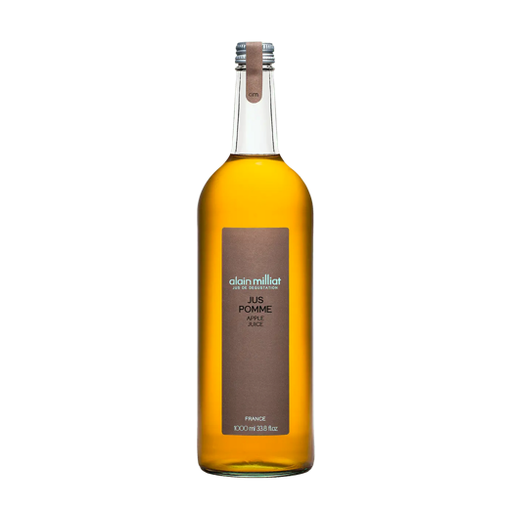 Image unavailable
For service from 1 L bottles, check the ‘of which sugars’ value on the label and the time allowed for consumption after opening.
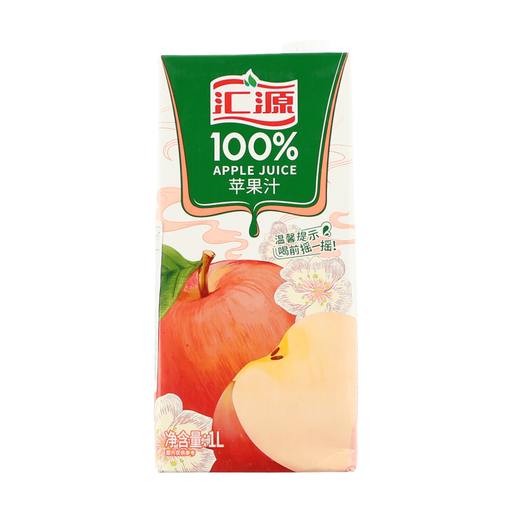 Image unavailable
If your canteen accepts apple juice made from concentrate in a 1 L bottle, check this product’s description and ingredients, as well as its ‘of which sugars’ value.
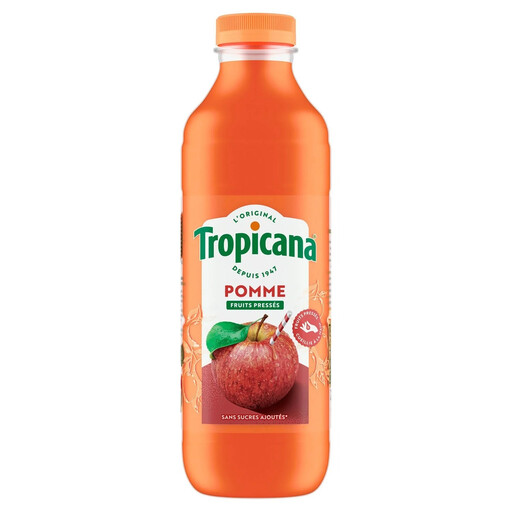 Image unavailable
If your canteen is looking for pressed apple juice in a 1 L bottle, check the ‘of which sugars’ value and the storage instructions on the packaging.
No. It still contains sugars naturally present in apples. The DGCCRF distinguishes between no added sugar and no sugars; the Joker and Auchan apple juice products mentioned list around 9.7 to 9.8 g of sugars per 100 ml, depending on the product.
In France, the provisions of Decree No. 2026-312 apply to products placed on the market from 14 June 2026, according to the DGCCRF. Whatever wording appears on a bottle, check its product description and ‘of which sugars’ value before choosing it.
Yes, if your specification allows nectar rather than juice. The product descriptions and recipes differ: the Pressade apple nectar sold by Auchan contains concentrated juice and water, among other ingredients. Compare the ingredients and sugars per 100 ml for the product you’re considering.
Follow the time limit and storage instructions on the bottle you choose. The Auchan apple juice products mentioned should be kept refrigerated and consumed within five days of opening, although this may not apply to other products.