
Livraison le jour même ou le lendemain

Qualité garantie

Débloquez vos offres de bienvenue: Livraison GRATUITE | Jusqu'à -80 % | 30 jours d'essai gratuits à JoyPlus
Téléchargez l'application
Removing the core from an apple seems simple… until the tool slips, leaves part of the core behind or proves frustrating to clean. Whether you are making pies, baked apples, fruit salads or homemade recipes, the right apple corer eliminates unnecessary handling and helps reduce waste.
The range of options is far from uniform: plastic or metal handles, narrow or wide serrated tubes, standalone tools or fruit utensil sets. Here are the key points to consider before buying, along with a selection suited to several types of users.
Very pointed teeth penetrate fruit easily, but they also require greater care. An overly aggressive apple corer may pass through the apple unevenly or require considerable pressure if the handle lacks stability.
It is better to look for a good balance between the tool’s length, the shape of its teeth and its grip. An ergonomic handle does not replace careful handling, but it does make the tool easier to control.
A narrow tube may work well for small apples but leave part of the core behind in larger fruit. Conversely, a diameter that is too large will remove more flesh around the core.
Before ordering, check the dimensions listed in the product description and consider how you intend to use it: eating apples, pears, cooking apples, or preparing pies and fruit desserts.
Pieces of fruit pulp can become trapped between the metal teeth. A model that is difficult to rinse can quickly become inconvenient for everyday use. Stainless steel is a sensible choice for the part that comes into contact with food, but it still requires careful drying.
After each use, rinse the tool in warm water, clean the serrated areas with a suitable brush, then dry it completely. Store pointed utensils out of the reach of children.
For the active part, stainless steel offers a corrosion-resistant surface suitable for repeated use, provided you follow the manufacturer’s care recommendations. It is generally more durable than an entirely plastic component when used on firm fruit.
The handle may be made from polypropylene, steel or another material. A rigid plastic handle is often lightweight and comfortable to hold, while a metal handle gives a more robust impression. The crucial point is the strength of the connection between the handle and the serrated section.
A length of around 21 to 23 cm keeps your hand safely away from the blade while allowing precise control. The Apple Corer 23 cm combines a polypropylene handle with stainless steel teeth.
Choose a handle that is wide enough to prevent you from gripping the tool too tightly. A non-slip surface or ergonomic shape can make a noticeable difference during repeated preparation, particularly when coring a large quantity of apples for a pie or applesauce.
An apple corer is suitable for anyone looking for a simple, compact solution without unnecessary accessories. By contrast, a fruit utensil set may include several tools, such as an apple corer, melon baller, citrus cutter or zester.
If you regularly prepare different types of fruit, compare the number of accessories, their functions and their care requirements. A complete set is worthwhile only if the pieces genuinely match your cooking habits.
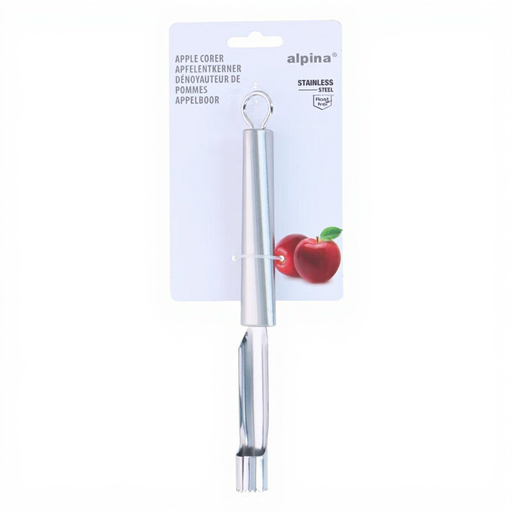
Why this model suits this profile: its standalone format is ideal for households that want to remove apple cores without investing in a complete set.
The product listing specifies a length of 23 cm, a polypropylene handle and stainless steel teeth. This information lets you check the tool’s construction before buying.
A tool suited to apples, pears and similarly sized fruit. Hand washing is recommended, and storage requires care because of the pointed teeth.
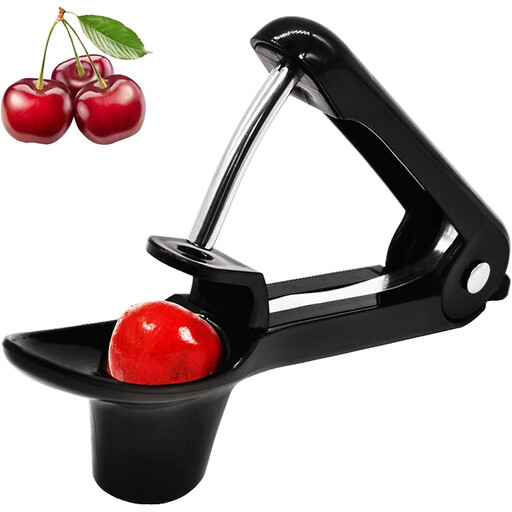
Why this model suits this profile: this cherry pitter is designed for people who prepare clafoutis, preserves or desserts made with fresh cherries.
Its dedicated function means you do not have to repurpose an apple corer for a task that requires a different mechanism. However, check the dimensions and cleaning instructions on the product page before ordering.
A design listed as stainless steel with a manual press mechanism. Intended for pitting cherries only: it is not a substitute for an apple corer.
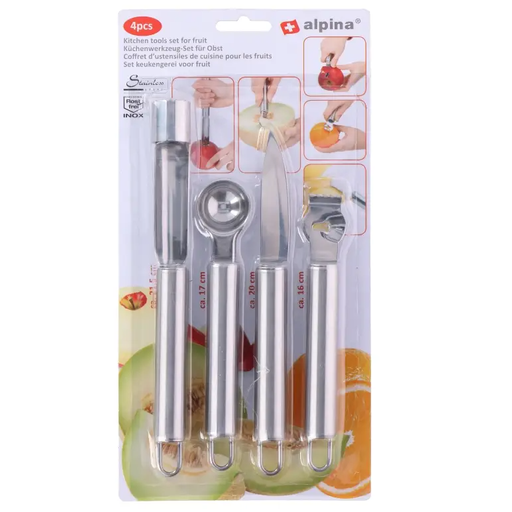
Why this model suits this profile: this set is well suited to families and home bakers who use several fruit utensils throughout the week.
All four functions are clearly specified: a 21.5 cm apple corer, melon baller, curved knife and citrus peeler. This makes it easier to assess the practical value of each piece.
Stainless steel, ergonomic handles and dishwasher-compatible pieces according to the product listing. Hand washing is still recommended to help preserve their condition.
We have brought together an up-to-date selection of fruit utensils so you can compare formats, functions and intended uses before buying.
Yes, some models are designed for apples, pears and similarly sized fruit. However, the fruit’s texture and diameter affect how easy the tool is to use. Check the product description and avoid applying excessive force.
Its lifespan depends on the quality of the assembly, frequency of use and level of care. Thorough drying, storage away from impacts and compliance with the manufacturer’s instructions all help preserve the teeth and handle. “Stainless steel” does not mean the tool is immune to all wear.
Choose a standalone model if you mainly prepare apples and want a compact accessory. A set becomes more useful if you also use a melon baller, fruit knife or citrus peeler. Compare the exact contents of the set with your usual recipes before paying for accessories that will simply sit at the back of a drawer.