
Livraison le jour même ou le lendemain

Qualité garantie

Débloquez vos offres de bienvenue: Livraison GRATUITE | Jusqu'à -80 % | 30 jours d'essai gratuits à JoyPlus
Téléchargez l'application
Whether you're launching your very first print or running batch productions, choosing the right filament is a critical step. A subpar consumable can quickly turn a promising 3D printing session into a total nightmare of repeated failures and wasted plastic. The market is full of promises, but not all spools are created equal. Before settling on an ANYCUBIC 1.75?mm PLA filament, it's crucial to know the most common pitfalls to avoid wasting time and money.
Here are the three most frequent pitfalls when buying 3D printer filament:
To ensure successful and repeatable prints, rely on objective criteria rather than marketing hype. Here are the three technical points to validate for your next 3D printing consumable.
This is THE number one criterion for avoiding extrusion-related headaches. This value indicates the maximum variation in the filament's diameter. The ANYCUBIC PLA Basic range, for example, guarantees a very strict tolerance of ±0.02?mm. In practical terms, this means the filament entering your extruder has a near-perfectly uniform diameter. The result? A consistent material flow, strong layer adhesion, and a drastically reduced risk of clogged nozzles (anti-clogging filament).
Not all PLAs are created equal. The quality of the base pellets and the additives used have a direct impact on the filament's behaviour. A good formulation, like that of ANYCUBIC PLA Basic, provides several key advantages:
This is an often-overlooked detail, but one that can ruin a multi-hour print. A 1?kg PLA spool that is poorly wound can form tangles. When the filament snags, the extruder can no longer pull it, and the print stops dead. Neat and tidy mechanical winding is a sign of the manufacturer's quality commitment and the guarantee of long, worry-free prints without having to keep an eye on the machine.
To help you see how these criteria apply in practice, here is our selection for different user profiles.
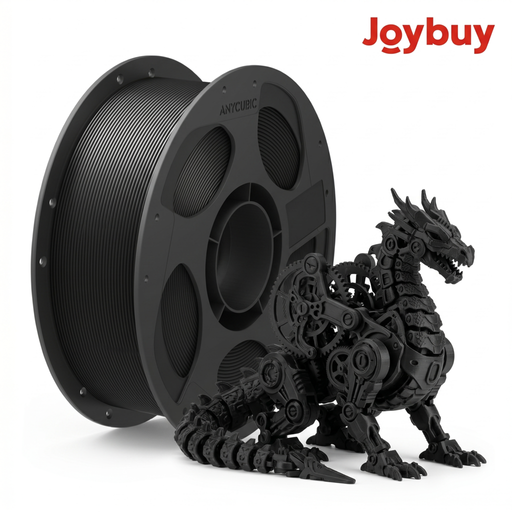
Why we chose it: Black is a versatile and forgiving colour that has the advantage of hiding minor imperfections. This makes it the ideal companion for your first prints. This filament is designed to be easy to get started with, forgiving minor setting errors and offering a positive experience right from the start.
It avoids the pitfall of inconsistent diameter with its strict ±0.02 mm tolerance, which drastically reduces the risk of a clogged nozzle—a major frustration for any beginner.
Reliability and simplicity. It lets you focus on learning your printer rather than spending your time troubleshooting the filament.
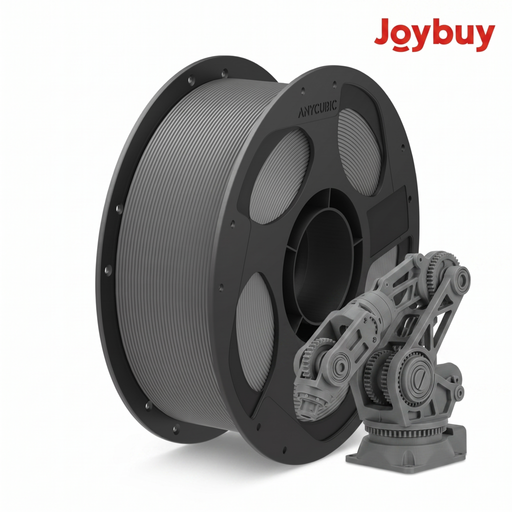
Why we chose it: Grey is the go-to colour for functional prototyping. Its neutral tone doesn't distract the eye and allows you to perfectly evaluate shapes, fits, and surface details. Here, precision is non-negotiable.
It combats the warping pitfall. For functional parts that need to fit together, flatness is crucial. Its low-warping formulation ensures that parts remain true to the digital model, without deformation.
Dimensional accuracy and a neutral finish. Perfect for validating mechanical assemblies and product designs before launching into production.
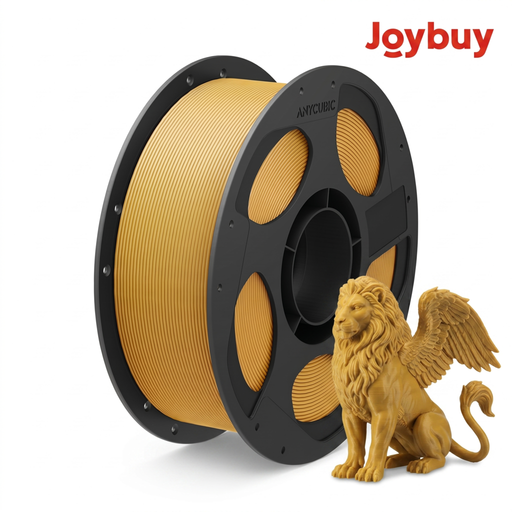
Why we chose it: For creations where aesthetics are paramount, a unique colour like gold provides a spectacular finish without needing any post-processing. This **coloured PLA filament** is perfect for decorative objects, figurines, or trophies.
It solves the problem of inconsistent shades. By choosing a reputable range like ANYCUBIC PLA Basic, you are assured of consistent pigmentation and finish from one spool to the next.
Aesthetic appeal and vibrant colour. The quality of the filament ensures that the silky or metallic look is perfectly uniform across the entire surface of the object.
We have compiled a complete and up-to-date list of products that meet these strict selection criteria and current standards.
Although every 3D printer has its own quirks, here is a good starting point for ANYCUBIC PLA Basic filament:
It's always a good idea to print a "temperature tower" to find the perfect setting for your machine and environment.
Yes, ANYCUBIC 1.75?mm PLA filament is designed to be compatible with the vast majority of FDM (Fused Deposition Modeling) 3D printers that use this standard diameter. This includes models from popular brands like Creality, Elegoo, Prusa, and, of course, the entire range of ANYCUBIC printers.
PLA is a hygroscopic material, meaning it absorbs moisture from the air. Filament that has absorbed moisture becomes brittle and can cause extrusion problems (crackling, bubbles, poor surface quality). To preserve your 1?kg PLA spool, store it in an airtight bag or a sealed storage box with the provided silica gel (desiccant) packets. Above all, do not leave it out in the open, especially in a humid room.