
Livraison le jour même ou le lendemain

Qualité garantie

Débloquez vos offres de bienvenue: Livraison GRATUITE | Jusqu'à -80 % | 30 jours d'essai gratuits à JoyPlus
Téléchargez l'application
When PLA hits its limits for your 3D printing projects, PETG emerges as the clear alternative. It's stronger, more durable, and far more tolerant of heat and humidity, making it the go-to material for upgrading from decorative trinkets to truly functional parts. But with a jungle of options out there, choosing the right spool can quickly become a headache.
As a product expert at Joybuy, my mission is to guide you. This guide focuses on the Anycubic 1kg PETG filament, a popular choice acclaimed for its reliability and consistency. We'll break down its strengths, share our tips for choosing the right one, and present a range of colours to inspire your future projects.
Before you add to your cart, there are a few key points to check to ensure your 1kg spool of PETG is perfectly suited to your needs and your machine.
PETG is trickier to print than PLA. It requires higher extrusion temperatures (typically between 230 and 250?°C) and a heated bed (around 60 to 80?°C). Before you buy, verify that your 3D printer can reach and stably maintain these temperatures. Anycubic PETG filaments are, of course, optimised for the brand's own printers, but rest assured, they are compatible with the vast majority of FDM printers on the market. Consulting the manufacturer's recommended PETG print settings is a crucial step to prevent failed prints.
One of the greatest strengths of PETG 3D printing filament is its toughness. It's a shock-resistant filament, much more so than the brittle PLA. This makes it ideal for creating functional parts: brackets, electronics enclosures, gears, or other mechanical components subject to stress. Its resistance doesn't stop there: it's also a water-resistant 3D filament that holds up against many chemical agents. A wise choice for objects intended for outdoor use or in humid environments.
PETG is a hygroscopic material, meaning it has an unfortunate tendency to absorb moisture from the air. A moisture-laden filament can cause bubbles, stringing (those infamous "angel hairs"), and a poor-quality finish, all while weakening the final part. For optimal results, it is therefore highly recommended to dry your spool of PETG before starting a print. A run in a filament dryer or a household oven (strictly following the instructions: 6 to 8 hours between 55 and 65?°C) will make all the difference.
Here is our selection of colours for Anycubic PETG filament. All these spools share the same excellent technical properties that make them such a versatile and reliable material.
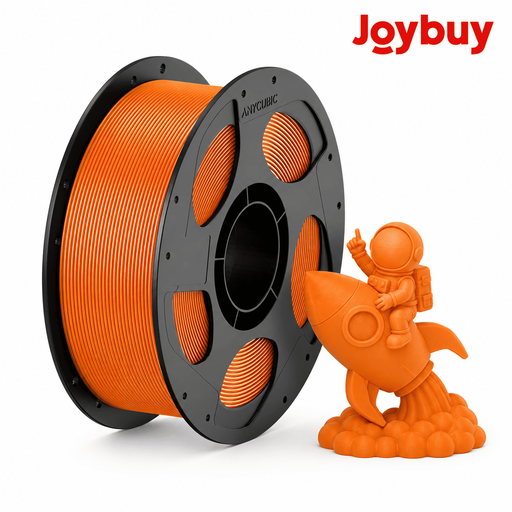
Key feature: Its bright orange colour is perfect for parts that need to stand out: safety tools, jigs, functional prototypes... Anycubic's formulation ensures a consistent shade along the entire length of the spool.
Highlights:
Who is it for? For makers and professionals who need functional parts that are both highly visible and robust.
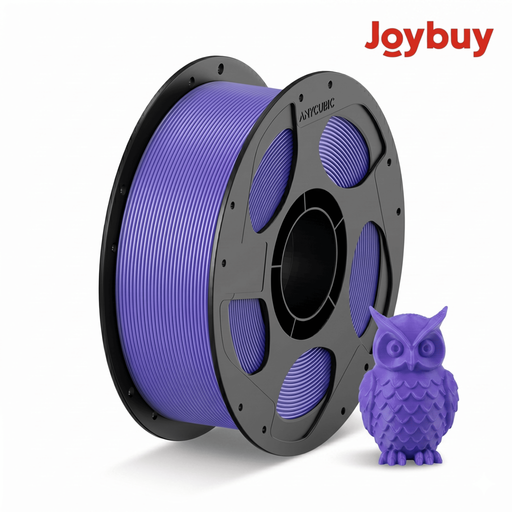
Key feature: A deep purple hue that adds a touch of originality, whether your creations are functional or decorative. It's the perfect way to blend aesthetics with the mechanical performance of PETG.
Highlights:
Who is it for? For creators who refuse to choose between the toughness of a functional part and a polished aesthetic with a unique colour.
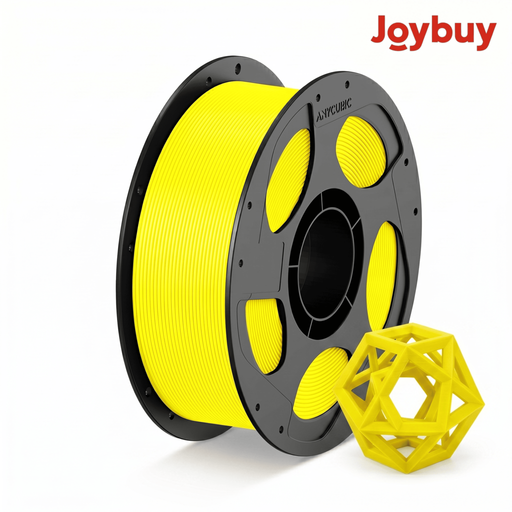
Key feature: This vibrant yellow is perfect for rapid prototyping. It makes it easy to distinguish the finest details and complex geometries. Like the orange, it's very practical for safety parts or assembly jigs.
Highlights:
Who is it for? For engineers, designers, and makers who need to rapidly prototype robust parts to validate their mechanical designs.
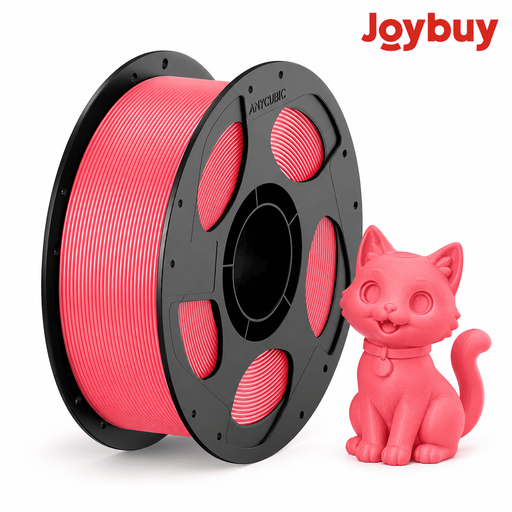
Key feature: An unconventional powder pink colour for such a technical material. Perfect for customising tools, creating accessories, or decorative objects designed to stand the test of time.
Highlights:
Who is it for? For those who want to make personalised items, gifts, or everyday accessories that are both beautiful and built to last.
PETG offers an excellent balance, but the world of 3D filaments is a vast playground filled with creative possibilities. If you're tempted by more adventurous options, like a glow-in-the-dark red filament, feel free to explore our dedicated category to find the perfect material to bring your wildest projects to life.
Although every printer may require slight adjustments, the basic settings recommended by Anycubic for its PETG are an excellent starting point:
We advise starting with these values and fine-tuning them by printing a temperature tower or other calibration models to find your perfect settings.
Yes, and the difference is significant on several key points. PETG is a far more shock-resistant filament than PLA, which is brittle. It also has better heat resistance (softening point around 70-80?°C compared to 55-60?°C for PLA) and excellent resistance to water and many chemicals. These properties make it the material of choice for mechanical parts and objects designed to last.
No, not at all. The vast majority of modern FDM 3D printers can print PETG, as long as they can reach 250?°C at the nozzle and have a heated bed. Of course, using Anycubic PETG filament on a printer from the same brand can make life easier thanks to pre-configured profiles and features like automatic filament recognition, but it is by no means a requirement.