
Livraison le jour même ou le lendemain

Qualité garantie

Débloquez vos offres de bienvenue: Livraison GRATUITE | Jusqu'à -80 % | 30 jours d'essai gratuits à JoyPlus
Téléchargez l'application
Are you looking for antioxidant food supplements to support your diet, boost your energy or take care of your everyday wellbeing? With quercetin, resveratrol, astaxanthin, organic spirulina, liposomal glutathione and vitamins, it’s easy to feel overwhelmed.
Packaging often highlights impressive dosages or “advanced” formulas. But a high number alone doesn’t tell you whether a product truly matches your needs and lifestyle. Here are the criteria to check before you order, along with a selection of options suited to different profiles.
Some products list the total weight of an extract or complex without specifying the amount of the active compound. For milk thistle, for example, you need to distinguish the extract weight from its silymarin content. The same logic applies to omega-3s: check the EPA and DHA amounts separately, rather than relying on the total oil weight alone.
For a resveratrol formula, also look at the form used, particularly trans-resveratrol, and the extract standardisation if stated.
A course of supplements quickly loses its practical appeal if it requires multiple doses a day, strong-tasting powders or complicated storage conditions. The number of capsules on the bottle should always be considered alongside the recommended daily dose.
A bottle of 180 capsules doesn’t necessarily mean six months’ supply – it all depends on how many capsules you need to take each day.
A food supplement is not a substitute for a varied diet or medical advice. Anyone on medication, pregnant or breastfeeding women, and adults with a medical condition should consult a healthcare professional before starting a course.
Also remember to check for allergens. A vegan formula isn’t automatically gluten-free or lactose-free, even if many products combine these features. Krill oil, for instance, comes from seafood and isn’t suitable for vegetarian or vegan diets.
The ingredients list should clearly state the main ingredient, its quantity per dose and the recommended daily dose. To compare different products, always use the same unit: per capsule, per serving or per day.
Here are some useful benchmarks:
Bioavailability depends on many factors: chemical form, matrix, excipients and whether it’s taken with or without food. Fat-soluble ingredients are generally recommended with a meal containing fats, but the manufacturer’s instructions should always take priority.
A liposomal system may be presented as a solution designed to aid absorption. However, this is a formulation feature, not a guarantee of effectiveness for every individual.
In France and the European Union, check for the ingredients list, the daily dose, warnings, storage conditions and the identity of the manufacturer or the person responsible within the European Union.
A GMP mark or organic certification can provide some traceability, but it doesn’t determine whether the product is right for you. For organic spirulina or chlorella, also check the origin, certification and available information on testing, particularly for contaminants.
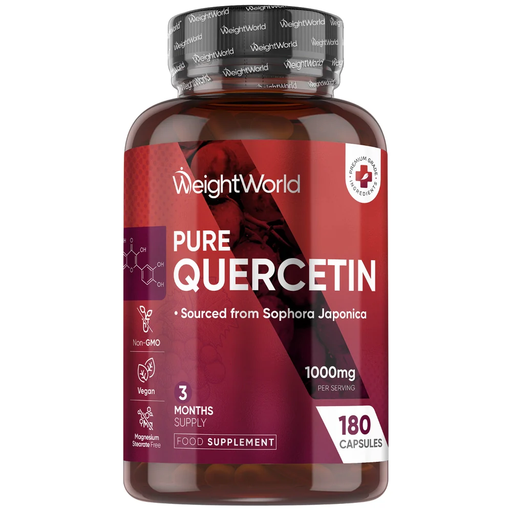
Why this suits this profile: A single-ingredient formula lets you start simply, with 1,000 mg of quercetin per two-capsule serving. The bottle contains 90 servings.
The amount is stated per serving and the ingredients list is short, making it easy to compare with other products.
180 capsules, a vegan formula, gluten-free and lactose-free. The capsules can be opened as per the manufacturer’s instructions.
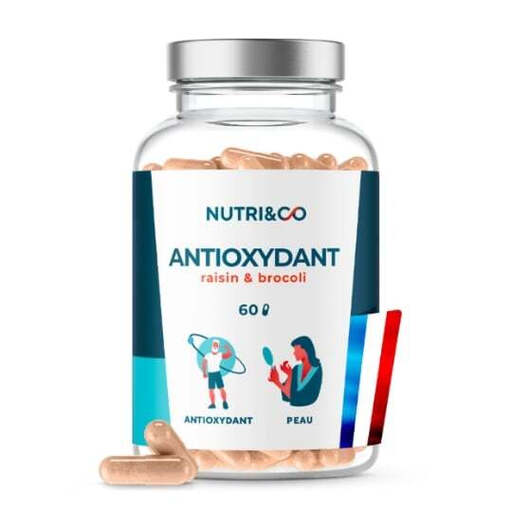
Why this suits this profile: This formula combines grape seed extract, broccoli seed extract, coenzyme Q10 and vitamin C, in a two-capsule daily routine.
The amounts of OPCs, sulforaphane, coenzyme Q10 and vitamin C are detailed, rather than just showing a total weight.
Vegan HPMC capsules, vitamin C stated at 15% of the NRV per dose, and a formula made by a French brand.
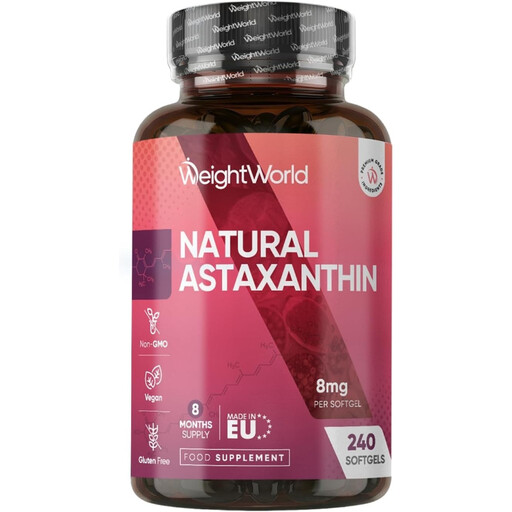
Why this suits this profile: A single daily dose and 240 softgels let you establish a routine lasting several months.
The dose is clearly stated per softgel and the bottle indicates 240 doses, making it easy to estimate the cost per day.
8 mg of natural astaxanthin per softgel, sourced from *Haematococcus pluvialis*, with a vegan formula, gluten-free and lactose-free.
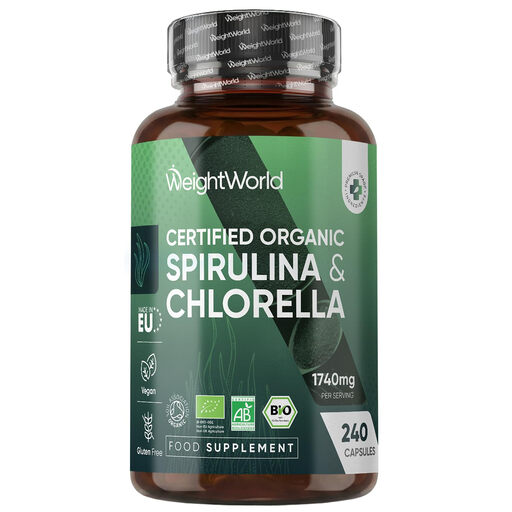
Why this suits this profile: The combination of two organic algae is ideal for those looking for a vegan supplement in easy-to-carry capsules.
The product page separates the amounts of spirulina and chlorella per three-capsule serving, for a stated duration of 80 days.
870 mg of each algae per serving, Soil Association organic certification, no additives or GMOs.
We’ve compiled a complete, real-time updated selection of products that meet these strict criteria and European safety requirements.
For a targeted formula, you can compare quercetin, resveratrol and astaxanthin. If you prefer a combined formula, look at associations of liposomal glutathione, alpha-lipoic acid and vitamin C.
Vitamin E is associated with the protection of cells from oxidative stress under the conditions set out by European regulations. Magnesium, on the other hand, addresses needs related to fatigue, muscle function or energy metabolism, where authorised claims are stated on the labelling.
Organic spirulina, chlorella, milk thistle and omega-3s serve different purposes. It’s therefore better to start by defining a priority, rather than stacking several products containing similar ingredients.
It depends entirely on the product and the recommended daily dose. Some bottles cover 20 days, while others are designed for three, six or eight months. Check the stated serving size and don’t extend the course beyond the manufacturer’s recommendations without consulting a professional.
It’s sometimes possible, depending on the formulas, but combining them can lead to an overlap of ingredients or doses. Be particularly careful with formulas that contain vitamin E, vitamin C, resveratrol, quercetin or alpha-lipoic acid together. If you’re on medication or have a health condition, seek advice from a professional.
No. The terms “vegan”, “organic” and “gluten-free” correspond to different criteria. Check each claim on the label and product page before ordering.