
Livraison le jour même ou le lendemain

Qualité garantie

Débloquez vos offres de bienvenue: Livraison GRATUITE | Jusqu'à -80 % | 30 jours d'essai gratuits à JoyPlus
Téléchargez l'application
The antibacterial products aisle can be overwhelming. Between marketing promises and actual effectiveness, it's hard to find the product that truly fits your needs. The result: purchases that are often unsuitable, not cost-effective, or even disappointing. As product experts, our mission is to help you navigate the options by decoding labels so you can make a truly informed choice.
To prevent disappointment, here are the three most common pitfalls to sidestep.
To avoid falling into these traps, here are the key points that define a product's true effectiveness.
A disinfectant's effectiveness is based on standardised tests. For a comprehensive multi-surface disinfectant, here are the standards to look for on the label:
The contact time, which is essential to guarantee the product's action, is another crucial piece of information often specified right next to the standard.
The choice of formula depends on your surfaces and preferences.
Each format meets a specific need:
To put theory into practice, here is our selection of products suited for different needs.
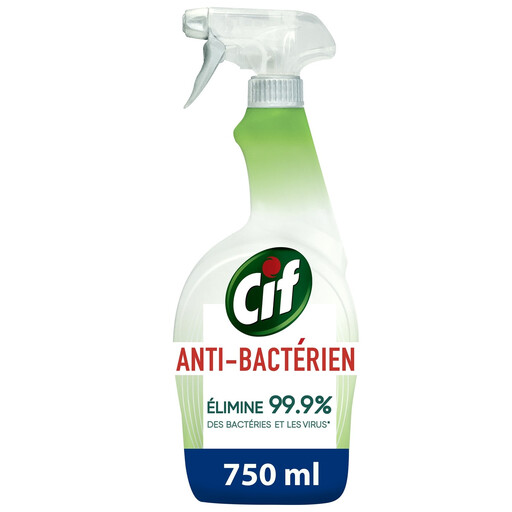
Why we recommend it: This spray is perfect for daily use throughout the house. Its formula is safe for food contact surfaces (after rinsing), a key criterion for cleaning high chairs, worktops, and tables where children eat.
It clears up the "natural vs. disinfectant" confusion: its bleach-free formula clearly states its bactericidal and virucidal efficacy, offering an excellent balance between performance and user safety.
Versatility: one product for multiple surfaces, from the kitchen to the bathroom. Its active agent is benzalkonium chloride.

Why we recommend it: For those who regularly clean large areas (homes, offices, shops), this 5 L format offers unbeatable value. It cleans and disinfects in a single step, for maximum time and effort savings.
It solves the problem of an unsuitable format by offering a highly economical solution for heavy use. It also clarifies the "99.9%" claim by displaying its compliance with standards EN 13697, EN 1650, and EN 14476.
Professional-grade compliance: suitable for food contact surfaces and can be integrated into HACCP procedures. Bleach-free formula.
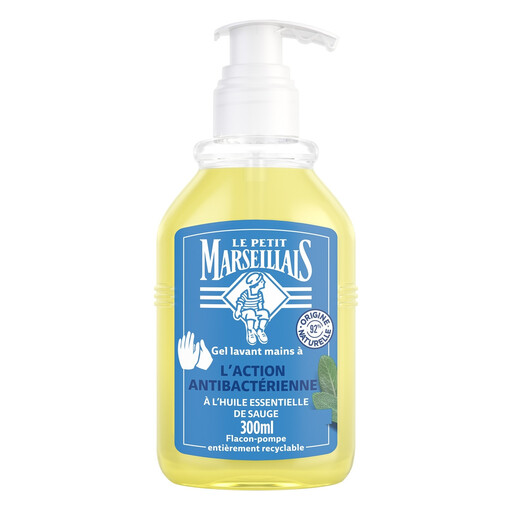
Why we recommend it: This antibacterial soap is specially formulated for frequent hand washing. It combines a purifying action with ingredients like sage essential oil and mandarin extract, while keeping skin soft.
It avoids the pitfall of harsh formulas thanks to its plant-based cleansing base, with no dyes or animal fats. It's an excellent alternative to purely chemical hand sanitisers.
A gentle formula designed for frequent use. The formula is biodegradable, and the pump bottle is convenient for daily use at home.
Discover our full selection of products that meet our selection criteria and current safety standards.
1. What is the difference between a cleaner and a disinfectant? A cleaner is used to remove dirt, grease, and impurities from surfaces. A disinfectant, on the other hand, contains biocidal agents designed to kill microorganisms like bacteria, viruses, or fungi. Many products, like a disinfectant cleaning spray, combine both actions.
2. Is a bleach-free antibacterial product really effective? Yes, absolutely. A disinfectant's effectiveness doesn't solely depend on the presence of bleach. Bleach-free products use other active substances (like benzalkonium chloride or hydrogen peroxide) whose effectiveness is validated by the same European standards (EN 1276, EN 14476, etc.). They are an excellent alternative, often less harsh on surfaces and with a more subtle scent.
3. How long should you leave a disinfectant product to work? Contact time is crucial and varies depending on the product and the targeted microorganism. It is always indicated on the label (e.g., "leave on for 5 minutes for bactericidal action"). For optimal disinfection, it's essential to respect this duration before wiping or rinsing the surface.