
Livraison le jour même ou le lendemain

Qualité garantie

Débloquez vos offres de bienvenue: Livraison GRATUITE | Jusqu'à -80 % | 30 jours d'essai gratuits à JoyPlus
Téléchargez l'application
Looking for an anti-stress food supplement to help you get through a busy period, promote relaxation or simply look after your everyday wellbeing? With promises of ‘immediate calm’, dosages expressed as plant equivalents and appealing formats, comparing products requires a little method.
A food supplement is no substitute for medical advice or appropriate care in cases of persistent anxiety. However, a considered choice can help you find a formula that fits your habits, diet and intended duration of use.
A label may state ‘1,500 mg of ashwagandha’ when the capsule actually contains 125 mg of concentrated extract, equivalent to 1,500 mg of root powder. These two values are not directly comparable.
Always check:
Ashwagandha or 5-HTP gummies are easy to incorporate into a routine. However, they may contain sugar, glucose syrup or sweeteners. This format may therefore not suit people looking to limit sugary products.
Tablets and capsules are generally easier to dose, but their size and the number of daily doses may put some people off. The best choice is mainly the one you can take regularly.
‘Natural’ does not mean suitable for every situation. Ashwagandha, 5-HTP, lemon balm and ginkgo may require particular precautions depending on your medication and state of health.
Ask a doctor or pharmacist for advice if you are pregnant or breastfeeding, have a chronic condition, take sedative or psychiatric medication, or have a history of liver problems. Also follow the stated dose and avoid combining several formulas containing similar ingredients without checking your total intake.
For an anti-stress ashwagandha formula, look for the botanical name Withania somnifera, the part used — generally the root — and the amount of extract. The KSM-66 designation identifies an extract by its ingredient brand; it does not remove the need to check the dosage, standardisation and usage recommendations.
A relaxation L-theanine formula may suit people who prefer an amino acid naturally found in green tea. The product information should state the amount per capsule and specify whether complementary ingredients, such as lemon balm, are included.
5-HTP calls for greater caution. If you are looking for a product combining 5-HTP and sleep, read the warnings carefully and ask a healthcare professional for advice if you are undergoing treatment, particularly if you take medication that affects mood or the nervous system.
Compare the number of doses, not just the number of tablets. A bottle of 180 units may last three, six or nine months depending on the dosage.
Also check:
A simple formula taken just once a day will often be easier to follow than a product requiring several doses. Even if its displayed price seems less attractive, being able to take it consistently can make all the difference.
If you are looking for a vegan food supplement, check the composition of the capsule — HPMC or gelatine — as well as the excipients. Claims such as gluten-free, lactose-free, GMO-free or free from declared allergens may meet specific needs, but they should be examined in detail.
For magnesium for tiredness, the form used also matters. The product featured below contains magnesium oxide derived from sea salt and vitamin B6. Under the nutrition claims authorised in the European Union, magnesium and vitamin B6 contribute, among other things, to reducing tiredness and supporting normal nervous system function. This is not a claim to treat stress or anxiety.
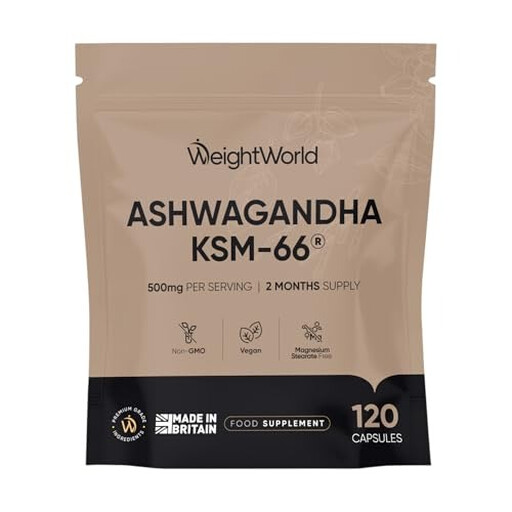
Why this choice suits this profile : With two capsules a day, a bottle of 120 units and a formula combining ashwagandha, vitamin B6 and black pepper extract, this product makes it easy to start a clear, manageable routine.
The product information specifies the 10:1 ratio, standardisation at 5 % withanolides and the two-capsule dose, rather than highlighting only an equivalent weight.
Vegan formula, gluten- and lactose-free; 120 capsules, providing 60 servings at the recommended dosage.
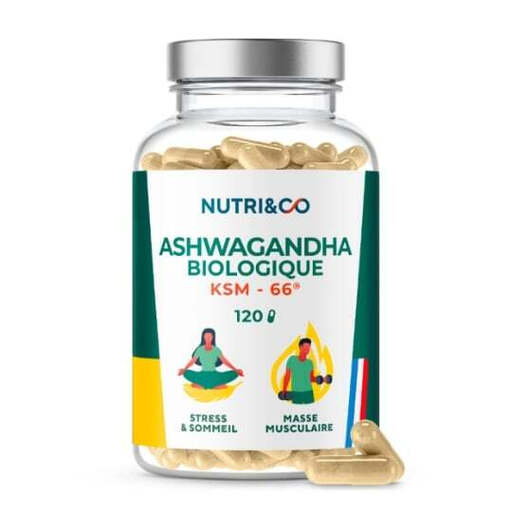
Why this choice suits this profile : This option is aimed at people who value organic sourcing, a short ingredient list and an adjustable dosage of one to two capsules a day.
The quantity is stated per two-capsule dose: 600 mg of organic KSM-66 extract, including 30 mg of withanolides, without focusing solely on the powder equivalent.
Organic root extract, vegan HPMC capsules and no titanium dioxide.
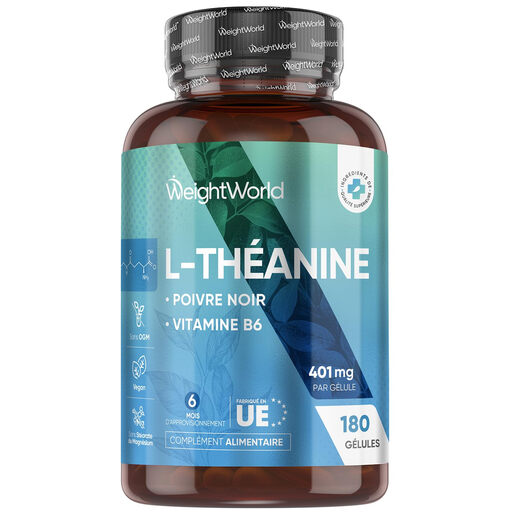
Why this choice suits this profile : One capsule a day and a bottle of 180 units will suit people who want to establish a long-term routine, with no particular taste.
The product information distinguishes L-theanine from Camellia sinensis from lemon balm extract. However, check the nutritional table, which states 401 mg per capsule despite the 500 mg product name.
Vegan format, gluten- and lactose-free, with 180 capsules and a formula free from declared allergens.
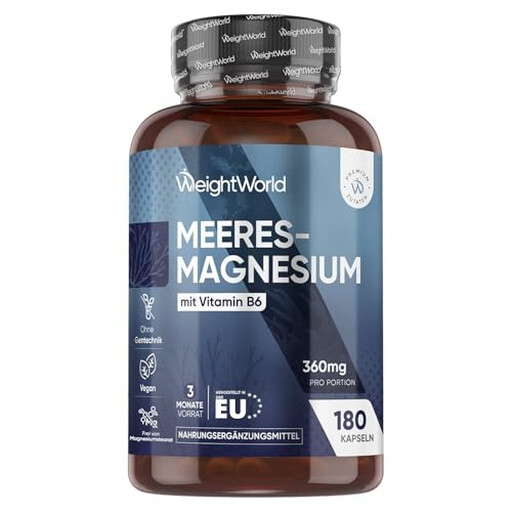
Why this choice suits this profile : This formula is aimed at adults who want to target their magnesium and vitamin B6 intake as part of a three-month routine, particularly during a period of perceived tiredness.
The label clearly states 360 mg of magnesium and 2 mg of vitamin B6 per two capsules. The form used is magnesium oxide derived from sea salt.
180 capsules, vegan formula, sugar-free, gluten- and lactose-free, with a recommended dose taken with a meal.
We have compiled a complete, real-time updated list of products that meet these strict selection criteria and European safety regulations.
The duration depends on the formula, dosage and instructions on the packaging. The products featured cover periods ranging from around one month to six months. Use them in accordance with the manufacturer’s recommendations, then assess how useful they are as part of your routine. If stress persists, becomes severe or is accompanied by physical symptoms, speak to a healthcare professional.
It is better to avoid taking multiple products without a good reason. Compare the ingredients, check your combined doses and ask a pharmacist for advice, particularly if you are already receiving treatment. For ashwagandha, some product information advises against use in cases of liver disease, during pregnancy or breastfeeding, and alongside sedatives or psychiatric medication.
The format alone does not indicate greater effectiveness. Ashwagandha or 5-HTP gummies may make them easier to take without water, while capsules generally offer a more compact and less sugary composition. Above all, compare the amount of active ingredient per serving, the excipients, how often they need to be taken and how well they fit your routine.