
Livraison le jour même ou le lendemain

Qualité garantie

Débloquez vos offres de bienvenue: Livraison GRATUITE | Jusqu'à -80 % | 30 jours d'essai gratuits à JoyPlus
Téléchargez l'application
Black marks in the grout, a lingering smell after a shower, peeling paint or condensation on the walls: anti-mould products for the bathroom don’t all solve the same problem. A cleaner can remove a visible stain, but it won’t repair grout that has become porous. Similarly, a moisture absorber can help reduce condensation without making up for poor ventilation.
So before you buy, start by identifying what you need: to clean, to renovate the grout, to reduce humidity or to make the shower safer.
An anti-mould cleaner is enough when the surface is still sound and the marks are only localised. However, silicone sealant that is peeling, cracking or has ingrained stains can let water through. In that case, it’s better to renovate or replace the sanitary sealant rather than keep spraying.
This label doesn’t always tell you which surfaces are compatible, the drying time or the method of application. A product designed for tiles might be unsuitable for acrylic, plastic or marble. Always check the instructions, the list of accepted materials and any usage restrictions.
Even the best product will soon show its limits if the bathroom stays humid for hours after every shower. Ventilation, mechanical extraction, drying the walls and enough space between furniture and walls all help with mould prevention. In a poorly ventilated room, a moisture absorber can support these good habits, but it will never replace fixing a leak or a faulty ventilation system.
The sanitary sealants shown here adhere to enamel, porcelain, glass, stoneware, ceramic tiles and some worktops. However, certain Rubson tubes are not suitable for synthetic materials, acrylic, Perspex, polyethylene, polypropylene or PTFE. This check is essential before any application.
The surface must be clean, dry, degreased and free from soap residue. To completely redo a seal, first remove the old crumbly bead before applying the new one. For a simple renovation, only use a solution designed to cover an existing seal.
A 50 ml tube is suitable for a small repair and can be used without a gun. A 280 ml cartridge usually needs a sealant gun, but provides enough material for several joints. Products containing bleach or concentrated cleaning agents require you to wear gloves, ensure good ventilation and follow the instructions on the label carefully. Never mix a chlorine-based product with an acid or another cleaner – dangerous fumes could be released.
To minimise risks, store these products out of reach of children and pets, avoid any contact with the eyes, and rinse surfaces according to the manufacturer’s recommendations.
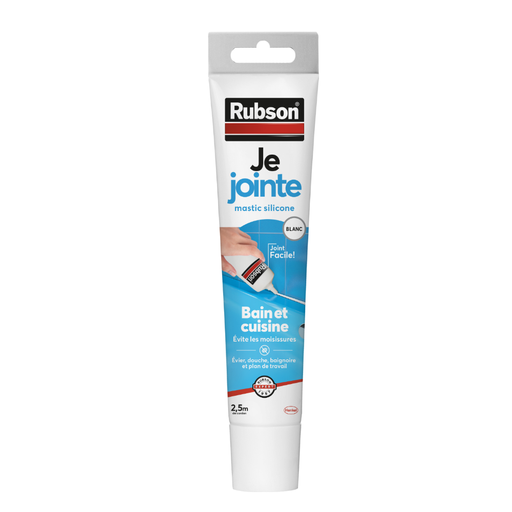
Why this choice suits this profile: its small, ready-to-use format is ideal for one-off repairs around a basin, bath or sink, without needing to buy a gun.
The tube stops you overbuying for a small area and clearly states the incompatible surfaces, including acrylic and certain plastics.
Direct application, 50 ml format and a white finish suitable for sanitary seals.
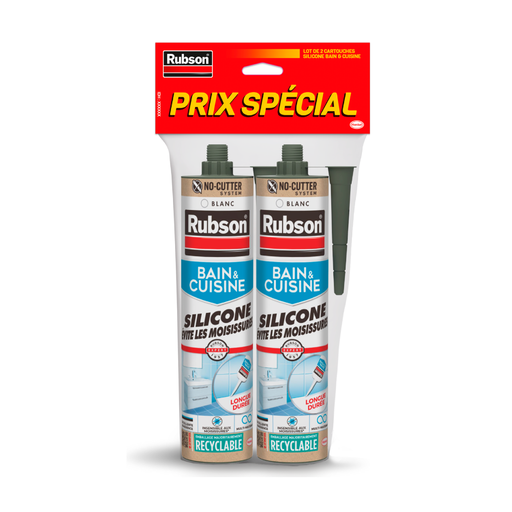
Why this choice suits this profile: the pack of two 280 ml cartridges is ideal for a larger renovation project, in both the bathroom and the kitchen.
The pre-cut nozzle system reduces handling, while the list of compatible materials prevents risky applications.
Elastomeric silicone, manufacturer-stated antifungal protection and a total volume of 560 ml.
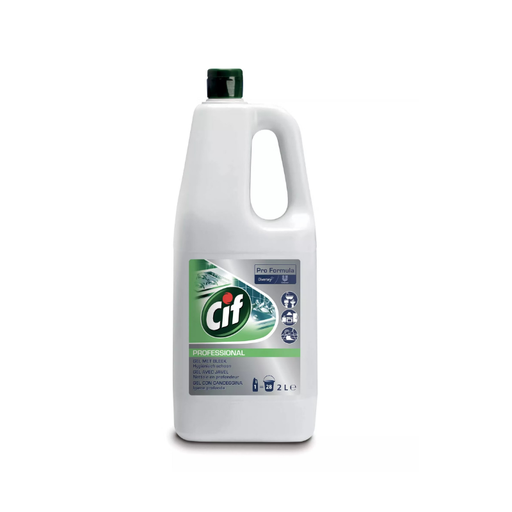
Why this choice suits this profile: its 2-litre pack is designed for households that regularly clean several washable surfaces in the bathroom and kitchen.
The gel texture clings to vertical surfaces, but the label warns of a corrosive risk and prohibits mixing with acids – safety remains the priority.
Ready-to-use gel, suitable for several water-resistant surfaces and dilution instructions provided for floors and walls.
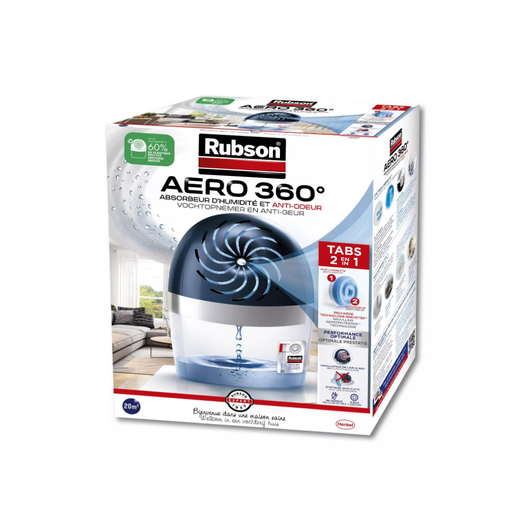
Why this choice suits this profile: its electricity-free operation is ideal for a bathroom, cupboard or small room where condensation keeps coming back.
The stated capacity of 20 m² and the refill replacement indicator let you tailor use to the size of the room.
Silent operation, 360° air circulation and a 450 g refill included.
We’ve put together a comprehensive, real-time updated selection of products that meet these strict criteria and the requirements of European safety regulations.
Start by checking whether the sealant is still flexible and properly attached. For a simple surface mark, an anti-mould cleaner may be enough. If the silicone is cracked, peeling or permanently stained, it’s better to redo it completely. A product like Rubson Re-New is designed to cover an existing seal, provided it is still sufficiently adhesive, clean and dry.
The drying time depends on the formula, the thickness of the bead, the temperature and the ambient humidity. Follow the time stated on the packaging and avoid any contact with water before the period is up. Good ventilation speeds up drying, but that doesn’t justify putting it back into use early.
It can reduce the ambient humidity in a room that matches its capacity, but it won’t fix a leak, an infiltration or a ventilation problem. Use it alongside regular maintenance, and have the cause of persistent condensation investigated.