
Livraison le jour même ou le lendemain

Qualité garantie

Débloquez vos offres de bienvenue: Livraison GRATUITE | Jusqu'à -80 % | 30 jours d'essai gratuits à JoyPlus
Téléchargez l'application
Sneezing when you wake up, a runny nose, or simply seeking a healthier sleep environment? You're not alone. Dust mites, those invisible occupants of our mattresses, sofas, and carpets, are the nemesis of many allergy sufferers. Faced with this scourge, the anti-mite vacuum is often presented as the miracle solution. However, the market is saturated with models making tempting promises, and it's easy to make the wrong choice.
Our editorial team's mission: to help you see things more clearly. Let's break down the pitfalls to avoid and the criteria that truly matter when choosing an effective device.
Marketing is full of claims designed to impress, but they are often misleading. Here are the 3 classic mistakes that lead to a regrettable purchase.
mattress vacuum, that defeats the purpose.For an effective solution against allergies, three technical parameters are non-negotiable. Be sure to check them before you head to the checkout.
A high-performance anti-mite vacuum does more than just suck. It combines three complementary actions for one clear goal: to eliminate bed mites and mites from other textiles.
sofa vacuum.The quality of filtration is paramount. A good device must capture the finest particles (smaller than 0.3 microns) to offer a true dust mite allergy solution. The most effective systems combine several stages of filtration:
An effective device must also be practical.
Rather than an endless list, here is our targeted selection, designed for different needs and budgets, and based on the criteria we've just established.
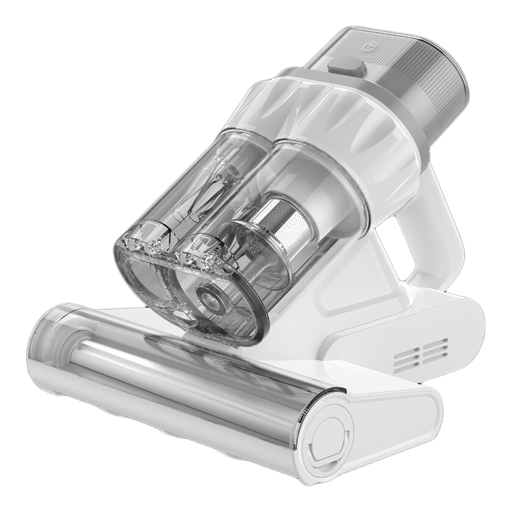
The Editor's Verdict: This is the ideal entry point. It checks all the essential boxes (suction, tapping, UV, hot air) for a deep clean without breaking the bank.
Far from being a simple UV gadget, it combines real suction power (12,000 Pa), a 72,000 taps/min beating function, and 65°C hot air. It thus avoids the classic pitfalls of an underpowered device.
The duo of hot air (65°C) and UV light ensures a dual sanitising action: it reduces humidity (the #1 enemy) and neutralises allergens on the surface.
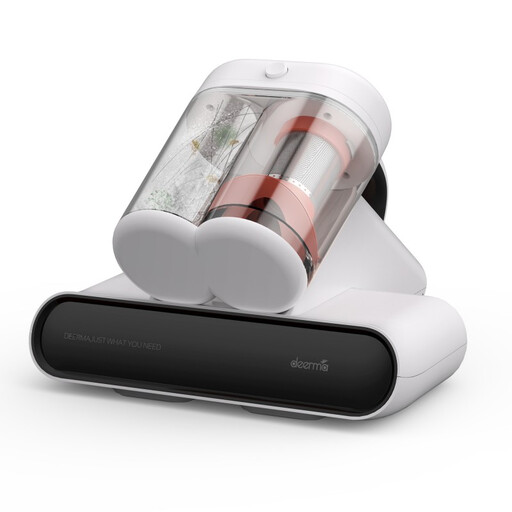
The Editor's Verdict: With its comfortable power (13 kPa) and its ingenious dual-cup system, this is the perfect ally for households where hygiene is non-negotiable (severe allergy sufferers, young children).
It avoids the trap of losing suction. Its dual-cup system separates filtration and collection, which prevents the filter from clogging and guarantees constant power from start to finish.
Its combined action is formidable: the 13 kPa suction dislodges mites, while the 60°C hot air dries out the fibres to prevent their return.
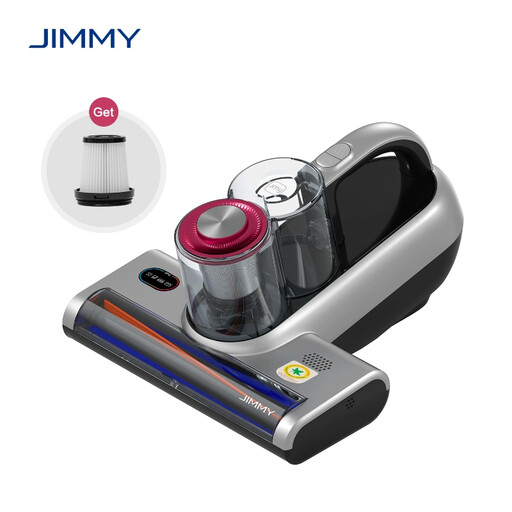
The Editor's Verdict: This is the model for those who love visible performance and "smart" features. Its dust sensor is a real plus for knowing when the job is truly done. It's the high-tech device in our selection.
No more cleaning "blind." Its smart dust sensor displays the dirt level in real time, telling you exactly when the area is clean. No more guesswork, just proof.
The winning trio: a smart sensor for efficiency, a wide suction inlet (245 mm) for speed, and tech bonuses (ultrasound, negative ions) for a complete treatment.
Discover our full selection of devices that meet our performance criteria and current safety standards.
For allergy sufferers, the ideal frequency is once or twice a week to keep allergen levels as low as possible. For preventive maintenance, a pass every 15 days is sufficient to limit their proliferation.
Yes, and the difference is technical. An anti-mite vacuum incorporates a high-frequency tapping function (rotating brush or vibrating pads) that beats the fabric to dislodge mites, which a canister vacuum does not do. The action of the UV-C lamp and hot air adds a sanitising treatment that conventional models simply do not offer.
Absolutely. Their playground isn't limited to the mattress. Sofas, armchairs, carpets, and even curtains... Using a sofa vacuum on all your home textiles is the best strategy to reduce the allergen load throughout the entire house.