
Livraison le jour même ou le lendemain

Qualité garantie

Débloquez vos offres de bienvenue: Livraison GRATUITE | Jusqu'à -80 % | 30 jours d'essai gratuits à JoyPlus
Téléchargez l'application
Sneezing when you wake up, itching, a stuffy nose?? If this trio sounds familiar, the culprits are likely already in your home: dust mites, the microscopic creatures that love our bedding and upholstery. Faced with this invisible menace, buying an anti-dust mite vacuum seems like the obvious solution. The problem?is that the market is saturated with products making dazzling promises that ultimately disappoint once you get them home.
As our editorial team's Home Tech expert, my mission is to help you separate fact from fiction. Let's break down the pitfalls to avoid and the criteria that really matter, so you can make the right choice for your needs and budget.
Many people end up with an ineffective device, lured in by slick marketing claims. Here are the key points to watch out for?:
For a clean that goes beyond the surface and for healthier air, here are the three features you should never compromise on.
The number one criterion for eliminating dust mites from your bed is the device's ability to agitate the mattress fibres. Dust mites cling to them with surprising force. One or more rotating brushes, ideally supplemented by a tapping system (vibrations), are therefore essential to dislodge them and guide them towards the suction inlet. A model with a dual rotating brush provides more intense agitation and wider coverage—a real plus for thick mattresses or sofas where pet hair is deeply embedded.
A vacuum for allergy sufferers worthy of the name must be equipped with a HEPA (High Efficiency Particulate Air) filter. This standard guarantees that at least 99.97% of particles as small as 0.3 microns are captured. In practical terms, dust mite allergens, pollen, pet dander, and other microscopic undesirables are trapped inside the device instead of being released back into the air you breathe. Be sure to check for this certification and how easy the filter is to maintain.
UV-C lamps and ultrasound are not miracle solutions, but they become real assets when combined with good mechanical action and HEPA filtration.
Rather than an endless list, we've selected devices that meet specific needs, based on the performance criteria we've just discussed.

Why we recommend it : This device is a specialist, designed specifically for deep cleaning mattresses and sofas. It tackles dust mites and other allergens at the source, right where they thrive.
It doesn't rely on a single selling point. It combines a dual rotating brush for mechanical action, cyclonic filtration with an MIF filter (a high-performance alternative to HEPA), a UV lamp, and ultrasound for a 360° approach.
Its intelligent dust sensor adjusts suction power in real-time based on the dirt level, optimising both efficiency and runtime. The Allergy UK certification is a true seal of approval.
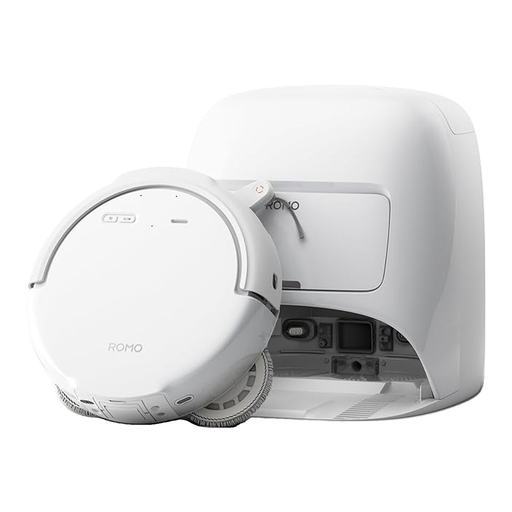
Why we recommend it : For households with pets, the war against hair and allergens on floors is a daily battle. This robot handles it autonomously, reducing the overall allergen load in your home.
It doesn't pretend to be a mattress cleaner. Its strength lies in powerful and intelligent floor cleaning, thanks in particular to its anti-tangle brush that tackles even the worst clumps of hair.
Its self-sufficiency is stunning : the station automatically washes and dries the mop, requiring intervention only every 200 days (according to the manufacturer). A dream for overwhelmed pet owners.

Why we recommend it : In a busy household, small accidents (spilled drinks, muddy footprints) are a part of daily life. This device vacuums and mops hard floors in a single pass, providing a complete hygiene solution that perfectly complements an anti-dust mite vacuum.
It doesn't claim to hunt dust mites. Its specialty is hard floors, which it cleans and sanitises in one pass using its electrolysed water sterilisation function—no chemicals required.
Its self-cleaning system, which uses 70°C hot water for the brushes followed by hot air drying, is a real game-changer. It prevents the bad odours and mould that can develop inside the device—a common flaw in floor washers.
Discover our full selection of devices tested and approved by our editors, all meeting safety and efficiency standards.
How often should I use an anti-dust mite vacuum on a mattress?? For allergy sufferers, a weekly pass is an excellent habit. For general maintenance, once every two weeks or once a month is enough to maintain good hygiene and limit the proliferation of dust mites.
Is a UV vacuum really effective against dust mites?? Its effectiveness is real, but limited. The UV lamp neutralises microorganisms on the surface, provided you let the device work on the same spot for several seconds. It's a good supplement, but it's no substitute for mechanical action (brushes) and HEPA filtration, which physically remove dust mites and their waste from the fabric's fibres.
Can this type of device be used on a sofa or rugs?? Yes, absolutely. These vacuums are specifically designed for all upholstery fabrics. They are perfect for deep cleaning sofas, armchairs, cushions, rugs, and even heavy curtains—all of which are breeding grounds for dust mites and allergens.