
Livraison le jour même ou le lendemain

Qualité garantie

Débloquez vos offres de bienvenue: Livraison GRATUITE | Jusqu'à -80 % | 30 jours d'essai gratuits à JoyPlus
Téléchargez l'application
An anti-dark spot face cream can address several needs: visibly reducing the appearance of brown spots, supporting a routine for acne marks, hydrating dull skin, or protecting your complexion from UV rays. However, not all formulas target the same issue.
Marketing language doesn't always make the choice easier. The term "radiance" doesn't necessarily mean the product works on pigmentation. Similarly, an anti-dark spot cream without sun protection won't shield your skin from daily UV exposure. Here are the criteria to consider before buying a brightening face cream.
A treatment can brighten the complexion thanks to hydrating agents, pigments, or a light-reflecting texture, without actually being formulated to reduce the appearance of dark spots. Check the ingredient list and look specifically for niacinamide, vitamin C derivatives, tranexamic acid, or alpha-arbutin, depending on the formula.
These active ingredients are commonly used to promote a more even skin tone. However, their presence doesn't guarantee the same result for everyone.
An anti-dark spot routine applied in the evening doesn't replace UV protection during the day. The sun can make pigmentation irregularities more noticeable. An SPF anti-dark spot cream can therefore simplify your morning routine, provided you apply enough and reapply during prolonged exposure.
Bear in mind: the presence of SPF in a day cream doesn't automatically make it a complete sun protection product, regardless of the circumstances.
Combining vitamin C, exfoliating acids, retinoids, and several corrective treatments can increase the risk of irritation, especially on sensitive skin. Introduce one new product at a time, test it on a small area, and stop using it if you experience persistent redness, itching, or a burning sensation.
The stated concentration should be interpreted with caution: a formula with more active ingredients isn't necessarily more effective or more comfortable for your skin.
Dry or dehydrated skin may prefer a hydrating anti-dark spot treatment containing glycerin, hyaluronic acid, shea butter, or ceramides. Combination to oily skin may be better suited to a lightweight, non-greasy gel-cream texture.
If you have sensitive skin, check for the presence of fragrance, essential oils, denatured alcohol, or exfoliating acids. The term "hypoallergenic" doesn't eliminate the risk of an individual reaction, so reading the ingredients list is still essential.
Start by determining what you're looking for:
Use the product according to the instructions on its packaging. In the morning, apply a suitable sun protection if the cream doesn't contain one, or if your level of exposure warrants it.
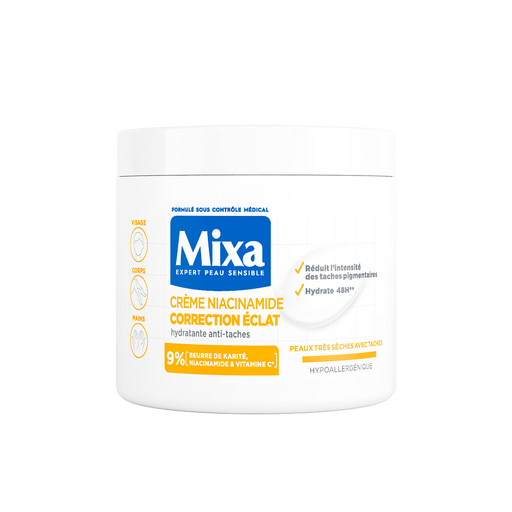
Why this choice suits this profile: Its large format is suitable for regular use on the face, hands and body, according to the manufacturer's instructions. The formula contains 9% niacinamide, glycerin, shea butter and a vitamin C derivative.
The format and detailed composition allow you to check the active ingredients present, rather than relying solely on a radiance promise.
Claimed hydration for up to 48 hours, hypoallergenic formula and versatile use.
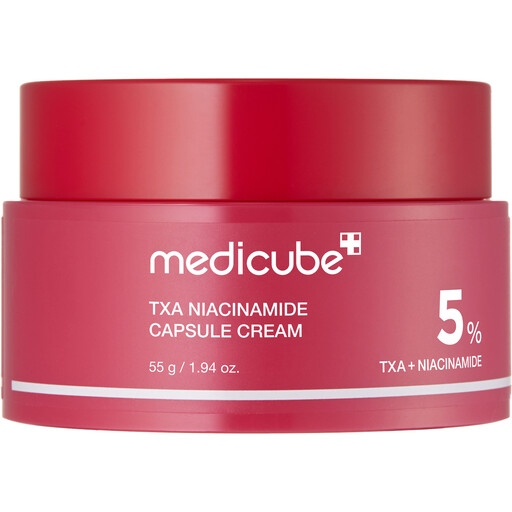
Why this choice suits this profile: Its capsule texture, which melts on contact with the skin, appeals to those who enjoy more elaborate routines and formulas combining niacinamide, tranexamic acid and alpha-arbutin.
The composition highlights several active ingredients and specifies that the product is applied as the final step, making it easier to follow a structured routine without multiplying treatments.
TXA-niacinamide-alpha-arbutin combination, hyaluronic acid in several forms and ceramide NP.
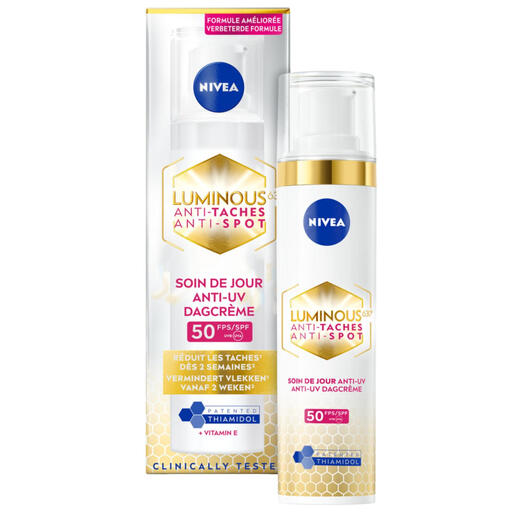
Why this choice suits this profile: This day cream combines a dark spot treatment with SPF50 protection. It can therefore simplify the routine for those who spend a lot of time outdoors or want to minimise the number of steps in the morning.
The level of protection is clearly stated. It's still essential to use the recommended amount and reapply during prolonged exposure.
SPF50, hyaluronic acid, vitamin E and a texture described as lightweight and mattifying.
We've put together a comprehensive, real-time updated selection of products that meet these strict criteria, while complying with European safety regulations.
For acne marks, avoid applying an exfoliating treatment to an open lesion or irritated area. A spot that changes appearance rapidly, bleeds, or persists should be checked by a doctor.
Opt for a short, hydrating formula without a combination of several exfoliating active ingredients. Check for the possible presence of fragrance and do a patch test on a small area before applying the product to your entire face. A texture containing glycerin, panthenol, or ceramides can improve comfort, without guaranteeing the absence of a reaction.
The duration depends on the formula, how regularly you apply it, and your sun exposure. Follow the usage period indicated on the packaging and monitor your skin's tolerance. The timeframes stated by a brand apply to its own product and should not be taken as a universal promise.
It can contribute to daily protection if its SPF level and usage conditions match your situation. For prolonged exposure, swimming, or sweating, a dedicated sunscreen that is regularly reapplied is generally more suitable.