
Same-day & Next-day Delivery

Quality Guaranteed

Unlock Your Welcome Offers: FREE Delivery | Up to 80% OFF | Free 30-day JoyPlus trial
Download the APP
Choosing an anthracite outdoor planter might seem simple. But who hasn't seen a sturdy-looking pot crack at the first frost, or its colour fade to a dull grey after just one summer? Behind the modern aesthetic and the promise of durability, there are often flaws that come at a high cost. As the head of product selection at Joybuy, my mission is to decode the labels for you and help you sidestep these marketing traps to make an informed and truly sustainable choice.
Before you decide, let's review the two most common mistakes made when buying an outdoor planter.
To avoid these disappointments, rely on objective technical specifications rather than marketing claims. Here are the three points you must check.
The term "plastic" is far too vague. For outdoor use, opt for planters made from high-quality polymers, often derived from recycled plastic. These materials are specifically formulated to guarantee heavy-duty resistance:
A good outdoor planter must adapt to the weather and the plant's needs. Two features should be a priority:
A large planter is ideal for shrubs or voluminous floral arrangements, but its weight can quickly become an issue. Once filled with soil and plants, moving it becomes a Herculean task. For large sizes (over 50 cm in diameter), a planter on wheels isn't a luxury, but a necessity for cleaning the patio, rearranging your space, or moving plants to shelter.
Rather than an endless list, we've matched specific models to user profiles to help you find the one that truly meets your needs.
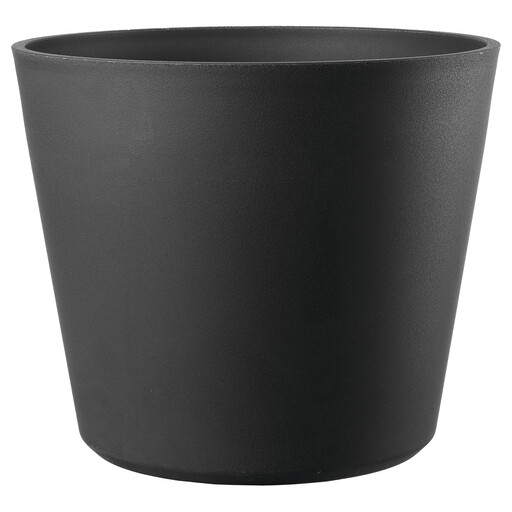
Why it's a perfect match: With its 78 cm diameter, this anthracite planter is perfect for housing large shrubs and adding structure to a patio or garden. Its impressive size makes it a true decorative element.
It directly solves the weight problem of large containers thanks to its integrated casters, which make moving it effortless. No more back strain from trying to shift a 100+ kg pot.
Mobility and large volume. Made from recycled material that is frost- and UV-resistant for maximum durability.
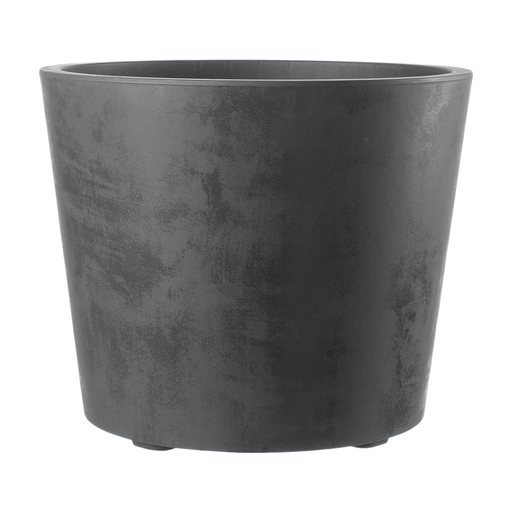
Why it's a perfect match: This planter combines all the best features: a generous size, a water reservoir for optimised watering, casters for mobility, and construction from recycled plastic. It's the all-in-one solution.
It tackles the drainage and watering trap head-on. The water reservoir prevents water stress, and the removable plug ensures perfect drainage during heavy rain, protecting the roots.
A self-watering planter system and casters for minimal maintenance and thriving plants.
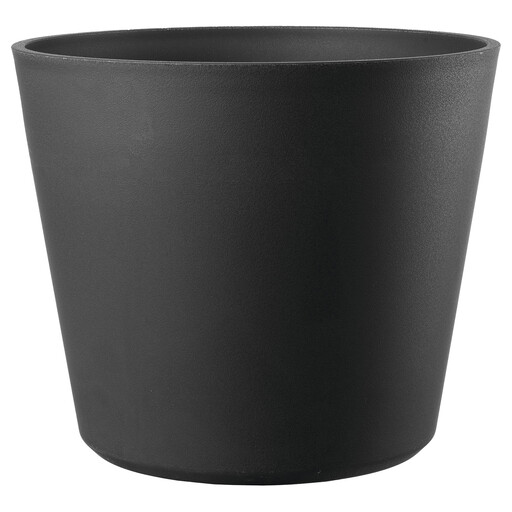
Why it's a perfect match: Its 38 cm size is ideal for balconies and small patios, offering a touch of contemporary design without cluttering the space. It's perfect for medium-sized plants, herbs, or annual flowers.
It sidesteps the "false durability" trap. Made with the same high-quality materials (frost- and UV-resistant) as the larger models, it guarantees a long-lasting investment, even at a more accessible price point.
An excellent balance of design, durability, and a compact footprint. The removable plug offers indoor/outdoor flexibility.
To complete your setup, we've curated a selection of containers that meet our strictest criteria for design and quality.
If you choose a frost-resistant planter like those in the Deroma range, preparation is minimal. Simply ensure the drainage hole is not blocked so that water doesn't stagnate and freeze solid. For planters not certified as frost-resistant, it's best to empty them and store them in a dry shelter to prevent cracking.
A simple rule of thumb is to choose a planter with a diameter 2 to 5 cm larger than the current one. This gives the roots enough space to grow without the plant getting "lost" in an excessive volume of soil, which can retain too much moisture. For a large planter intended for a shrub, plan for its mature size.
Yes, provided it is a high-quality polymer. Modern manufacturing technologies make it possible to create a recycled plastic planter that is not only a more responsible option but also a material with remarkable technical performance. Unlike low-end plastics, it is specifically formulated to withstand freeze/thaw cycles and UV-induced fading, ensuring it will last for many years.