
Livraison le jour même ou le lendemain

Qualité garantie

Débloquez vos offres de bienvenue: Livraison GRATUITE | Jusqu'à -80 % | 30 jours d'essai gratuits à JoyPlus
Téléchargez l'application
The Android tablet market is a jungle of promises: giant screens, gaming power, all-in-one bundles... But behind the marketing claims, it's easy to get lost and regret your purchase. As tech experts, our mission is to help you read between the lines of spec sheets to make an informed choice that truly fits your needs and budget.
Before you even start comparing models, it's crucial to know the most common traps. A deal that looks good on paper often hides real-world compromises.
To hit the mark, focus on the features that truly make a difference in daily use.
Size is the starting point. A 10-inch tablet offers an excellent balance between portability and viewing comfort. For those looking to replace their laptop, an 11-inch tablet or larger will provide a much more pleasant workspace.
But size isn't everything. Two other points are crucial:
The processor is the tablet's engine. An Octa-Core (eight-core) model is the standard today to ensure a smooth experience in most apps and during multitasking.
For RAM, as we've said, only trust the physical RAM figure.
All tablets today come equipped with Wi-Fi. Opt for a recent standard like Wi-Fi 5 or 6 for faster speeds and a more stable connection, provided you have a compatible router.
For on-the-go use, a 4G tablet with a SIM card slot is a must. It gives you internet access wherever a mobile network is available, without relying on a Wi-Fi hotspot.
Here are a few models that stand out, designed for different profiles and budgets.
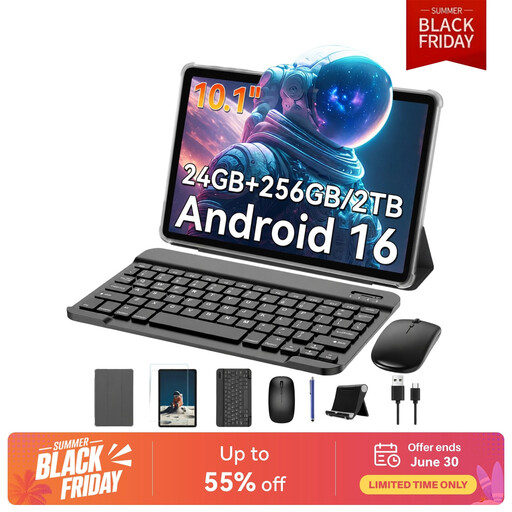
Why we chose it: Perfect for a student or anyone looking for an all-in-one solution without breaking the bank. This bundle delivers the essentials for note-taking and light office work, ready to go out of the box.
This Android tablet bundle is an honest starter kit. It avoids the "dream bundle" trap by offering a functional solution for basic use, without pretending to compete with premium accessories.
Its unbeatable price-to-feature ratio. With 256GB of storage (expandable) and an Octa-Core T606 chip, it handles everyday tasks without breaking a sweat.
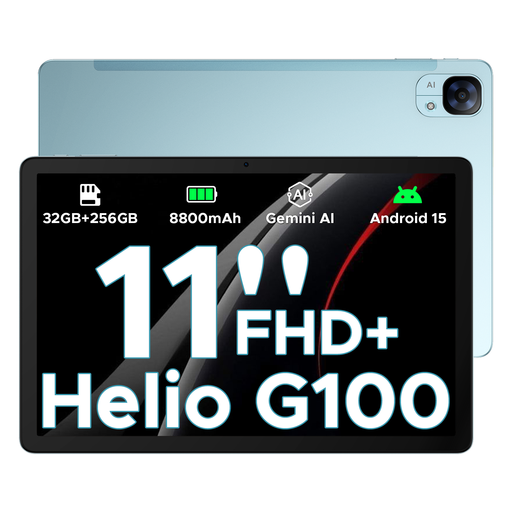
Why we chose it: Built for life on the go. Its large 11-inch, 90Hz screen offers excellent viewing comfort, while its dual SIM slot ensures constant connectivity.
It focuses on balance rather than inflated specs. The Helio G100 processor and a sufficient amount of physical RAM ensure good daily responsiveness. The 8,800 mAh battery is well-sized for the hardware, promising decent endurance.
Its versatility. Comprehensive connectivity (4G tablet, Wi-Fi 5, GPS) and a slim metal body make it an excellent work and entertainment companion for mobile users.
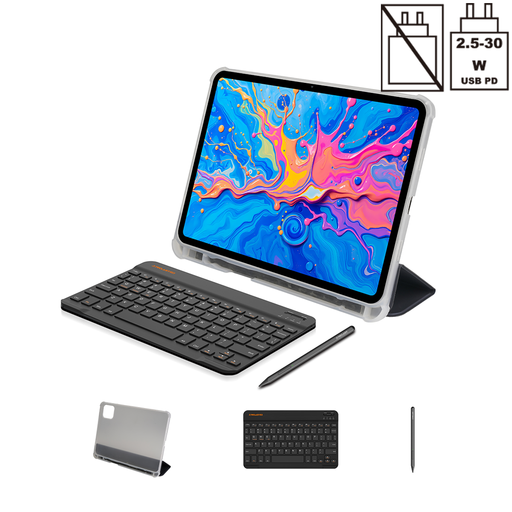
Why we chose it: For creatives and media lovers. Its huge 2K screen and support for a pressure-sensitive stylus make it a superb creative tool and an excellent gaming tablet.
There's no bluffing on the RAM here. Its 8GB of physical RAM, paired with the excellent Helio G99 processor (a benchmark for gaming), guarantees a truly fluid experience. The 10,000 mAh battery is consistent with the power consumption of such a large screen.
Its 12.7-inch 2K screen is its main selling point, offering a spectacular canvas for work and play at this price point. Widevine L1 certification ensures high-definition streaming on Netflix, Prime Video, and more.
Explore our full selection of editor-tested and approved tablets that meet our strict criteria.
Generally, expect a lifespan of 3 to 5 years. The Achilles' heel is always the battery, which will lose capacity over time. To preserve it, avoid full discharges and extreme heat. Also, note that software update support from manufacturers rarely exceeds 2 to 3 years, but the tablet will remain perfectly functional for common tasks.
It all depends on your use case. For taking a few notes in class or answering emails, a bundle can be a smart move. But if you plan on writing long documents, the typing comfort and reliability of a brand-name keyboard, purchased separately, will make all the difference in the long run.
Yes and no. A 4G tablet with a SIM card can send and receive SMS messages and make calls through apps (WhatsApp, Messenger, etc.). However, most do not support traditional voice calls over the cellular network. And let's be honest, their form factor makes them impractical for that purpose. Their primary purpose remains internet access on the go.