
当日/次日达

品质保障

开启新人专享福利: 全场免邮 | 低至 2 折 | 免费试用 30 天 JoyPlus 会员
下载 Joybuy
Whether you're furnishing a balcony, equipping your garden, or heading out on a camping trip, the aluminum folding chair is the obvious choice. Lightweight, rust-resistant, and easy to store, it looks perfect on paper. However, the market is flooded with models where quality varies dramatically. It's easy to fall for the common pitfalls that turn a good investment into a seasonal disappointment.
Before you decide, let's review the three deal-breaking flaws that can send a chair to the scrap heap after just one season:
Knowing how to spot these flaws is the first step to making a smart purchase.
To avoid unpleasant surprises, here are the technical specifications that are clear indicators of quality. They will help you judge the real-world performance of a folding outdoor armchair.
Aluminum is an excellent material, but not all alloys are created equal. A quality frame can be identified by several details:
The choice of fabric should primarily depend on your intended use.
A good portable chair should be as pleasant to use as it is easy to store.
Because every user has different needs, here are a few models that cater to specific user profiles, all selected for their durability and practicality.
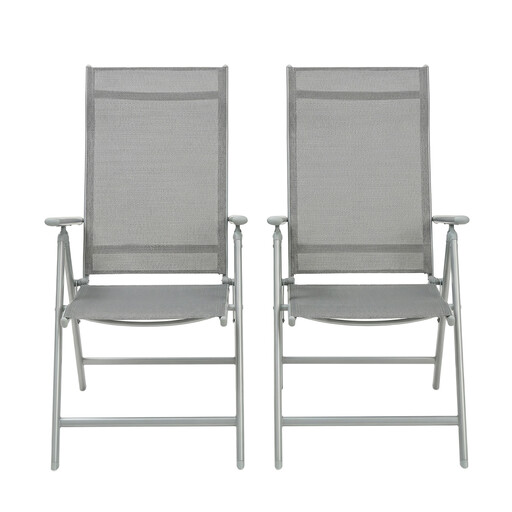
Why we chose it: This set of garden chairs is designed for those who prioritize relaxation on their patio. The 8-position reclining backrest allows you to easily switch from an upright dining position to a semi-reclined napping position.
Its robust aluminum frame supports a maximum static load of 150 kg (330 lbs) per chair, which demonstrates a serious design and eliminates the risk of a deceptively lightweight frame.
The 8-position adjustable backrest offers superior versatility and comfort for extended use in the garden.
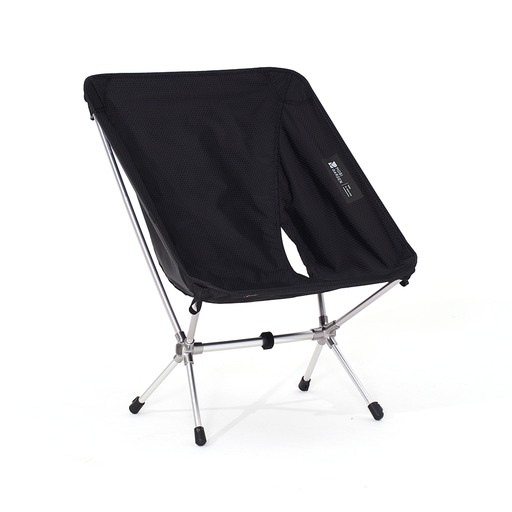
Why we chose it: For hikers, anglers, or campers, every gram counts. This ultralight camping chair weighs approximately 765 g (1.69 lbs) and folds into a 36 cm (14 in) long pouch, sliding easily into a backpack.
Thanks to its triangulated aluminum alloy structure and high-density Oxford fabric, it avoids the common pitfalls of ultra-portable models: fragile joints and fabric that tears easily.
A feather-light weight (just 765 g) and minimal footprint (36 cm long when folded) for maximum portability.
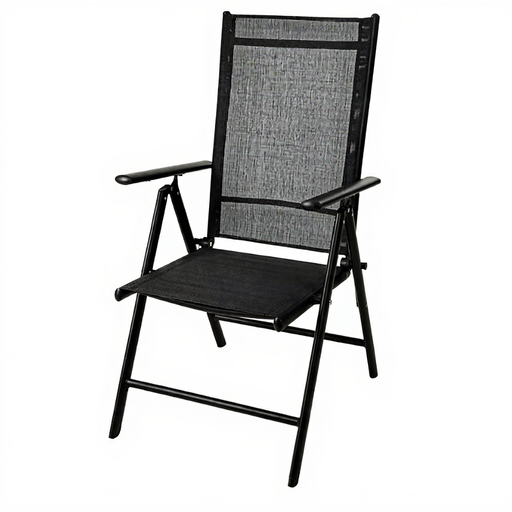
Why we chose it: Ideal as a balcony chair or spare seat, this model combines a minimalist design with thoughtful functionality. Its flat profile when folded makes it easy to store in a closet or behind a door—a major asset in urban environments.
Its Textilene fabric, designed to resist weather and UV rays, prevents the rapid fabric degradation that is a recurring problem on balcony chairs.
The adjustable seating angle offers personalized comfort, while its compact design is perfect for small spaces.
Explore our full, up-to-date selection of products that meet our quality criteria and safety standards.
Maintenance is very straightforward. Wiping the frame and fabric with a damp cloth and a little mild soap is sufficient. Be sure to rinse and dry the structure well, especially around the joints, before storing it. To preserve the fabric's vibrancy and the folding mechanism, store the chair away from moisture and direct sun during long periods of non-use.
Aluminum is naturally rustproof and much lighter than steel, making it the material of choice for a portable chair. Steel is generally denser and can feel more robust, but it must be treated with a high-quality coating (epoxy, cataphoresis) to prevent rust. For nomadic use or if you need to move your chairs often, aluminum stands out as the most practical choice.
The static load capacity is a figure provided by the manufacturer that indicates the weight the chair can support while stationary. It's a good indicator of overall strength. For safety reasons and to ensure the product's longevity, it is crucial to respect this limit and avoid improper use (such as rocking on it, for example).