What should you check before buying?
For a snack at work, decide how much you want to take with you first, then compare the ingredients and allergen information for the products you’re considering.
| What matters |
What to check |
Consumers concerned |
| Amount eaten |
Energy per 100 g and packet weight; whether you can prepare a separate portion. |
When a packet is within easy reach while I’m working, I prefer to decide how much I’ll have before opening it. Around 50% of consumers put portion control at the top of their list of needs. |
| No added ingredients |
Ingredients list and salt content; whether sugar, oil or flavourings have been added. |
If I’m mainly looking for plain almonds for my break, I want to tell the difference between nuts on their own and a flavoured recipe. For around 30% of consumers, simple ingredients are the main priority. |
| Portability and allergens |
Suitable packaging for taking with you, plus allergen or “may contain” information on the packet you choose. |
To take a snack to work or share it, I need practical packaging and a label I can check. Around 20% of consumers prioritise convenience alongside checking allergen information. |
An individually portioned option on Joybuy
This 30 g packet could be a good fit if you want to take a set amount to work. However, these are flavoured almonds, so they’re different from the plain almonds with no added salt mentioned above.
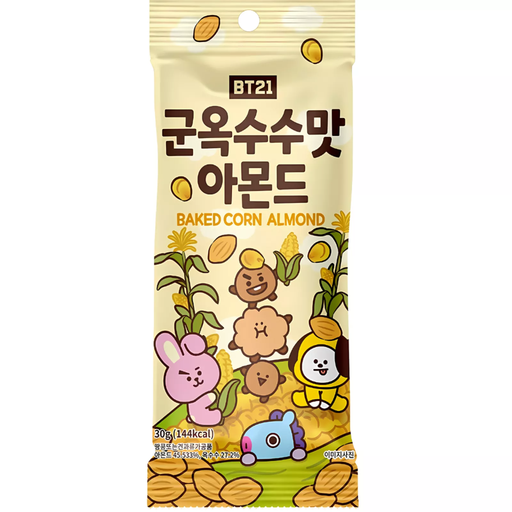 Image unavailable
BT21 roasted corn-flavoured almonds, 30 g
The 30 g packet gives you a set amount to take for a break at work, but that doesn’t make these almonds a “low-calorie” product.
The recipe includes sugar, syrup, honey, oil and salt, so it isn’t a substitute for plain almonds if you’re looking for a product with no added ingredients. The product information also mentions soya and milk, as well as possible traces of other allergens. Check the label before eating or sharing.
View on Joybuy
Frequently asked questions
Are almonds “low calorie”?
Not the plain varieties described here. European Regulation (EC) No 1924/2006 sets a maximum of 40 kcal per 100 g for a solid food to carry the “low energy” claim, while Auchan’s listings for Wonderful and Vico Natur & Bon almonds show 596 and 640 kcal per 100 g. When choosing a snack, check the value for the product you’re buying and how much you plan to eat.
How many almonds should I prepare to take to work?
Manger Bouger, the French public health website, recommends a small handful of unsalted, unsweetened nuts with no chocolate each day. If you’re taking a large packet with you, portion some out before you leave rather than eating straight from the packet.
What should I look for on the label before buying?
Start with the ingredients, energy per 100 g, salt content, packet weight and any allergen or “may contain” information. For prepacked foods in France, the DGCCRF states that allergenic ingredients must be listed and highlighted on the label.
How should I store almonds for work?
Follow the storage instructions on the packet you buy. Auchan’s listing for Vico Natur & Bon recommends keeping this product away from heat and moisture. You can portion some into a sealed container before taking it with you.


