To offer plant-based protein at a village fête, start by comparing tree nuts, particularly plain or roasted almonds with no added salt, rather than treating dried fruit as an equivalent. Ground almonds work well in a recipe for a group, but their protein content varies by product. For young children, Assurance Maladie recommends ground nuts mixed into a dish rather than whole nuts. In all cases, check the nutritional information, ingredients and allergens for the specific product you plan to serve.
Who is this choice for?
Organisers of a buffet after a sporting activity
If you’d like to offer a snack containing plant-based protein, almonds, peanuts and pistachios are among the oilseeds listed by Anses. Compare the nutritional values of the product you choose, without presenting the buffet as a sports recovery solution.
People running a stall for families
The ingredients should be easy to identify for anyone concerned about allergens. For young children, Assurance Maladie recommends ground nuts mixed into a dish rather than whole nuts.
People making recipes to share
Ground almonds let you add almonds to a recipe instead of serving them whole. Compare the ingredients and protein per 100 g for the product you buy: two types of ground almonds can have different nutritional values.
What should you look for when choosing buffet food?
First, decide whether you want a snack to nibble on or an ingredient to use in a recipe. Then compare the labels of products suited to that purpose, without inferring a nutritional claim from the product name alone.
| What matters |
What to check |
Who is it for? |
| Plant-based protein |
The ‘protein’ figure per 100 g and the ingredients list for the exact product. |
If I’m looking for a snack containing plant-based protein, I want to distinguish tree nuts from dried fruit before comparing labels. Around 42% of consumers put this need first. |
| Sharing and ingredients |
Whether the product is plain or seasoned, then the ‘salt’ and ‘of which sugars’ figures per 100 g. |
For a buffet where everyone helps themselves, I’d rather know whether I’m offering plain almonds, almonds with no added salt or a flavoured recipe. Around 33% of consumers put this choice of ingredients first. |
| Allergens and texture |
The allergens listed and whether the dish contains whole or ground nuts. |
When children are taking part and recipes are shared between several people, I need to be able to adapt the texture and clearly identify allergens. Around 25% of consumers prioritise these precautions. |
Common mix-ups to avoid
-
Treating dried fruit and tree nuts as interchangeable
Here, the term ‘dried fruit’ covers different products. Anses lists almonds, peanuts and pistachios among plant-based sources of protein; that doesn’t mean raisins, figs or dates have the same role in this choice.
For a stall focused on plant-based protein, start by comparing tree nuts, then choose dried fruit for its place in the recipe or buffet.
-
Assuming that ‘almonds’ means ‘high in protein’
Under the EU regulation on nutrition claims, the claim ‘high in protein’ requires at least 20% of the product’s energy value to come from protein. A figure given in grams per 100 g is not enough on its own to establish this.
Compare the nutritional information, but don’t use this claim for a product that doesn’t meet the relevant requirement.
-
Choosing a flavoured product as if it were plain
Coated or seasoned almonds may contain other ingredients. The Joybuy listing for BT21 Honey Butter Almonds, for example, mentions sugar, a milk-containing seasoning and starch syrup.
Read the ingredients list and check the ‘of which sugars’ and ‘salt’ figures before choosing a product for your stall.
-
Leaving whole nuts within reach of young children
Assurance Maladie advises against giving whole nuts to children aged 3 to 4 because of the risk of choking, and recommends ground nuts mixed into a dish until the age of 6. Ground nuts are still an allergen if they contain tree nuts.
Adapt dishes intended for the children concerned and clearly identify their allergens for everyone attending.
Retailers and brands to explore
Carrefour
A place to compare different types of almonds, including plain, roasted with no added salt and ground.
- Carrefour’s range makes it easy to find different formats and preparations.
- Check the product and its availability at your store or for your chosen collection option.
E.Leclerc
Plain, organic or roasted almonds with no added salt to compare on their individual product pages.
- E.Leclerc lists 27.4 g of protein and 0 g of salt per 100 g for its 250 g bag of Couleurs Vives roasted almonds. The 100 g Bio Village product page lists 23 g of protein and 0 g of salt per 100 g.
- These figures apply to these two specific products. Check availability with your chosen store or online collection service.
Auchan
A retailer to explore if you’re looking for ground almonds to use in a recipe for a group.
- Auchan’s product pages list 21 g of protein per 100 g for the Vahiné ground almonds mentioned, and 12 g per 100 g for the Auchan Bio ground almonds mentioned.
- So, the fact that a product is ground doesn’t tell you its protein content: check the specific product you buy.
Monoprix
Monoprix Courses lists a Damiano product made with blanched organic almonds.
- The product page states that it contains 100% organic almonds and 23.1 g of protein per 100 g.
- These details don’t apply to the other almond products sold by the retailer.
Lidl
The Alesto range includes plain nuts as well as savoury snacks.
- This distinction can help you find a plain product rather than a seasoned one.
- To compare protein content, check the nutritional information for the exact product you plan to serve.
Aldi
Aldi sells products including roasted almonds with no added salt and ground almonds.
- These two types suit different uses: serving whole or mixing into a recipe.
- Check which product is available locally and read its label before making your final buffet choice.
Joybuy products for different occasions
This selection includes peanuts and pistachios to share, as well as flavoured almonds in individual packs. For a buffet focused on simple ingredients, distinguish plain nuts from seasoned products and check the allergens before serving.
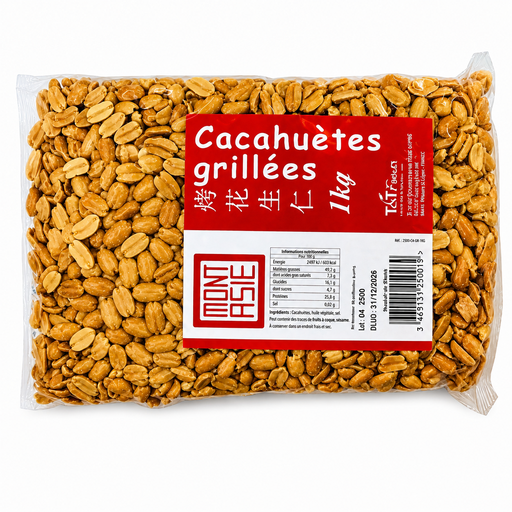 Image unavailable
MONT ASIE roasted peanuts, 1 kg
The 1 kg pack could work well for sharing, as long as you clearly label the presence of peanuts. To compare its ingredients with those of other tree nuts, check the ingredients list and nutritional information on the pack.
View on Joybuy
Image unavailable
Farm Pack Tasty Peanut Natural, 300 g
This 300 g pack is an option for sharing peanuts. The product is described as containing peanuts in their shells and salt. Bear the shells in mind when setting up your stall, and check the seasoning and allergens on the pack.
View on Joybuy
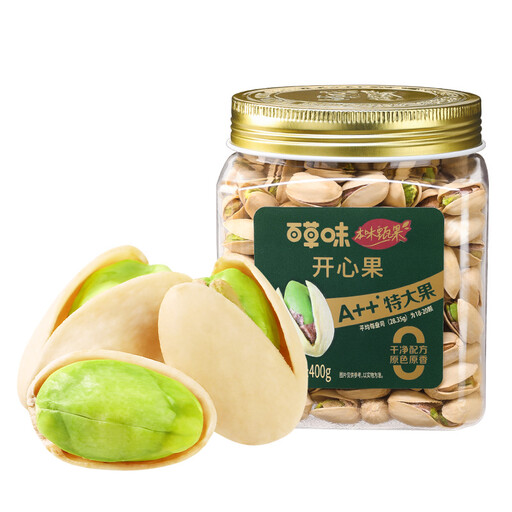 Image unavailable
BE&CHEERY pistachios, 400 g
This 400 g pack offers another type of nut for a shared buffet. The product is described as salted, so compare its ‘salt’ figure with those of the other products you’re considering and identify pistachios as an allergen.
View on Joybuy
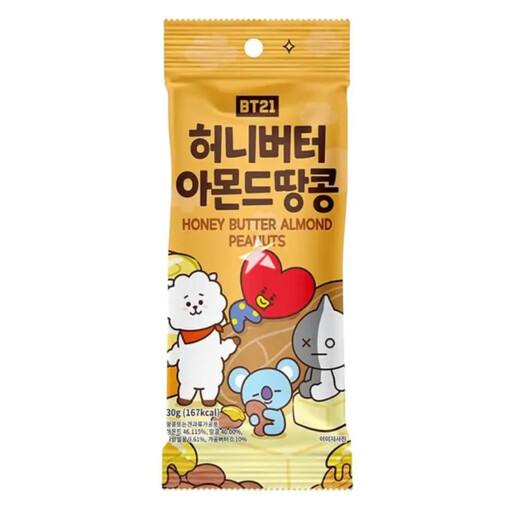 Image unavailable
BT21 Honey Butter Almonds, 30 g
The 30 g pack is better suited to individual tasting than to serving a large group plain nuts. The Joybuy listing mentions sugar, starch syrup and a milk-containing seasoning. Read the ingredients and flag the allergens before offering it.
View on Joybuy
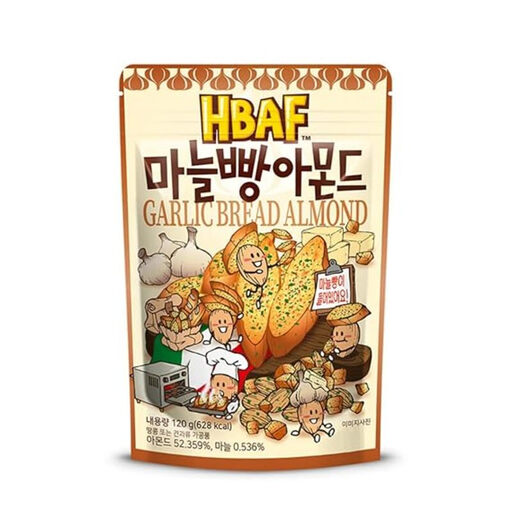 Image unavailable
HBAF garlic bread-flavoured almonds, 120 g
This 120 g pack is a flavoured option for a savoury snack stall, not a plain almond product. The recipe is described as also containing croutons and seasoning, so check the full ingredients list and allergens before serving.
View on Joybuy
Frequently asked questions
Can almonds always be described as ‘high in protein’?
No. In the European Union, the regulation on nutrition claims reserves this wording for products where protein provides at least 20% of the energy value. The amount of protein listed per 100 g alone isn’t enough to draw this conclusion for all almonds.
How should allergens be identified at a village fête stall?
For relevant foods sold loose, packed at the customer’s request or prepacked for direct sale, the French rules set out by Légifrance require allergen information to be provided on or near the food, in a clear and unambiguous way. Identify each dish concerned, including those containing ground almonds.
Can you serve whole almonds to young children?
Assurance Maladie advises against giving whole nuts to children aged 3 to 4 because of the risk of choking and inhalation. Up to the age of 6, it recommends ground nuts mixed into a dish; this form doesn’t remove the allergen.
How should you store ground almonds after opening?
Follow the instructions on the pack you buy and reseal it after use. For the Vahiné ground almonds mentioned by Auchan, the instructions say to store in a cool, dry place away from light. Check the instructions for any other product you buy.


