Students who exercise and want to add to a snack
Almonds can be part of a snack or meal around your training, but they are not a recovery strategy in themselves. Anses classifies oilseeds, including almonds, as plant-based sources of protein.


Whole almonds are handy for an on-the-go snack, while ground almonds are better suited to cooking in your first home. Product information from Juste Bio, Bio Village and Damiano lists 23–25 g of protein per 100 g, but also 601–636 kcal per 100 g. Compare the portion you plan to use rather than looking at the protein content alone. These figures are no guarantee of an effect on post-exercise recovery.
Almonds can be part of a snack or meal around your training, but they are not a recovery strategy in themselves. Anses classifies oilseeds, including almonds, as plant-based sources of protein.
Ground almonds can be used in home cooking, while whole almonds are easier to carry for a quick snack. Pack size also matters if you have limited storage space for your shopping.
A snack described as ‘with almonds’ is not necessarily a bag of almonds. The ingredients list helps you tell whole almonds apart from a biscuit or flavoured product that contains them.
To choose between whole and ground almonds, start with how you plan to use them. Then compare the ingredients and nutritional information per 100 g and for the portion you expect to have.
| What matters | What to check | Who this applies to |
|---|---|---|
| Protein and how it fits into your snack | Compare protein and energy per 100 g, then check the figures for the portion you’ll use. | After training, I want to know what almonds add to my snack without assuming they guarantee better recovery. Around 46% of consumers would prioritise protein content. |
| Pack size and managing your shopping | Compare the pack size with what you can store and finish. | When I move in, I’d rather choose a pack that suits my available space and habits than a large one I’ll struggle to finish. Managing your shopping would be a priority for around 27% of consumers. |
| How you’ll use them and what’s in them | Choose whole or ground almonds to suit your needs; check the ingredients and the information on salt, sugars and allergens. | For a break between classes or a quick recipe, I’m looking for a convenient option with ingredients I understand. Around 27% of consumers would put practical considerations and the label at the heart of their choice. |
A biscuit can contain several ingredients and only a small proportion of almonds. E.Leclerc’s product information for P’TIT DELI almond tiles, for example, lists 10% flaked almonds.
If you’re looking for an almond-based snack, check the ingredients list and nutritional information rather than relying on the product name.
Product information from Juste Bio, Bio Village and Damiano lists 23–25 g of protein per 100 g, as well as 601–636 kcal per 100 g. Both figures matter when deciding on a portion.
Compare protein and energy, and, depending on the product, sugars and salt, on a like-for-like basis.
A bag of almonds and a supplement or enriched food are different types of product. Anses has flagged risks associated with certain supplements and enriched foods aimed at athletes; this warning is not a judgement on plain almonds.
If you’re interested in a sports formula, check the product name and ingredients rather than assuming it’s equivalent to ordinary almonds.
You can’t tell everything about a snack’s ingredients just by looking at it. Allergen information is particularly important for anyone with an allergy.
If you have a known allergy, check the product’s ingredients list and allergen information before eating it.
Its organic ground almonds, listed by Auchan, are a good choice for home cooking.
E.Leclerc stocks a 100 g bag of organic almonds from this brand.
Its organic shelled almonds, listed by Monoprix Courses, are aimed at people looking for a product made only with almonds.
ALDI offers this brand’s roasted almonds in a 200 g bag.
The retailer stocks several types of almonds, including whole, roasted with no added salt and ground varieties.
These flavoured packs are best suited to an on-the-go snack. Check their ingredients separately from those of plain almonds or ground almonds used in cooking.
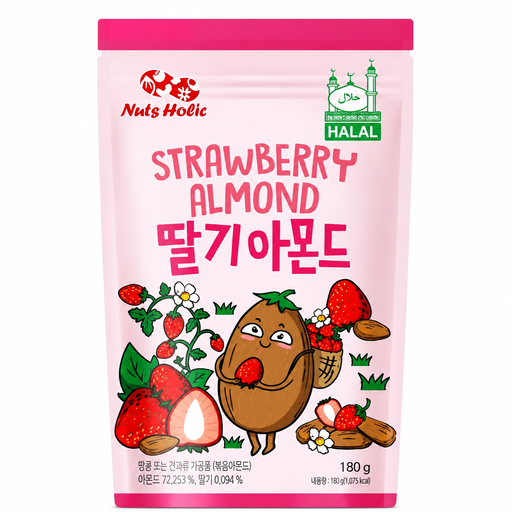 Image unavailable
This flavoured pack is handy for an on-the-go snack if you’re looking for an almond product rather than plain almonds. Check the ingredients, including sugars and allergen information, before comparing it with a bag of almonds on their own.
 Image unavailable
The 30 g pack makes a handy little snack to take with you. This honey and butter flavour is not the same as plain almonds: check the ingredients and allergen information, particularly if milk or soya are a concern for you.
The Bio Village, Damiano and Juste Bio product details list 23 g, 23.1 g and 25 g of protein per 100 g, respectively. To work out what a snack provides, compare these figures with the portion you’ll actually use and check the energy content too.
Their protein content can’t guarantee an effect on an individual’s recovery. A study reported by the Almond Board of California, an organisation backed by the almond industry, involved 25 middle-aged adults who were slightly overweight; its findings cannot be applied to all students who exercise.
This claim helps distinguish some roasted almonds from varieties with added salt, but it doesn’t tell you everything about the product. Bio Village’s product information lists 0 g of salt per 100 g, while ALDI describes its roasted almonds as having no added salt. Check the label on the pack you buy.
Start by checking the product name, ingredients, quantity and nutritional information so you can tell plain almonds apart from flavoured products. In France, the DGCCRF states that pre-packed foods must include, among other things, an ingredients list and a nutrition declaration. Also check any allergen information that’s relevant to you.