What should you check first?
When choosing almonds to snack on in front of the TV, start by deciding what matters most to you: fat, salt or household safety.
| What to check |
What to look for |
Who is it for? |
| Fat content |
Compare the fat content per 100 g of products of the same type and check whether oil is listed among the ingredients. |
If I’m looking for lower-fat almonds, I want to distinguish their composition from that of a coated or mixed snack. Around 50% of consumers would put this check first. |
| Added salt |
Look for the words ‘no added salt’, then check the salt content on the label of the product you choose. |
For a crunchy snack in front of a film, I’d rather choose a recipe that doesn’t start with added salt. Reducing salt would be the priority for around 30% of consumers. |
| Allergens and how you use the packet |
Check allergens, ‘may contain’ warnings and storage instructions after opening. Take into account the ages of any children you’re offering the snack to. |
When several people are sharing a snack, or you’ll be using the packet over several evenings, I need to be able to choose and store the product with my household in mind. Around 20% of consumers would prioritise these precautions. |
Almond snacks on Joybuy
These flavoured snacks could be part of your choice for a night in front of the TV. To compare them with plain almonds or find a product with a lower fat content, check the ingredients and nutrition information per 100 g on each product’s packaging.
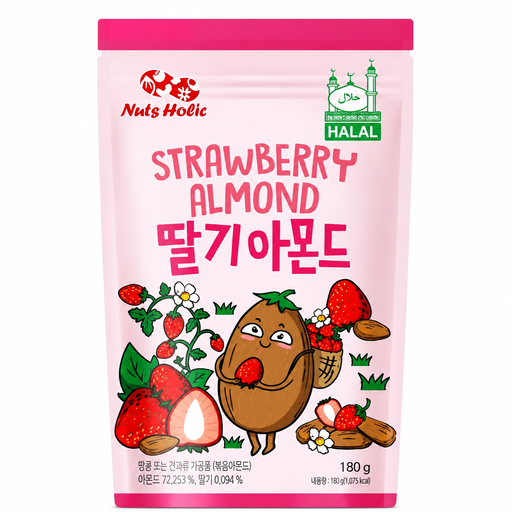 Image unavailable
Nutsholic strawberry-flavoured almonds – 180 g
Worth considering if you’d like a flavoured snack to serve during a night in front of the TV. The packet contains 180 g. If your priority is limiting added ingredients or comparing fat content, check the ingredients and nutrition information for the product you buy rather than treating it as plain almonds.
View on Joybuy
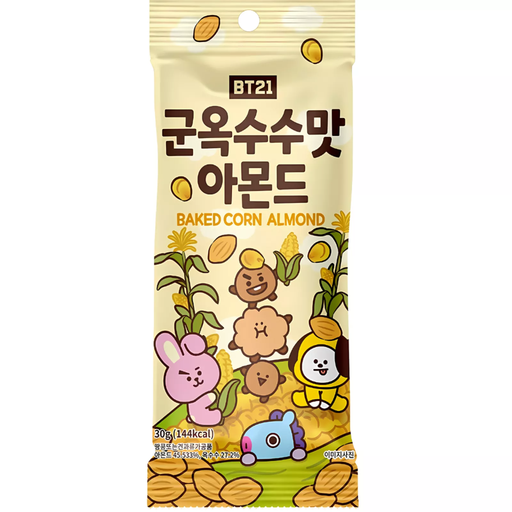 Image unavailable
BT21 baked corn-flavoured almonds – 30 g
The 30 g pack could be a good choice if you’d like to set aside a specific amount for the evening. To find out how much of this flavoured snack is made up of almonds, and compare its fat content with that of plain almonds, check the ingredients and nutrition information on the packaging.
View on Joybuy
Frequently asked questions
Are almonds with no added salt lower in fat?
Not necessarily. Auchan and E.Leclerc product listings for two no-added-salt options show 52 g and 51.6 g of fat per 100 g respectively. The claim refers to salt; to check the fat content, look at the corresponding figure on the packaging.
How can I find roasted almonds with no added oil?
Check the ingredients list for the product you’re considering. Auchan describes a Daco Bello product as dry-roasted with no added salt or oil, whereas the ingredients list for a salted, roasted Carrefour Classic’ product includes sunflower oil.
Where can I check allergens before buying?
Read the ingredients list and any ‘may contain’ warnings on the specific product packaging you’re buying. The DGCCRF says that allergenic ingredients must be highlighted on the label.
Can you give whole almonds to a young child?
Manger Bouger advises against giving whole nuts to children under 6 because of the risk of choking. So, if you’re serving snacks to a child of this age, don’t offer whole almonds.
What should I do with a packet I’ll use over several evenings?
Follow the storage instructions on the packaging and reseal the packet after each use. Before each evening, serve the amount you want in a bowl rather than leaving the packet open within easy reach.


