Anyone keeping an eye on portion size
You want to enjoy almonds with your coffee without eating straight from a large bag. The pack size and how much you serve matter just as much as the nutritional values per 100 g.


For a coffee break where you want to keep track of how much you’re eating, choose plain or roasted almonds with no added salt, and set out your portion before opening the bag. “Unsalted” doesn’t mean “low in calories”: product listings for Wonderful plain almonds at Auchan and Bio Village at E.Leclerc give 596 and 636 kcal per 100 g respectively. Manger Bouger recommends a small handful of unsalted, unsweetened nuts with no chocolate each day, but doesn’t specify a portion for your break.
You want to enjoy almonds with your coffee without eating straight from a large bag. The pack size and how much you serve matter just as much as the nutritional values per 100 g.
You’re after the taste of almonds without added salt, sugar or flavourings. The ingredients list helps you tell plain almonds apart from flavoured varieties.
You’re planning several coffee breaks from the same bag. Check its weight, storage instructions once opened and the allergen information for the specific product you’re buying.
Start by deciding how much you want to serve, then compare the ingredients and choose a pack size that suits how often you’ll be eating them.
| What to consider | What to check | Who is this for? |
|---|---|---|
| Portion size and energy | Compare the kcal per 100 g and decide how much to serve before opening the bag. | If I want a small snack with my coffee, I’d rather portion it into a bowl than eat from the bag. Around 42% of consumers would put portion control first. |
| Ingredients | Read the ingredients list and check whether salt, sugar, oil or flavourings have been added. | If I want plain almonds with my coffee, I want to be able to tell nuts on their own apart from a seasoned recipe. Around 33% of consumers would make ingredients their top priority. |
| Pack size and storage | Choose the bag size to suit how often you eat almonds, and read the instructions for storing them after opening. | If I’m using the same pack for several breaks, I want to be able to reseal it and follow the storage instructions. Around 25% of consumers would put pack convenience first. |
No added salt doesn’t tell you how much energy the almonds provide. Product listings for Wonderful plain almonds at Auchan and Bio Village at E.Leclerc show 596 and 636 kcal per 100 g respectively.
Compare the nutritional information per 100 g, then serve the amount you planned for your break.
Roasted almonds can be plain or part of a seasoned recipe. The listing for Tokapi smoked-flavour almonds at E.Leclerc, for example, includes sunflower oil, salt, dextrose and caramelised sugar.
If you’re looking for a simple ingredients list, check the specific product rather than relying on its name alone.
Almonds are tree nuts. The listing for one Auchan variety of roasted almonds with no added salt also warns that it may contain traces of peanuts, other tree nuts, gluten, soya, sesame and sulphites. These warnings may not apply to other bags.
If you have an allergy or avoid certain ingredients, check the ingredients list and trace warnings on the pack you buy.
A pack intended for several breaks needs to be stored according to the instructions once opened. For its 400 g bag of roasted almonds with no added salt, Auchan advises resealing the bag tightly and eating the product within 15 days of opening.
Check the instructions on the pack you’re considering and choose a size that suits how often you eat almonds.
Carrefour’s listings let you compare products such as unsalted Vico almonds and roasted, unsalted Seeberger almonds.
The retailer offers products including 100 g bags of organic Bio Village almonds and a loose, unpackaged option.
Auchan’s range includes plain almonds and roasted almonds with no added salt.
Monoprix listings include unroasted, unsalted Vico almonds and roasted Daco Bello almonds with no added salt.
This pick is a flavoured almond snack in an individual bag. If you’re looking for plain almonds with no added salt, check the ingredients before choosing.
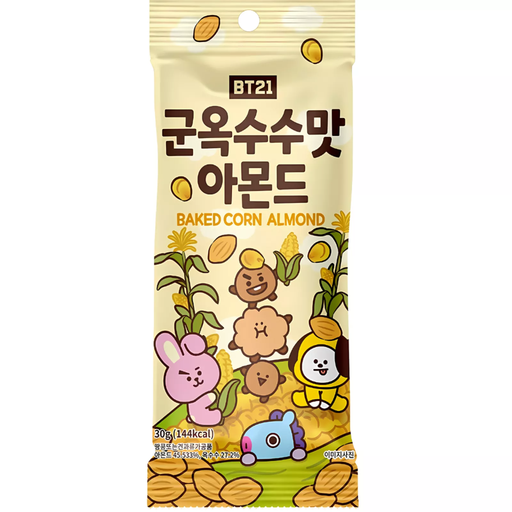 Image unavailable
The 30 g bag is a handy choice if you want to decide how much to take along for your coffee break. This flavoured recipe contains sugar and salt, so it isn’t the right choice if you’re after plain almonds with no added salt.
No. “Unsalted” describes the salt content, not the energy content. Product listings for Wonderful plain almonds at Auchan and Bio Village at E.Leclerc give 596 and 636 kcal per 100 g respectively. Remember to consider how much you plan to serve, too.
When choosing a snack, start with the ingredients list, kcal per 100 g, net weight and allergen information. The nutritional information and storage instructions will then help you compare products and pack sizes.
No. Almonds are tree nuts, and trace warnings vary by product. One Auchan listing for roasted almonds with no added salt warns of possible traces of other allergens. Read the packaging for the specific product before using it.
Follow the instructions on the bag you buy. For its 400 g bag of roasted almonds with no added salt, Auchan advises sealing it tightly and eating the almonds within 15 days of opening. This storage period doesn’t apply to all almonds.