Active people looking for a plant-based snack
Almonds can complement meals and are easy to take with you. However, check their protein content per serving, rather than assuming every pack can carry the ‘high in protein’ claim.


For an almond-based snack, choose plain almonds or ones roasted without added salt if you prefer a short ingredient list. The products mentioned by Auchan, E.Leclerc and Monoprix contain around 21 to 27 g of protein per 100 g. However, that amount alone is not enough to support the regulated ‘high in protein’ claim: also check the serving size, salt content and allergens in the variant you buy.
Almonds can complement meals and are easy to take with you. However, check their protein content per serving, rather than assuming every pack can carry the ‘high in protein’ claim.
Whether you’re choosing plain, roasted with no added salt or flavoured almonds, check the ingredients list and the ‘salt’ line to find the variant you’re looking for.
Whether you’re having them for breakfast, as a snack or in your cooking, the pack size, amount you eat and allergen information matter just as much as the figures given per 100 g.
Start with the amount you’ll actually eat, then compare the ingredients and salt content across variants.
| Criteria | What to check | Who is it for? |
|---|---|---|
| Protein per serving | Compare the protein and energy figures per 100 g, then consider how much you’ll eat. Under EU regulations, the ‘high in protein’ claim depends on the proportion of energy provided by protein. | If I’m relying on almonds to help meet my protein needs, I want to know what my snack provides rather than go by the front of the pack; around 42% of consumers put this at the top of their list. |
| Salt and ingredients | Check the ingredients list and the ‘salt’ line. The unroasted TOKAPI almonds mentioned by E.Leclerc list only almonds, while the smoky-flavour variant also contains oil and salt. | If I want a product made only with almonds, I need to tell the plain version apart from the flavoured one; this is a priority for around 33% of consumers. |
| Serving size and how you’ll use them | Check the stated serving size and pack format. Auchan’s roasted almonds with no added salt provide 6.8 g of protein per 25 g serving. | If I split my almonds between snacks and recipes, the pack size and serving need to suit how I use them; around 25% of consumers put ease of use first. |
Under EU rules on nutrition claims, this wording is reserved for foods where at least 20% of the energy comes from protein. The roasted almonds with no added salt mentioned by Auchan contain 27 g of protein and 632 kcal per 100 g, meaning around 17% of their energy comes from protein.
If this claim is important to you, don’t rely on the protein figure per 100 g alone.
The unroasted TOKAPI almonds mentioned by E.Leclerc list only almonds and contain 0 g of salt per 100 g. The smoky-flavour variant contains oil, salt and sweetening ingredients, among other things, and has 1.2 g of salt per 100 g.
Compare the labels for each variant, even when they’re from the same brand.
The Bjorg drink mentioned by Monoprix contains 2% almonds and pea protein, and provides 1.8 g of protein per 100 ml. It isn’t directly comparable with a handful of almonds in terms of quantity or how you’d use it.
First decide whether you want a drink or a solid food, then compare the protein content for the serving you’ll have.
The Monoprix product information for Profruit raw almonds warns that they may contain traces of peanuts, sesame and gluten. Precautions can vary from one product to another.
Check the allergen information on the pack and follow the storage instructions after opening.
The roasted almonds with no added salt mentioned by Auchan come in a 400 g pack.
This E.Leclerc brand offers, among other products, unroasted almonds with no added salt and a smoky-flavour variant.
The roasted almonds with no added salt mentioned by Auchan come in a 150 g pack.
The organic almonds mentioned by E.Leclerc come in a 100 g pack.
Monoprix sells Profruit blanched raw almonds in a 250 g pack.
If you’d prefer flavoured almonds to a plain version, here’s a strawberry-flavoured pack to consider. If you’re looking for a product made only with almonds, check the ingredients before choosing.
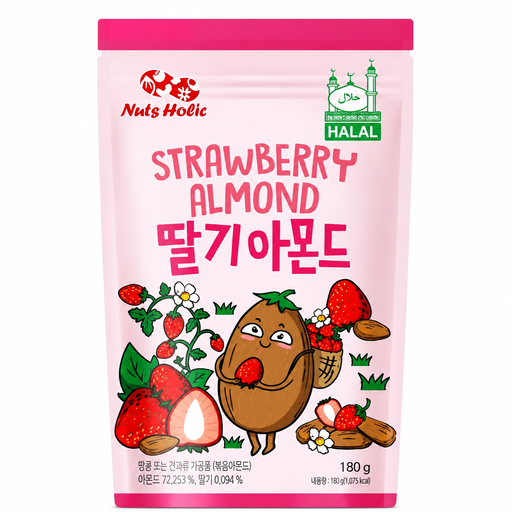 Image unavailable
An option to consider if you’re looking for flavoured almonds to enjoy as a snack. The pack contains 180 g; the strawberry-flavour variant contains sugar, so it isn’t made with almonds alone. Check the pack for the serving size you’ll eat and the allergen information, particularly if milk or possible traces of gluten, peanuts or sesame are a concern for you.
Not based on the protein figure per 100 g alone. EU rules require at least 20% of a food’s energy to come from protein for this claim to be used. The Auchan roasted almonds with no added salt mentioned here contain 27 g of protein and 632 kcal per 100 g, meaning around 17% of their energy comes from protein.
Manger Bouger recommends a small handful of unsalted nuts each day as part of its general dietary guidance. To work out how much protein you’ll actually get, adjust the figures per 100 g to match your own serving.
Look for an ingredients list that contains only almonds, then check the ‘salt’ line. The plain or no-added-salt products mentioned by E.Leclerc and Auchan differ in this respect from the smoky-flavour TOKAPI variant, which contains oil and salt, among other ingredients.
Check the allergen list and any ‘may contain’ warnings on the product you’re buying; don’t rely on the word ‘almonds’ alone. For example, the Profruit product information mentioned by Monoprix warns of possible traces of peanuts, sesame and gluten.