What should you look for on the pack?
For your drinks party, start by choosing according to your main priority. Then compare products on the same per-100 g basis before checking the portion you plan to serve.
| What to compare |
What to check |
Who it matters to |
| Protein content |
Protein per 100 g and per serving; energy if the ‘high in protein’ claim appears. |
If I want to add protein-containing almonds to the drinks spread, I want to know how much will actually be served without confusing grams of protein with a regulated claim. Around 36% of consumers would make protein their main priority. |
| Salt and added ingredients |
Salt per 100 g and the ingredients list, particularly oils and seasonings. |
If I’d rather season the almonds myself, an already-salted recipe isn’t right for me. Keeping an eye on salt and added ingredients would come first for around 29% of consumers. |
| Recipe for the buffet |
Plain, roasted, salted or flavoured; ingredients and allergens in the recipe you choose. |
When almonds are going straight onto the buffet, I mainly choose a flavour that suits my guests. A taste that works well with drinks would be the main priority for around 21% of consumers. |
| Pack size and storage |
Net weight, serving quantity and instructions for storing the product after opening. |
For a small gathering, I’d rather serve the right amount and store the rest according to the pack instructions. Around 14% of consumers would put this practical consideration first. |
Brands to compare
These products illustrate differences in recipe and pack size. Always check the label on the pack you’re thinking of buying.
Carrefour Original
Roasted almonds with no added salt, in a 200 g pack.
- A roasted option to consider if you don’t want added salt seasoning.
- Carrefour states that this product may contain traces of peanuts and other nuts.
TOKAPI / Marque Repère E.Leclerc
Two different recipes: salted roasted almonds and unroasted almonds with no added salt.
- E.Leclerc states that the salted variety contains 25 g of protein and 1 g of salt per 100 g, compared with 26.2 g of protein and 0 g of salt per 100 g for the no-added-salt variety.
- The salted variety also contains sunflower oil, so check the recipe on the pack you choose.
Auchan / Auchan Bio
Auchan offers unsalted, salted and flavoured recipes; its Auchan Bio product is made with organic roasted almonds.
- Auchan Bio states that the product contains 26 g of protein and 0.05 g of salt per 100 g, as well as 6.5 g of protein per 25 g serving.
- The product may contain traces of peanuts and other nuts, and the pack should be kept away from heat and moisture.
Monoprix
Whole roasted and salted almonds in a 75 g pack for the product featured here.
- Monoprix states that the product contains 26 g of protein and 0.64 g of salt per 100 g.
- The recipe contains sunflower oil and salt. The label states that it may contain traces of peanuts, other nuts, gluten and soya.
TRADER JOE'S® chez ALDI
ALDI offers salted roasted almonds in a 150 g pack, as well as a roasted variety with no added salt.
- These two recipes let you choose first according to whether salt has been added.
- For an accurate comparison of protein, salt and allergens, check the nutrition information and the label on the product you choose.
Almonds and flavoured mixes on Joybuy
These products are flavoured recipes for a drinks party: two packs of seasoned almonds and a mix of almonds and corn. If you’re looking for a plain or no-added-salt option, consider these for their distinct flavours rather than as equivalent alternatives.
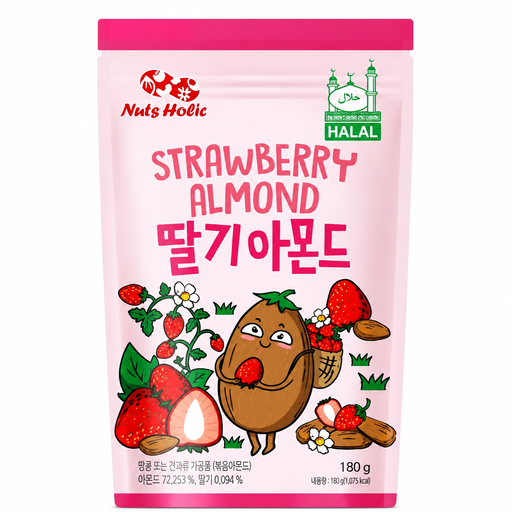 Image unavailable
Nutsholic strawberry-flavoured almonds, 180 g
Worth considering if you’d like a fruity flavour to share rather than plain or salted almonds. The coating contains sugar and flavouring ingredients. If any guests have allergies, check the information on the pack, particularly for milk and possible traces of wheat, peanuts and sesame.
View on Joybuy
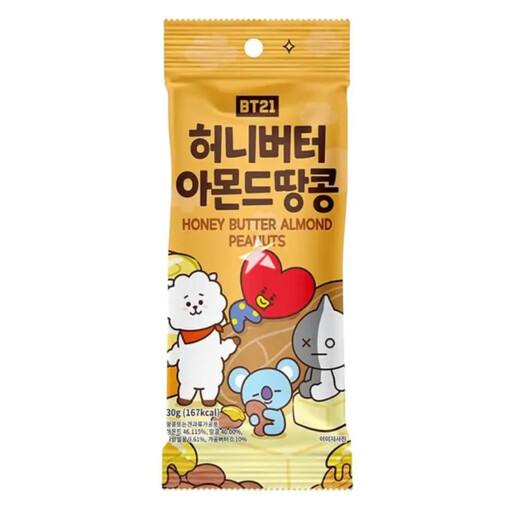 Image unavailable
BT21 honey butter almonds, 30 g
The 30 g pack is a good choice for a small sweet-and-savoury snack. Make sure you have enough if you’re serving several people. This recipe isn’t a substitute for plain or no-added-salt almonds. Also check the packaging for information about almonds, milk and soya.
View on Joybuy
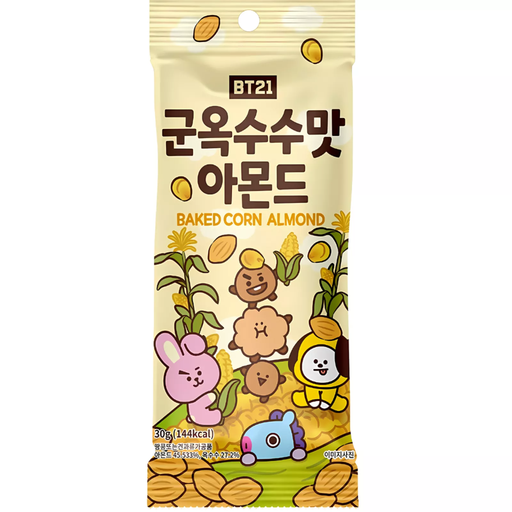 Image unavailable
BT21 roasted corn-flavoured almonds, 30 g
Choose this small flavoured pack if a mix of almonds and corn would work for your buffet: it isn’t made from almonds alone. Before serving it to anyone with allergies, read the packaging. The ingredients list mentions almonds, but the allergen information provided doesn’t.
View on Joybuy
Frequently asked questions
Are almonds that contain protein necessarily ‘high in protein’?
No. To use this claim in the European Union, Regulation (EC) No 1924/2006 requires at least 20% of the product’s energy value to come from protein. The number of grams of protein per 100 g, on its own, isn’t enough to reach a conclusion.
How should I compare almonds if I also want to keep them for a post-workout snack?
Compare protein, energy and salt on the same per-100 g basis, then work out what these figures mean for your portion. For example, Auchan states that a 25 g serving of its Bio roasted almonds contains 6.5 g of protein. If you want to control the seasoning, start by looking at plain or no-added-salt varieties.
What should I check for allergies before serving almonds?
Check the ingredients list and any ‘may contain’ warnings on the exact pack: almonds are an allergen in their own right. The DGCCRF reminds shoppers that allergens in prepacked food must be highlighted in the ingredients list. Other warnings vary by product, including those for peanuts, other nuts, gluten or soya.
How should I store almonds after the drinks party?
Follow the instructions on the pack you bought. For its Bio roasted almonds, Auchan recommends resealing the pack after opening and keeping it away from heat and moisture. Don’t assume the same instructions apply to other products.
Are bitter apricot kernels suitable for the buffet?
No: they shouldn’t be confused with ordinary edible almonds. Anses warns that amygdalin in bitter apricot kernels can release cyanide during digestion. For your drinks party, choose a clearly labelled food product.


