An easy-to-compare portion after exercise
If the amount of protein you consume is your main concern, check the grams per bar or per portion of almonds you plan to serve, rather than looking only at the figure per 100 g.


For a simple snack to share during a film, choose plain or dry-roasted almonds with no added salt. If your priority is knowing how much protein is in an individual post-workout portion, compare almond bars instead. Check the protein per bar, the proportion of almonds and the other ingredients, as a bar is not the same as plain almonds.
If the amount of protein you consume is your main concern, check the grams per bar or per portion of almonds you plan to serve, rather than looking only at the figure per 100 g.
If you’re mainly after crunchy almonds with a short ingredients list, plain or dry-roasted almonds with no added salt are a better fit than a bar or flavoured almonds.
If certain ingredients or allergens affect your choice, check the exact recipe. Depending on the product, bars containing almonds may also contain milk, soya or sweeteners.
First decide whether you’re looking for a clear protein figure per portion, simple almonds to share, or a product that meets your dietary requirements.
| What to consider | What to check | Who is it for? |
|---|---|---|
| Protein per portion | The weight of the portion you plan to have and the corresponding grams of protein; for a bar, the grams per bar. | After exercise, I want to know what I’ll get from the amount I’ll actually eat. Around 45% of consumers prioritise protein. |
| Plain almonds | The ingredients list and, if you prefer, the ‘no added salt’ label; distinguish between plain, roasted and flavoured almonds. | For a film-night snack, I’d rather have uncoated almonds than a sweet or savoury recipe. This simplicity comes before other criteria for around 33% of consumers. |
| Ingredients and allergens | Declared allergens and ‘may contain’ warnings, followed by the proportion of almonds if it’s stated. | If an ingredient could make the product unsuitable for me, I check the exact recipe before choosing. Around 22% of consumers prioritise this check. |
Under European Regulation (EC) No 1924/2006, this claim can only be used for foods where protein provides at least 20% of the energy value. So the number of grams of protein per 100 g is not enough on its own to support the claim.
Compare the protein content with the portion you plan to have, and don’t assume that almonds qualify for a nutrition claim just because they’re almonds.
On the Auchan product pages for the Gerlinéa Fit et Protein and Barebells bars mentioned here, almonds make up 8.1% and 4% of the recipes respectively. Their protein doesn’t come from almonds alone.
If you want almonds to be the main ingredient, check the ingredients list. If you’re choosing a bar for its individual portion, compare it as a separate recipe.
A figure per 100 g doesn’t necessarily tell you how much you’ll have during a film. The pack size isn’t necessarily a single portion either.
Decide how many almonds you plan to serve, then work out the nutritional information for that amount.
A bar containing almonds may include other allergens or ingredients, depending on the recipe. The brand name is no substitute for checking the label of the product you’re buying.
Before buying, check the ingredients list, declared allergens and ‘may contain’ warnings on the exact product packaging.
Two products offer a useful comparison of plain almonds: Couleurs Vives dry-roasted with no added salt, and Tokapi unroasted with no added salt.
The product pages for two bars containing almonds make it possible to compare individual post-workout portions.
The retailer stocks both Carrefour Le Marché shelled almonds and an Inshape almond and cashew bar.
The Daco Bello product offers a useful comparison with other packs of plain almonds: it’s roasted and contains no added salt.
The Aldi product page lists Trader Joe’s shelled almonds in a 500 g pack.
This selection features flavoured almonds for a film-night snack. If plain almonds or the protein content of your portion are your priority, compare the ingredients and the amount you plan to serve.
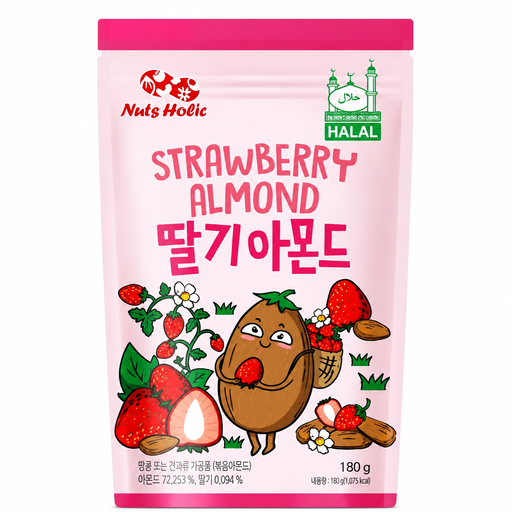 Image unavailable
This pack is a good choice if you fancy flavoured almonds during a film, rather than plain almonds. It contains 180 g; to check how much protein you’ll get from the amount you plan to serve, see the nutritional information on the packaging.
No. This claim has a specific requirement beyond the number of grams of protein. Under European Regulation (EC) No 1924/2006, at least 20% of a product’s energy value must come from protein for it to be described as ‘high in protein’. The E.Leclerc product pages for Couleurs Vives and Tokapi almonds list 27.4 g and 26.2 g of protein per 100 g respectively, but these figures alone don’t support the claim.
Either is suitable if you’re looking for a recipe made with almonds alone. Choose whichever texture you prefer and check the ingredients on the pack. For nuts, Manger Bouger, the Santé publique France website, recommends a small handful each day, without salt, sugar or chocolate.
No, they’re different recipes. Auchan lists 13 g of protein per 45 g Gerlinéa Fit et Protein bar and 20 g per 55 g Barebells bar, but almonds make up just 8.1% and 4% of these products respectively. So compare the protein per bar as well as the full ingredients list.
Before buying, check the declared allergens and ‘may contain’ warnings on the exact product. Almonds themselves aren’t suitable for anyone with an almond allergy; depending on the recipe, an almond bar may contain other ingredients you’ll need to consider too.