Almonds aren’t suitable for a snack that must be nut-free, even if they’re organic, unsalted or ground. If your nursery allows them and there are no individual restrictions, check the label of the product you choose. For children under 6, avoid whole almonds because of the risk of choking, in line with Manger Bouger’s recommendations.
Who is this advice for?
Families who need to avoid nuts
If your nursery or individual care plan (PAI) requires nuts to be avoided, almonds should be left out of snack time. The French Ministry of National Education says a PAI can specify dietary adjustments; its allergy information form also sets out different arrangements for snacks.
Families with children under 6
Even when almonds are allowed, their form matters. Manger Bouger recommends not giving whole nuts to children under 6 because of the risk of choking.
Families whose children are allowed almonds
If there are no restrictions, plain or unsalted almonds may suit your preferences. Still, check the ingredients and any ‘may contain’ warnings on the pack you choose, as well as your nursery’s rules.
What should you check before choosing?
Start with your nursery’s rules and the PAI, then consider the form of the snack and, only if almonds are allowed, its ingredients.
| Consideration |
What to check |
Who is this relevant to? |
| Allergen rules |
Check whether nuts and food brought in by families are allowed. Consult the PAI, particularly for any ‘may contain’ warnings. |
If the snack must be nut-free, I need an alternative to almonds. This would be the main concern for around 50% of consumers. |
| Age-appropriate form |
Avoid whole almonds for children under 6. Ground almonds mixed into a recipe are an option only where almonds are allowed. |
If a young child is allowed to eat almonds, I want to avoid giving them whole nuts. The form would be the top priority for around 30% of consumers. |
| Ingredients once almonds are allowed |
Check the ingredients on the exact product, whether it says ‘no added salt’ and any ‘may contain’ warnings. |
Once almonds are allowed, I may prefer a plain or unsalted product, without mistaking this for an absence of allergens. Ingredients would be the main consideration for around 20% of consumers. |
Mistakes to avoid
-
Assuming ‘organic’ or ‘unsalted’ means ‘nut-free’
These labels describe other characteristics: an almond is still a nut, whether it’s organic, roasted or unsalted.
If nuts must be avoided, choose a different snack and check the allergens listed on its label.
-
Only reading the front of the pack
An almond product may also carry a warning that it could contain traces of peanuts or other nuts. Éduscol’s allergy information form says it should be specified whether such products are acceptable for the child concerned.
Read the ingredients and precautionary warnings on the product you buy, then follow the PAI guidance if there is one.
-
Giving whole almonds to a child under 6
Manger Bouger advises against giving whole nuts to children under this age because of the risk of choking.
Don’t bring whole almonds. Ground almonds mixed into a recipe are only an option if the nursery and any individual guidance allow almonds.
Almond brands to know
These products show how forms and ingredients can vary; none is suitable when nuts must be avoided.
CARREFOUR BIO
Carrefour offers organic blanched almonds and organic ground almonds.
- Ground almonds can be mixed into a recipe instead of serving whole almonds, if they’re allowed.
- According to the ingredients listed by Carrefour, both products contain almonds: grinding them doesn’t remove the allergen.
CARREFOUR ORIGINAL
Carrefour offers a 200 g bag of roasted almonds with no added salt.
- The ‘no added salt’ label may suit your preferences when almonds are allowed.
- Carrefour warns that the product may contain traces of peanuts and other nuts. These whole almonds are not suitable for children under 6, in line with Manger Bouger’s recommendation.
SUN
Carrefour offers a SUN product of roasted blanched almonds, described as unsalted.
- The ingredients list published by Carrefour states that the product contains blanched almonds.
- They’re still whole nuts, so they’re not suitable when nuts must be avoided or for children under 6, in line with Manger Bouger’s recommendation.
Fruit snacks available on Joybuy
These fruit products are options to consider when almonds need to be avoided. Before taking them to nursery, check the ingredients, precautionary warnings and any rules that apply to snacks.
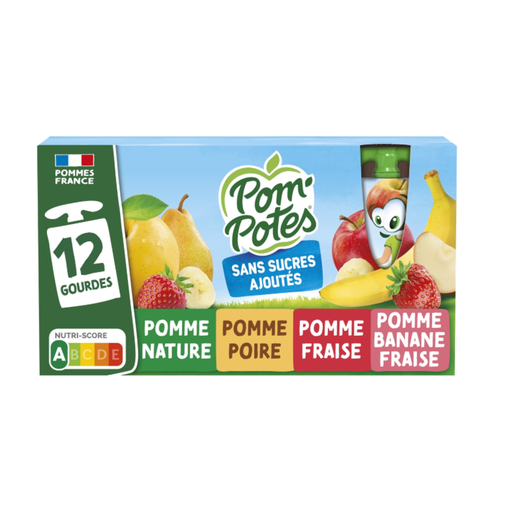 Image unavailable
POM'POTES Assorted Pouches, 12 × 90 g
The pouch format may work for a snack on the go if your nursery allows it. The pack contains 12 pouches of 90 g each; check the allergen information and any ‘may contain’ warnings on the packaging of the product you choose.
View on Joybuy
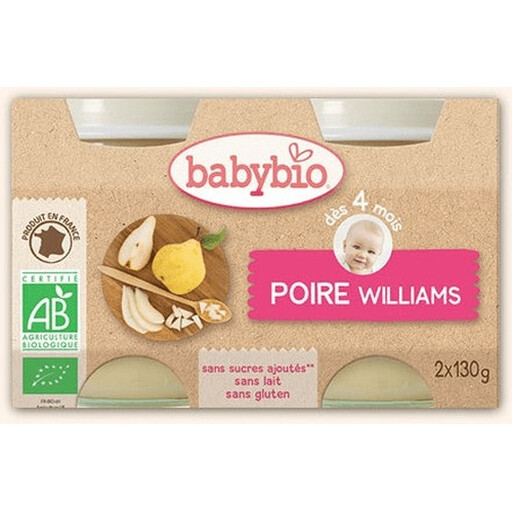 Image unavailable
Baby Bio Pear Purée Pots 4M, 2 × 130 g
These pear purée pots are another type of snack to discuss with your nursery. The pack contains two 130 g pots and is marked 4M; check the label and your nursery’s guidance before choosing them for the child concerned.
View on Joybuy
Frequently asked questions
Are almonds suitable for a nut-free snack?
No. Almonds are nuts themselves, so a recipe made entirely from almonds doesn’t meet a requirement to avoid nuts, whatever form it takes.
Is a product labelled ‘may contain traces’ acceptable?
That depends on the guidance for the child and the nursery. Éduscol’s allergy information form says it should specify whether products with such a warning can be eaten. If there’s a PAI, check it rather than relying on the label alone.
Can you take whole almonds to nursery?
Not for a child under 6: Manger Bouger recommends not giving whole nuts to children under this age because of the risk of choking. For an older child, you still need to follow the nursery’s rules and any allergy-related restrictions.
What can a PAI specify about snacks?
According to the French Ministry of National Education, an individual care plan can set out dietary adjustments. Its allergy information form includes options such as a snack where the setting excludes the relevant allergens, or one limited to food brought in by the family. Check which arrangement applies to your child.


