People who pay attention to added ingredients
If you’re sharing almonds during a film, you may prefer a plain recipe or roasted almonds with no added salt. If avoiding added oil matters to you too, check that this is stated on the pack you choose.


Almond product listings from Carrefour, Auchan and Monoprix show 51 to 57 g of fat per 100 g. Claims such as ‘no added salt’ or ‘no added oil’ don’t mean they’re lower in fat. If you want to enjoy almonds during a film, choose a recipe based on the ingredients you’d like to avoid. If your priority is reducing total fat, compare the nutritional information for other snack categories, but don’t treat them as equivalent to plain almonds.
If you’re sharing almonds during a film, you may prefer a plain recipe or roasted almonds with no added salt. If avoiding added oil matters to you too, check that this is stated on the pack you choose.
Your focus is on the fat content of the whole product, not just its seasoning. The almond products listed by Carrefour, Auchan and Monoprix contain 51 to 57 g of fat per 100 g. If you’re considering a different type of snack, compare the same nutritional line.
Before serving almonds, consider the almonds themselves and any warnings about possible traces. These warnings vary by product, so read the information on the pack you’re serving to anyone concerned.
For a film night, start with your priority: total fat content, the recipe’s ingredients or allergen information.
| Criteria | What to check | Who is it for? |
|---|---|---|
| Total fat | Compare the ‘fat’ line per 100 g on the packaging. Don’t assume that a product is lower in fat just because it has no added salt or oil. | If I want to reduce the fat in my snack, a less seasoned almond recipe won’t necessarily meet my needs. Around 42% of consumers would prioritise total fat content. |
| Added ingredients | Read the ingredients list and check any claims about added salt and oil. Also check the ‘salt’ value per 100 g. | If I want to have almonds to share during the film, I’d rather choose what’s been added to the recipe than switch snacks. Around 33% of consumers would make ingredients their first priority. |
| Allergens and traces | Check the allergens and trace warnings on the specific pack before serving it. | When sharing a snack with someone who has an allergy, I need to read the information on the product I’ve bought before offering it to them. Around 25% of consumers would make this check a priority. |
Salt and fat are two separate pieces of information. Listings for Auchan, Carrefour Original and Maître Prunille show 52 g, 55 g and 57 g of fat per 100 g respectively for their roasted almonds with no added salt.
If fat content is the reason for your choice, check the value per 100 g rather than relying on the claim about salt.
Carrefour describes its Daco Bello roasted almonds as roasted without added oil, while still listing 51 g of fat per 100 g.
Use this information to choose a recipe that suits your preference, and check the nutritional information separately.
Almonds are an allergen in their own right. Depending on the product, Auchan and Maître Prunille listings also warn that other allergens may be present in traces.
Check the ingredients and trace warnings on the exact pack before serving it.
The retailer offers a 400 g pack of roasted almonds with no added salt.
The products reviewed include Carrefour Le Marché blanched almonds and Carrefour Original roasted almonds with no added salt.
Carrefour describes a Daco Bello product as roasted almonds with no added salt or oil.
Monoprix offers a 250 g pack of Maître Prunille dry-roasted almonds with no added salt.
Aldi France offers a 200 g pack of TRADER JOE'S® blanched almonds with no salt.
Both of these snacks contain almonds, but one combines them with corn and the other is a fruit and nut bar. Choose them for their recipe and format, but don’t treat them as plain almonds or as lower-fat products.
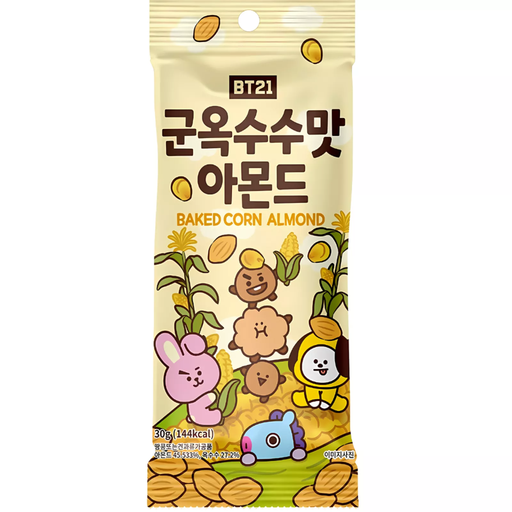 Image unavailable
The 30 g pack is a handy individual portion to enjoy during a film. This snack combines almonds and corn, and also contains sugar, rapeseed oil and salt. Check the allergen information on the packaging before sharing.
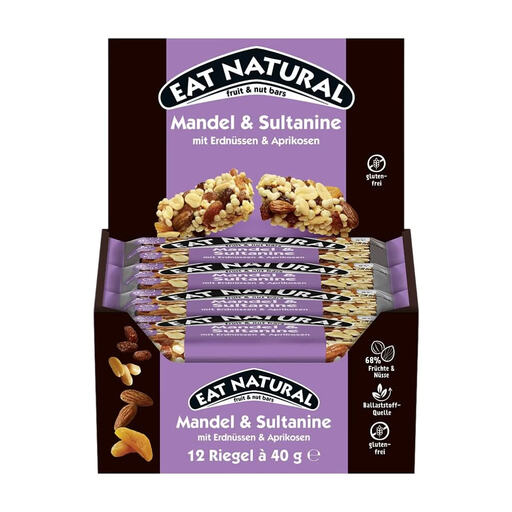 Image unavailable
This 40 g bar is an individual snack option if you’d prefer a mix of fruit and nuts to a pack of plain almonds. Its ingredients include raisins, peanuts, honey and apricots. Check the ingredients and allergen information on the packaging before serving.
The claim ‘no added salt’ doesn’t mean the product is lower in fat. The Auchan and Carrefour Original listings give 52 g and 55 g of fat per 100 g respectively for the products in question. Compare this line on the products you’re considering.
This claim describes the recipe or roasting process; it doesn’t mean the almonds contain no fat. Carrefour describes the Daco Bello product as roasted without added oil, while its listing gives 51 g of fat per 100 g.
First check for almonds, then look at the other ingredients and any trace warnings on the specific pack. Depending on the product, the Auchan and Maître Prunille listings warn that traces of peanuts, other nuts, gluten, soya, sesame or sulphites may be present.
Follow the instructions for the product you’ve bought. Auchan recommends sealing its pack tightly and eating the almonds within 15 days of opening. Maître Prunille advises storing its product in a cool, dry place away from light, then resealing the pack securely.