People comparing protein content
If you take a snack with you for around your workout, the ‘protein’ line and the portion you eat tell you more than a claim highlighted on the pack.


For lunch on the go, when protein intake matters, compare the figures per 100 g and then work them out for the portion you’ll take with you. The word ‘protein’ on a pack isn’t enough to tell you which product is right for you. Plain almonds let you keep things simple, while with a mix you’ll need to check the recipe. A ‘high in protein’ claim is also subject to a separate regulatory criterion; it isn’t determined by the protein figure alone. If nuts are standing in for lunch, also consider how much you’ll eat, along with the sugars, salt and allergens.
If you take a snack with you for around your workout, the ‘protein’ line and the portion you eat tell you more than a claim highlighted on the pack.
If you want a pack that’s easy to carry, check its size and how much you plan to eat. A no added salt option may fit your criteria, but you’ll need to check this for each product.
The ingredients list and any ‘may contain’ warnings matter just as much for a mix as they do for plain almonds. The DGCCRF reminds consumers that allergenic ingredients must be emphasised on the label.
First decide whether you want a simple ingredient list, the variety of a mix or a product with a protein claim. Then compare the nutrition information for the specific pack, using the same per-100 g basis.
| Criteria | What to check | Who is it for? |
|---|---|---|
| Protein content | Compare the protein per 100 g, then work it out for the portion you have in mind. A ‘high in protein’ claim is subject to a separate criterion. | When I take a snack with me around a workout, I want to know how much protein I’ll actually consume. Around 31% of consumers put this verifiable figure at the top of their list. |
| Portion to take with you | Check the pack weight and energy value per 100 g before deciding how much to take. | When I’m having lunch on the go, I want an easy-to-carry portion rather than treating the whole pack as one serving. A convenient pack size would be the main priority for around 31% of consumers. |
| Ingredients | Compare the sugars and salt per 100 g, then read the ingredients list, especially for a mix or flavoured product. | If I’m looking for almonds with no added salt, I don’t want to assume that a mix or flavoured pack meets the same criteria. Around 23% of consumers would put ingredients first. |
| Allergens | Read the highlighted allergens and any ‘may contain’ warnings on the pack you’re considering. | When buying for someone with an allergy, I need to be able to check the exact label, even if I already know the brand. This would be the top priority for around 15% of consumers. |
In the European Union, under the regulation published in the Official Journal of the European Union, this claim requires at least 20% of a product’s energy value to come from protein. The figure shown per 100 g does not, on its own, meet this definition.
If the claim is influencing your purchase, check the wording on the packaging and look at both the protein and energy values for the specific product.
The product listings for SUN Blanched Almonds and Carrefour Original roasted almonds with no added salt show 596 and 628 kcal per 100 g respectively. The total pack weight doesn’t tell you how much energy you’ll get from the amount you actually eat.
Decide how much you want to take with you before choosing a pack size.
Ingredients and nutritional values vary according to the recipe. Auchan’s category includes packs of almonds as well as various nut mixes.
Read the ingredients list, then compare the protein, sugars and salt per 100 g for the products you’re considering.
The Carrefour Original almonds listing warns that the product may contain traces of peanuts and other nuts. A short ingredients list doesn’t mean you can skip these warnings.
Check the label every time you buy, even if it’s a product you know well.
Carrefour France lists a 200 g pack of roasted almonds with no added salt.
Auchan France’s nuts and dried fruit category lets you compare almonds, walnuts and mixes.
SUN Blanched Almonds in a 500 g pack are a good option to compare using a specific nutrition listing.
These two packs of flavoured almonds are suited to taking along as a snack. If you’re looking for plain almonds or a no added salt option, check the ingredients before choosing them for lunch.
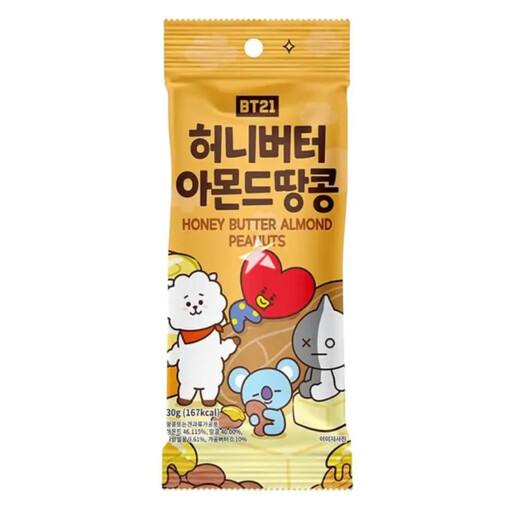 Image unavailable
The 30 g pack is a small amount of almonds to take with you. This product is seasoned, not plain, so if sugars or salt are part of your decision, check the nutrition information and ingredients on the pack. Also check the information about milk, soya and almonds.
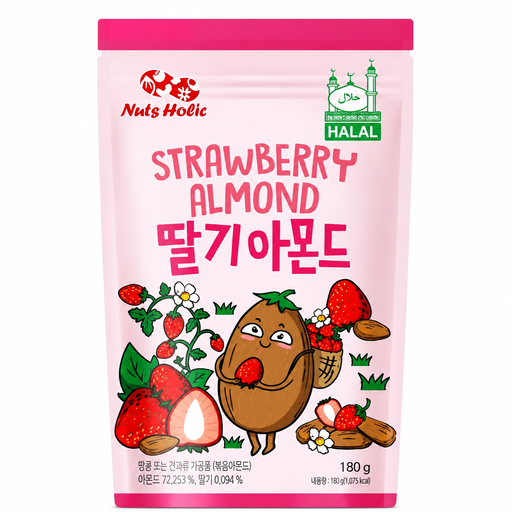 Image unavailable
This pack of strawberry-flavoured almonds can be portioned out before lunch on the go; 180 g isn’t a defined single serving. Check the ingredients and sugar and salt values if you’re comparing it with plain almonds. The listing warns that it may contain traces of cereals containing gluten, peanuts and sesame. Read the label on the pack if these allergens are a concern for you.
Not on the basis of that figure alone. The regulation published in the Official Journal of the European Union reserves the ‘high in protein’ claim for products where at least 20% of the energy value comes from protein. For the SUN almonds listed by Auchan France, 23 g of protein represents around 15.4% of the 596 kcal shown per 100 g.
First compare their nutrition information per 100 g, the basis for presentation highlighted by the DGCCRF for pre-packed foods. Then consider how much you’ll actually eat to work out the corresponding protein and energy intake, as well as the sugars and salt.
No: the recipe determines what it contains. If you’re choosing between a mix and plain almonds, compare the ingredients lists and the protein, sugar and salt values for the specific packs.
Read the highlighted ingredients and any ‘may contain’ warnings on every pack. The DGCCRF explains the rules on highlighting allergenic ingredients; for example, the Carrefour Original almonds listing warns that the product may contain traces of peanuts and other nuts.