For a garden party, choose shelled almonds if you want to fill a bowl, almond butter for toast or a dip, and a bar if individual portions are your priority; almond drink serves a different purpose. If protein content matters, compare the nutritional information for the specific product and the portion you’ll serve. The word ‘almond’ alone tells you neither how much protein it contains nor whether it will support sports recovery.
Who are these options for?
People comparing protein content
If you’re planning a snack around a sporting activity, check the protein listed per 100 g or 100 ml, then consider how much you intend to serve. A figure given for almond butter won’t tell you how much protein is in a drink or bar.
Hosts serving nibbles to share
Whole or shelled almonds are easier to serve in a bowl than almond butter or a drink. Check whether your chosen product is plain, roasted or seasoned, particularly if you’re looking for an option with no added salt.
Guests with food allergies
Keep the packaging handy so everyone can check the ingredients and any allergen warnings. For example, Carrefour’s product listing for Ethiquable almond butter mentions possible traces of other tree nuts, sesame and peanuts; this information applies to that specific product.
What should you look for?
First decide how you’ll serve the product, then compare the labels of options suited to that purpose.
Whole or shelled almonds
Choose these if: you want to put out a bowl of almonds for everyone to share.
Check: plain, roasted and seasoned options may have different ingredients; Auchan lists options with no added salt, for example.
Almond butter
Choose this if: you’re preparing toast or a dip rather than a bowl of nibbles.
Bear in mind: you’ll need something to serve it with, and should check the ingredients of your chosen product.
Almond protein bar
Choose this if: you want to hand out individual portions or offer something guests can take away.
Limitation: its name doesn’t prove that it supports recovery; check the nutritional information and ingredients.
Almond drink
Choose this if: you’d like to offer a drink alongside the buffet.
Limitation: its nutrition information may be given per 100 ml; consider the amount served before comparing it with a food measured per 100 g.
| What to consider | What to check | Who is it for? |
|---|
| Protein per portion |
The amount per 100 g or 100 ml, and how much you’ll actually serve. |
If I’m choosing a snack around a sporting activity, I want to know how much protein is in the portion being offered, rather than relying on the product name. Around 40% of consumers put this comparison first. |
| Sharing with others |
The pack format and ingredients list, particularly to distinguish an option with no added salt from a seasoned one. |
When setting out nibbles, I look for almonds that are easy to put in a bowl and whose ingredients guests can check. Around 30% of consumers put sharing first. |
| Individual portions |
The amount per unit, along with the protein, sugars and allergens listed on the packaging. |
After an activity, I’d rather hand everyone an individual snack to take away than serve a shared pot. Around 30% of consumers prioritise individual portions. |
What should you watch out for?
-
Assuming all ‘almond’ products are alike
Monoprix Courses lists 23 g of protein per 100 g for Nu3 almond butter, compared with around 1.8 g per 100 ml for Bjorg Amande protéines Bio drink. These figures are for two specific products, use different units and relate to different uses.
For the product you plan to serve, read the nutritional information and compare it with the amount you’ll offer. Don’t assume the figures for one product apply to the whole category.
-
Expecting a bar to guarantee recovery
A bar may be convenient to carry or hand out as an individual snack, but its name doesn’t prove that it supports recovery. Anses warns of risks associated with certain supplements and fortified foods aimed at sportspeople.
Choose a bar for its format and check its nutritional information; don’t assume it promises better performance.
-
Making allergens hard to identify on the buffet
Ingredients and possible traces vary by product. The Ethiquable almond butter listed by Carrefour contains almonds and may contain traces of other tree nuts, sesame and peanuts.
Keep the packaging handy and label dishes containing almonds. If a guest needs to avoid certain allergens, choose an option with them so they can check the label.
Brands and retailers to consider
Carrefour Le Marché
Carrefour offers Le Marché shelled almonds in a 200 g bag, a size worth considering if you’re filling a bowl.
- The bag size is specified.
- To compare protein content, check the nutritional information for this product on the packaging.
Auchan
Auchan’s almond range includes unsalted options and roasted almonds with no added salt, in a variety of pack sizes.
- The different options let you choose between plain almonds and a seasoned version.
- Read the ingredients and nutritional information for the product you choose; you can’t assume they’re the same across the whole range.
Bio Village
E.Leclerc offers Bio Village roasted almonds with no added salt.
- The product listing gives its composition as 97.5% almonds and 2.5% sunflower oil.
- This product isn’t made from almonds alone, so bear that in mind if your recipe calls for a single ingredient.
Monoprix
Monoprix Courses offers Nu3 almond butter and a Bjorg almond drink, two products for different uses.
- Their product listings give 23 g of protein per 100 g and around 1.8 g per 100 ml respectively.
- These figures relate to these two products and can’t be compared without taking the units and serving sizes into account.
ALDI / TRADER JOE'S®
ALDI France offers TRADER JOE'S® roasted almonds with no added salt in a 200 g bag.
- The pack size and ‘no added salt’ claim are specified for this product.
- To check its protein content, consult the nutritional information on the bag you choose.
Alesto
Lidl includes Alesto almonds ‘au naturel’ in its range of nuts and snacks for sharing.
- This option may be suitable for serving in a bowl.
- Check the ingredients and nutritional information on the specific product before comparing it with other almonds.
Almond-based snacks on Joybuy
These two flavoured snacks offer two ways to serve almond-based products: a bag to pour into a sharing bowl and a small individual pack. Check the label against your needs before choosing.
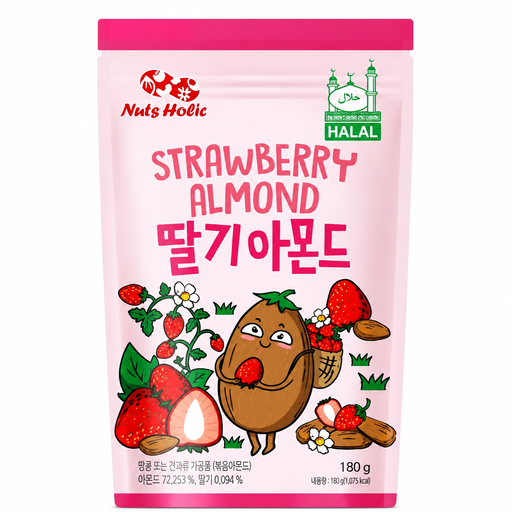 Image unavailable
Nutsholic Almonds, strawberry flavour, 180 g
Worth considering if you’d like to pour a flavoured almond-based snack into a sharing bowl. The bag contains 180 g. To compare the nutritional value of a serving, check its nutrition information and the ingredients and allergen list.
View on Joybuy
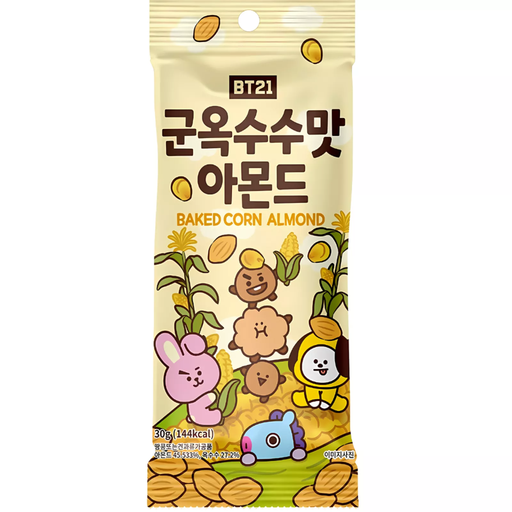 Image unavailable
BT21 roasted corn-flavoured almonds, 30 g
Worth considering if you’d prefer to offer a small, individually packed almond-based snack. This 30 g pack doesn’t remove the need to check the protein per portion, ingredients and allergens listed on the packaging.
View on Joybuy
Frequently asked questions
Is the word ‘protein’ on an almond product enough to help you choose?
No. Compare the nutrition information for the specific product with the amount you’ll serve. Monoprix Courses lists 23 g of protein per 100 g for Nu3 almond butter, while its product listing for a Bjorg drink gives around 1.8 g per 100 ml: the units and uses are different.
How should you serve almonds if guests have allergies?
Label dishes containing almonds and keep their packaging handy so guests can check the ingredients and any possible traces. For example, Carrefour’s product listing for Ethiquable almond butter mentions possible traces of other tree nuts, sesame and peanuts; always check the specific product being served.
Does an almond bar guarantee recovery after sporting activity?
No. Its format or name doesn’t prove that it has this effect. Choose it based on the portion and nutritional information that matter to you; Anses also warns of risks associated with certain supplements and fortified foods aimed at sportspeople.
Can you replace edible almonds with apricot kernels?
No. They’re different products: Anses states that apricot kernels contain amygdalin, which can release cyanide during digestion. For your buffet, use clearly labelled edible almonds.


