For frequent journeys, choose a ready-to-go portion or prepare one in a small container. If you eat almonds regularly, a larger bag to portion out at home could also suit you. Before buying, check whether you’re choosing plain almonds or an almond-based snack, and look at the quantity, ingredients and allergen information. According to ADEME, individually wrapped portions generate more packaging waste.
Who are these formats for?
Students who are often on the go
If you want a snack you can pop in your bag without having to prepare it before you leave, a ready-made portion or a small container is handy. Individual bags mean you don’t have to carry your whole supply, but they do create more packaging.
Students stocking their first cupboard
If you’re planning to keep a few snacks on hand, choose a quantity that suits how much you eat and the space you have to store it. A larger bag to portion out at home means you’ll need a container for taking some with you.
Students who pay attention to ingredients
If you’re looking for plain or roasted almonds with no added salt, check the product name and ingredients list for the exact product you’re considering. Check the allergen information too, especially if you’ll be sharing your snack.
What should you look at first?
When you’re moving into student accommodation, start by thinking about your journey, then choose a quantity you can store and get through. Next, check the ingredients to see whether you’re buying almonds on their own or a recipe with other ingredients.
| What to consider |
What to check |
Who is it for? |
| Taking it with you |
Quantity per bag and whether it can be resealed, or whether you have a suitable container to prepare a portion. |
Between home and campus, I want to put a snack in my bag without taking my whole supply; around 40% of consumers put ease of transport first. |
| Quantity to store |
Net weight, cupboard space and the best-before date shown on the pack. |
When stocking my cupboard, I prefer a quantity that suits how often I eat almonds; this is the main consideration for around 30% of consumers. |
| Ingredients |
Ingredients, any added salt or other ingredients, and allergen information. |
If I’m looking for almonds with no other ingredients, or plan to share the bag, I need to read the label for the exact product; around 30% of consumers put ingredients and allergens first. |
To reduce packaging, you can use a reusable container to prepare a portion from a larger bag. ADEME recommends avoiding individual portions where possible, as they generate more packaging waste.
What should you avoid confusing?
-
Confusing almond flavour with a bag of almonds
An almond-flavoured pastry or snack isn’t the same as a portion of whole almonds.
Check the product name and the first ingredients listed before choosing your snack.
-
Assuming ‘no added salt’ means ‘almonds only’
The Bio Village product described by E.Leclerc contains almonds and sunflower oil, while the Couleurs Vives product we checked lists only blanched almonds.
If this distinction matters to you, read the ingredients list for the variant you’re buying, even if it says ‘no added salt’.
-
Forgetting about allergens when sharing a snack
A product that looks simple may still contain information that matters to someone with an allergy.
Before buying or sharing, check the allergen information and full ingredients list on the exact pack.
Brands to know
These products give you examples of formats and ingredients to compare. The details below apply to the products mentioned, not to every product from each brand.
Carrefour Le Marché
The blanched almond product featured by Carrefour comes in a 200 g bag. It may suit you if you want to prepare several portions without buying a large pack.
- Carrefour’s product listing names ‘ALMOND’ as the ingredient.
- For journeys, you’ll still need to prepare a portion or find a suitable container.
Daco Bello
The Daco Bello products we checked include 125 g bags of blanched almonds and 375 g bags of roasted almonds with no added salt.
- The 125 g bag takes up less space in a cupboard or bag.
- If you don’t want to take the whole bag with you, you’ll need to prepare a portion from the 375 g pack before you leave.
Bio Village
The Bio Village product described by E.Leclerc is a 100 g bag of organic roasted almonds with no added salt.
- The 100 g size is a good option if you’re looking for a small bag.
- Its ingredients list shows 97.5% almonds and 2.5% sunflower oil, so it doesn’t contain almonds alone.
Couleurs Vives
The Couleurs Vives product described by E.Leclerc is a 250 g bag of dry-roasted blanched almonds with no added salt.
- The ingredients list for this product names only blanched almonds.
- You’ll need to portion out the 250 g bag if you only want to take one snack with you.
Joybuy picks for taking on the go
The product featured here is a small corn-flavoured almond snack to consider for taking with you. Its recipe is not the same as a bag of plain almonds.
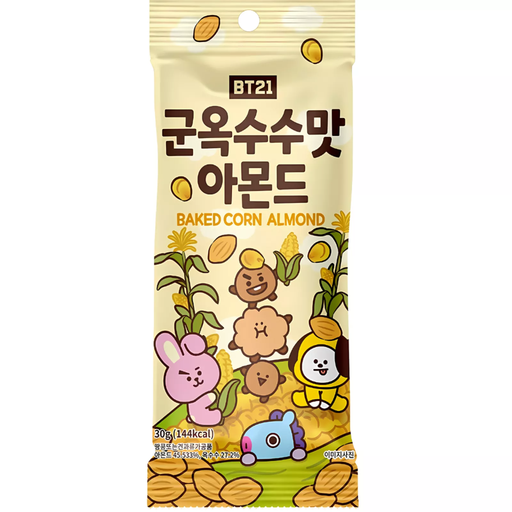 Image unavailable
BT21 Baked Corn Flavor Almond 30 g
The 30 g bag is a small format worth considering for a journey. If you’re looking for plain almonds, bear in mind that this corn-flavoured recipe also contains sugar, honey and refined salt. Check the label for allergen information and to see whether the bag can be resealed.
View on Joybuy
Frequently asked questions
Should you choose individual bags for classes and journeys?
Not necessarily. They save you having to prepare a portion before leaving, but a small container filled at home can do the same job. ADEME recommends avoiding individual portions where possible, as they generate more packaging waste.
How can you tell if a product contains only almonds?
Read the product name and ingredients list on the pack. ‘No added salt’ isn’t enough to tell you: the Bio Village product featured by E.Leclerc also contains sunflower oil, while the Couleurs Vives product we checked lists only blanched almonds.
Does ‘no added salt’ tell you anything about allergens?
No, it refers to salt. If you have an allergy, or before sharing a snack, check the allergen information and ingredients list on the exact pack.
What should you check on a pre-packed bag of almonds?
Check the product name, net quantity, ingredients, nutritional information and allergens. The DGCCRF lists these among the labelling information to check on pre-packed food. You should also check the best-before date and storage instructions on your pack.
What should you do with the bag after eating the almonds?
Check the recycling guidance on the pack and your local instructions. ADEME says packaging should go in the designated recycling bin, which is usually the yellow bin.


