People topping up their lunch after exercise
If your lunch already includes other foods, almonds can add plant-based protein. Anses classifies almonds as oilseeds that provide protein, but that doesn’t make a handful of almonds a complete meal.


To add almonds to your lunch at work, choose whole plain almonds or ones roasted without added salt if you prefer a simple ingredient list. An almond bar may suit you better if you want a portion that’s ready to take with you, but its protein content, ingredients and allergens vary by recipe. Assess an almond drink separately, based on how much you actually drink.
If your lunch already includes other foods, almonds can add plant-based protein. Anses classifies almonds as oilseeds that provide protein, but that doesn’t make a handful of almonds a complete meal.
A bag of plain almonds or almonds roasted without added salt lets you take a simple recipe to work. Check the ingredients list, pack size and allergen information for the specific product.
An almond bar is easy to carry and needs no preparation. However, the recipes mentioned by Auchan and Monoprix combine almonds with other ingredients, so check the portion size, nutritional information and allergens together.
Start with what you need most from your lunch, then compare the nutritional values per portion. For a drink, look at the amount you consume; for almonds and bars, you can also compare values per 100 g.
| Criteria | What to check | Who is it for? |
|---|---|---|
| Protein in your lunch | Protein per 100 g and then per planned portion; how the product fits into your lunch. | After exercise, I want to know how almonds contribute to my lunch without confusing them with the whole meal. Around 33% of consumers prioritise protein intake. |
| Easy-to-carry format | Pack or bar size; storage instructions. | When I’m juggling work commitments, I’m mainly looking for a portion that’s easy to carry and eat without preparation. Convenience is the main priority for around 27% of consumers. |
| Ingredients | Ingredients, the proportion of almonds if stated, and sugars and salt per portion. | If a bar has the word ‘almond’ in its name, I want to know what it actually contains before choosing it. Around 27% of consumers prioritise ingredients. |
| Allergens | Highlighted allergenic ingredients and any ‘may contain’ warnings on the pack you choose. | If I need to avoid a specific ingredient, a different recipe could change my choice, even within the same category. Around 13% of consumers prioritise whether a product meets their requirements. |
The Eat Natural bar featured by Auchan contains 55% peanuts and 2.5% almonds. The product name alone doesn’t tell you how much of each ingredient it contains.
Read the ingredients list and check the percentage of almonds if it’s shown on the packaging.
The Couleurs Vives almonds roasted without added salt listed by E.Leclerc provide 27.4 g of protein and 629 kcal per 100 g. These values may not reflect the amount you eat at lunch.
Check protein, energy, sugars and salt per 100 g, then look at the values for your portion.
The Bjorg Amande protéines Bio drink featured by Monoprix lists 1.8 g of protein per 100 ml and contains 2% almonds as well as pea protein.
For a drink, start with the volume you plan to have and check the ingredients to see where its protein comes from.
Recipes featured by Auchan and Monoprix show that bars containing almonds may also contain peanuts, milk or soya. So the name ‘almond’ isn’t enough to tell you whether a bar is suitable for you.
Check which allergenic ingredients are highlighted and look for any ‘may contain’ warnings on the product you choose.
Carrefour lists a 90 g bag of Carrefour Bio blanched, unroasted almonds.
E.Leclerc lists Couleurs Vives blanched almonds, roasted without added salt.
Auchan’s product listings let you compare several bars containing almonds, including Eat Natural and Kellogg's.
Monoprix lists, among other products, a Barebells White Chocolate Almond bar and a Bjorg Amande protéines Bio drink.
Aldi France lists a 200 g bag of Trader Joe's roasted almonds.
These two flavoured bags could go with your lunch at work or make a handy snack. Their names and formats set them apart from the plain or unsalted roasted almonds mentioned above, so check the label against your needs.
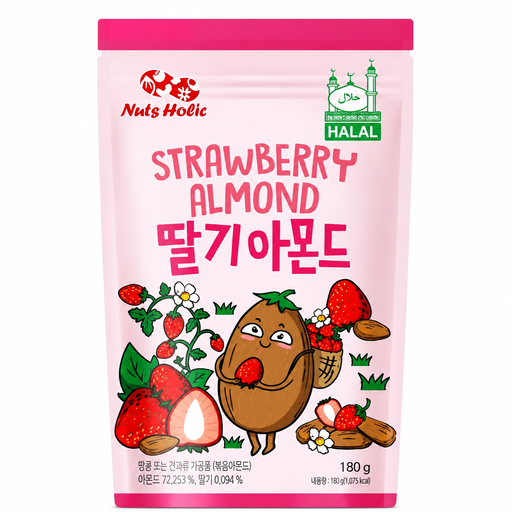 Image unavailable
A strawberry-flavoured bag to consider if you’d like to take an almond snack to work. The listed pack size is 180 g. Decide how much you’ll eat, then check the nutritional information and allergens on the label.
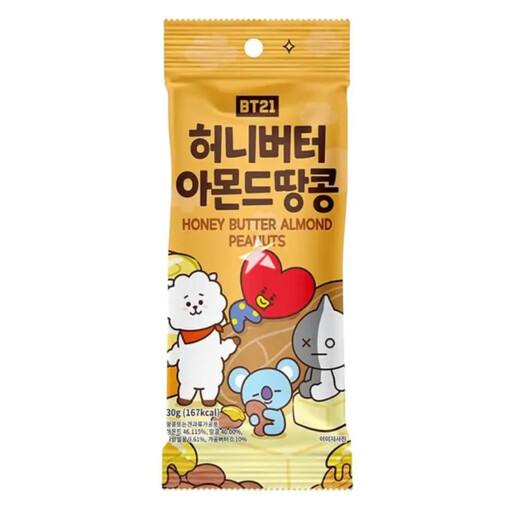 Image unavailable
The 30 g bag is handy when you want a snack to take with you and don’t have time to prepare anything. To see how it fits into your lunch, check the protein and sugars per bag, as well as the ingredients list and allergens.
No. As Anses notes, almonds provide plant-based protein, but a handful of almonds isn’t enough to make up the lunch discussed here. Think of them as one food to include in your meal, rather than an automatic substitute for it.
Compare the nutritional values per 100 g and then for the amount you’ll eat, before checking the ingredients. For example, the Eat Natural bar featured by Auchan contains 55% peanuts and 2.5% almonds: ‘almond’ doesn’t tell you everything about the recipe.
They’re a good option if you’re looking for a snack with no added salt, but be sure to check the label of the specific product you choose. The Couleurs Vives roasted almonds listed by E.Leclerc contain 0 g of salt per 100 g.
Read the ingredients list. France’s Directorate General for Competition, Consumer Affairs and Fraud Control says that allergenic ingredients must be highlighted in the list. Also check the packaging of the specific product you’re buying for any ‘may contain’ warnings.
Follow the instructions on each pack rather than assuming almonds, bars and drinks all need to be stored in the same way. If you’ve opened an almond drink, pay particular attention to the manufacturer’s storage instructions and how soon it should be consumed.