If a guest needs to avoid almonds, don’t serve them almonds: the European Commission classifies them as an allergenic tree nut. For everyone else, choose a recipe based on the salt content and added ingredients, then check the allergen and ‘may contain’ information on the specific pack you’re serving.
Who is it for?
Those cutting down on added salt
You’re looking for almonds to serve with drinks, with a short ingredients list. Compare the ingredients and the salt content in the nutritional information: options with no added salt and salted varieties are both available.
Those taking allergens into account
You need to know exactly what a guest must avoid before you choose. Almonds aren’t suitable for anyone who needs to avoid almonds; for other allergens, also check the ‘may contain’ warnings on the specific pack.
Those who prefer a single-ingredient recipe
You prefer roasted almonds with no added oil or seasoning. Daco Bello and Maître Prunille offer products that list almonds as the only ingredient; check their allergen warnings separately.
What should you check?
When you’re having friends round for drinks and nibbles, first identify the allergens you need to avoid. Then compare the recipe and pack size of products that are suitable for your guests.
| Consideration | What to check | Who is it for? |
|---|
| Allergens |
Identify the allergen to avoid, then check the ingredients and ‘may contain’ information on the pack. If almonds need to be excluded, choose a snack from another category. |
When a guest needs to avoid an allergen, I want to choose a suitable product before thinking about its seasoning; around 42% of consumers put this compatibility first. |
| Salt and added ingredients |
Compare the ingredients list and the ‘salt’ line in the nutritional information, rather than relying on the word ‘roasted’ alone. |
If I prefer almonds with no added salt or oil to serve with drinks, the ingredients matter more to me than a salty taste; this is the main consideration for around 33% of consumers. |
| Flavour and pack size |
Choose the seasoning and pack size to suit the number of guests, and check the storage instructions for after opening. |
When sharing a pack with friends, I’m mainly looking for a flavour that suits the group and a size that lets me store any leftovers; around 25% of consumers prioritise this. |
Mistakes to avoid
-
Assuming ‘no added salt’ means ‘allergen-free’
The claim refers to salt, but the product still contains almonds. Some products also warn that they may contain traces of other allergens.
If a guest needs to avoid almonds, choose a snack from another category. For any other exclusions, check the ingredients and warnings on the exact pack.
-
Choosing based on the word ‘roasted’ alone
‘Roasted’ doesn’t tell you everything about the recipe. According to E.Leclerc, Tokapi roasted and salted almonds also contain sunflower oil and salt; Daco Bello and Maître Prunille products list only roasted almonds as an ingredient.
Compare the ingredients and nutritional information for each product before choosing.
-
Forgetting how to store a large pack
A sharing-size pack may leave you with almonds after your get-together. For its 400 g product, Auchan says to reseal the pack tightly and consume its contents within 15 days of opening.
Choose a pack size to suit your guests and follow the instructions printed on the product you buy.
Brands to consider
Daco Bello
The brand offers a 250 g pack of roasted almonds with no added salt.
- Daco Bello lists roasted blanched almonds, with no added salt or fat.
- The product information warns that it may contain traces of peanuts, other tree nuts, sesame, wheat, soya and sulphites.
Maître Prunille
Monoprix offers a 250 g pack of dry-roasted almonds with no added salt.
- The listed ingredient is blanched almonds.
- Monoprix’s product information mentions other allergens handled at the facility, including tree nuts, peanuts, sesame and soya.
Auchan
Auchan offers a 400 g pack of roasted almonds with no added salt.
- For this product, Auchan states that it contains less than 0.1 g of salt per 100 g.
- The product information warns that it may contain traces of several allergens. After opening, Auchan advises sealing the pack tightly and consuming its contents within 15 days.
Tokapi
E.Leclerc offers Tokapi roasted and salted almonds to serve with drinks.
- The published recipe makes it easy to distinguish this product from almonds with no added salt.
- According to E.Leclerc, it contains 94.5% almonds, 4.5% sunflower oil and 1% salt, so it isn’t suitable if you’re looking for a single-ingredient recipe.
An option on Joybuy
If you need to avoid almonds when serving drinks and nibbles, this selection features a snack from another category. However, check its packaging for the relevant allergens before serving.
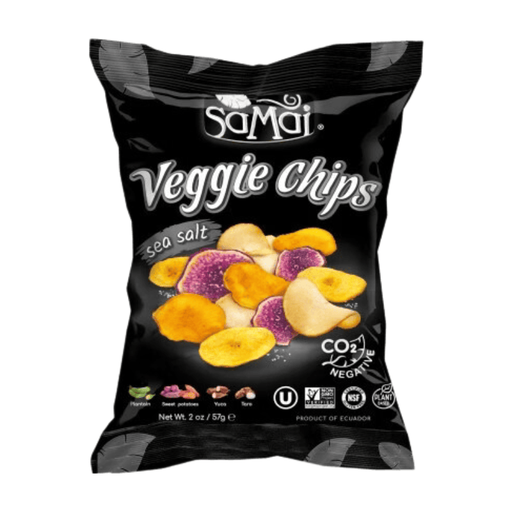 Image unavailable
SAMAI Veggie chips 57 g
A different kind of snack to consider serving with drinks if you’re looking for an alternative to almonds. The pack contains 57 g; the product name doesn’t guarantee that it’s allergen-free. Check the ingredients and ‘may contain’ information on the packaging against your guests’ dietary requirements.
View on Joybuy
Frequently asked questions
Can you serve almonds to someone who needs to avoid them?
No: almonds contain precisely the ingredient they need to avoid. The European Commission classifies almonds as an allergenic tree nut; choose a snack from another category and check its label for the relevant allergens.
Does ‘no added salt’ mean ‘allergen-free’?
No. This claim relates to salt, not allergens: the almonds are still there, and some products with no added salt carry ‘may contain’ warnings.
What should you do if the pack says ‘may contain traces’?
Check this warning against the allergen your guest needs to avoid. Even if that allergen isn’t listed in the ingredients, a ‘may contain’ warning shouldn’t be taken as a guarantee that it’s absent.
How should you store leftover almonds after your get-together?
Follow the instructions on the pack you bought. For its 400 g roasted almonds with no added salt, Auchan advises sealing the pack tightly and consuming the rest within 15 days of opening.


