When choosing an almond drink as part of managing diabetes, compare the carbohydrates and sugars per 100 ml, then work out how those values relate to the amount you drink: “no added sugars” isn’t enough. If you also need to avoid gluten completely, check that the exact product is labelled “gluten-free” and read any precautionary statements about traces. If you regularly use it instead of milk, compare the calcium and protein values too.
Who are these criteria for?
People who keep track of their carbohydrate intake
If you count carbohydrates as part of your diet, the nutrition table helps you compare two drinks on a like-for-like basis and then factor in the amount you actually consume. Assurance Maladie recommends using this information to compare products while shopping.
People with coeliac disease who strictly avoid gluten
The name “almond drink” alone doesn’t confirm that a product is gluten-free. Check the exact product: for example, an Andros product listing viewed on Carrefour’s website warns that it may contain traces of gluten.
People who often use it instead of milk
If you regularly pour this drink over cereal, add it to coffee or use it in a recipe, compare the calcium and protein values and choose a product that suits how you plan to use it. Ingredients and nutritional values vary between products.
What should you check first?
Start with your non-negotiables: check that the drink is gluten-free if you need to avoid gluten completely, then look at the carbohydrates in your serving. Calcium, protein and whether you can find an alternative matter too, depending on how often you use it.
| What matters |
What to check |
Who is this for? |
| Carbohydrates and sugars |
Compare both values per 100 ml, then factor in the amount you actually pour. Don’t confuse “no added sugars” with “no carbohydrates”. |
I want to include the drink in my dietary tracking without relying on the claim on the front of the pack. Around 34% of consumers concerned put tracking their carbohydrate intake first. |
| Gluten-free status |
Look for a “gluten-free” claim on the exact product and read the allergen and precautionary statements. |
If I need to avoid gluten completely, another almond drink may not be suitable. This check is a priority for around 33% of consumers concerned. |
| Regularly using it instead of milk |
Compare the calcium and protein values per 100 ml, as well as the ingredients for the way you plan to use it. |
I often use it at breakfast or in cooking, and want to know what it contributes nutritionally rather than assume it’s equivalent to milk. Around 20% of consumers concerned prioritise this. |
| Finding an alternative |
If your usual product is out of stock, check the essentials on the alternative carton too, especially its gluten status if needed and its carbohydrates per 100 ml. |
When my usual product is unavailable, I want to be able to choose another without assuming the labels are identical. Around 13% of consumers concerned prioritise having this option. |
Shopping mistakes to avoid
-
Reading “no added sugars” as “no carbohydrates”
This claim doesn’t replace the carbohydrate and sugar values in the nutrition table. Compare two cartons using the same quantity before working out what’s in your serving.
Check the values per 100 ml, then calculate how they relate to the amount you plan to drink.
-
Assuming “almond” means gluten-free
Claims vary between products: the Provamel listing viewed on Carrefour’s website states “gluten-free”, while the Andros listing warns that it may contain traces of gluten.
If you need to avoid gluten completely, look for a “gluten-free” claim and check the information on the carton you buy, especially if the recipe or pack size has changed.
-
Assuming all plant-based drinks have the same nutritional profile
Calcium and protein values vary from one product to another. The almond content alone doesn’t tell you everything about its nutritional profile.
If you use it regularly, compare the nutrition information per 100 ml and make sure the recipe suits your coffee, cereal or cooking.
-
Choosing an alternative without checking the label
Another almond drink may have different gluten warnings and nutritional values.
Before comparing other features, check that the alternative meets your essential requirements.
Brands and products to consider
Carrefour Bio
Carrefour’s description of its organic almond drink with no added sugars makes it worth considering if you want to compare its ingredients and nutritional information.
- Carrefour’s product listing states that the recipe contains 2.8% almonds and cassava starch.
- If you need to avoid gluten completely, look for a “gluten-free” claim on the exact carton before choosing it.
Provamel
An organic almond drink whose product listing viewed on Carrefour’s website claims that it is “gluten-free”.
- Carrefour’s product listing describes a recipe containing 5% almonds.
- Check the claims on the packaging of the product you buy, as well as its availability at your retailer.
La Mandorle
A product worth comparing if you use almond drink regularly and calcium and protein factor into your choice.
- The product listing viewed on Carrefour’s website states that it contains 0.5 g of carbohydrates and 1.5 g of protein per 100 ml.
- Check the packaging for calcium and gluten information for the exact product.
Andros Gourmand & Végétal
An unsweetened almond drink featured on a Carrefour product listing, worth considering in light of your dietary requirements.
- The product listing states that it contains 2.5% almonds.
- It states, “May contain traces of GLUTEN”: don’t assume it’s gluten-free simply because it’s an almond drink.
Éthiquable
An organic, unsweetened almond drink described as suitable for drinking or cooking.
- The recipe featured by Carrefour contains 2.8% almonds and carob flour.
- If gluten-free is essential, look for this claim on the carton of the product you choose.
Almond drinks available on Joybuy
These products give you a range of almond drinks to compare for everyday shopping, including varieties designed for coffee. Their stated values can help you compare servings. If gluten-free is essential, always check the claim on the exact carton.
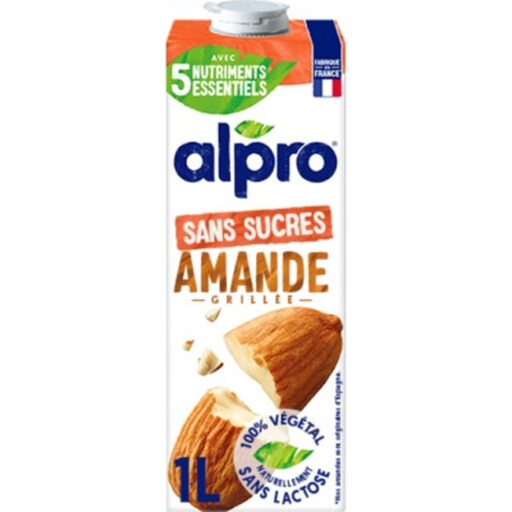 Image unavailable
Alpro Almond Unsweetened UHT 1 L
Worth considering if you’re looking for an unsweetened almond drink: its product description claims it is “gluten-free”, but check the carton to confirm if you need to avoid gluten completely.
The description states that it contains 0 g of sugars per 100 ml, 2.3% almonds, and added calcium and vitamins D2, E, B2 and B12. Check the total carbohydrate value on the packaging too, so you can work out what’s in your serving.
View on Joybuy
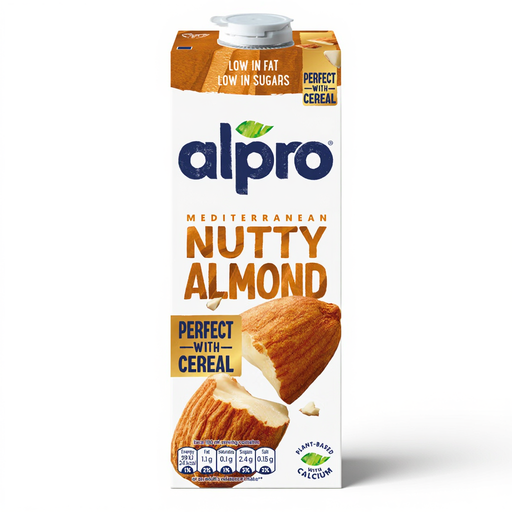 Image unavailable
Alpro Almond Drink 1 L
Worth comparing if your priority is knowing how many carbohydrates are in the amount you pour. If you need to avoid gluten completely, look for the relevant claim on the carton.
The product listing states that it contains 3 g of carbohydrates and 3 g of sugars per 100 ml, as well as added calcium and 2.3% almonds.
View on Joybuy
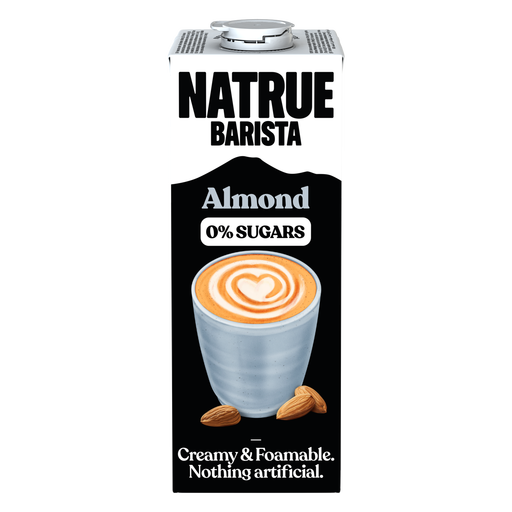 Image unavailable
NATRUE 0% Almond Drink Barista Edition 1 L
This Barista Edition is worth considering for coffee, while keeping an eye on the nutritional values in the amount you pour.
The product listing states that it contains 0.2 g of carbohydrates, 0 g of sugars and 0.7 g of protein per 100 ml, as well as 2% almonds. Check the carton for calcium and, if needed, a “gluten-free” claim.
View on Joybuy
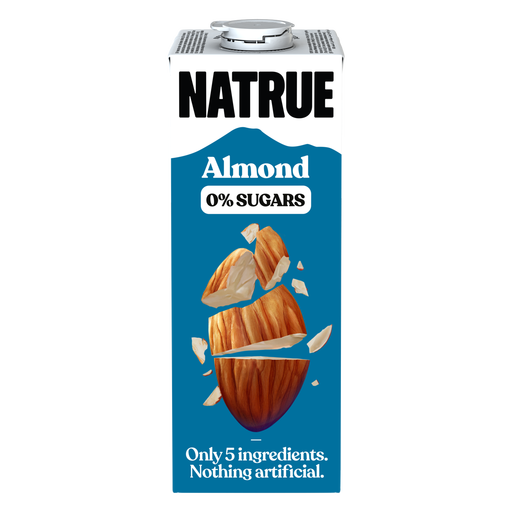 Image unavailable
NATRUE 0% Almond Drink 1 L
Worth comparing for cereal or coffee if you want to work out how many carbohydrates are in your serving.
The product listing states that it contains 0.1 g of carbohydrates, 0 g of sugars and 0.6 g of protein per 100 ml, as well as 2% almonds. Check the packaging for calcium and a “gluten-free” claim if these matter to your choice.
View on Joybuy
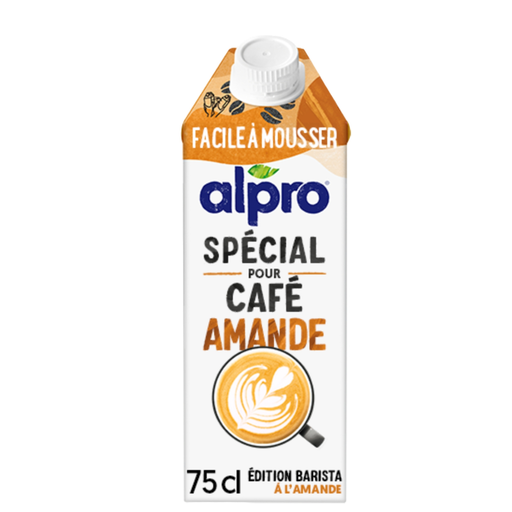 Image unavailable
Alpro Barista, almond-flavoured plant-based drink, 75 cl
This variety is designed for coffee, but remember to factor in how much you use in each drink when checking its nutritional values.
The product listing states that it contains 2.5 g of carbohydrates, 2.5 g of sugars and 0.5 g of protein per 100 ml, as well as calcium. If you need to avoid gluten completely, check the claim on the packaging of this variety.
View on Joybuy
Frequently asked questions
Is an almond drink automatically suitable for someone with coeliac disease?
No: the product category doesn’t confirm that a drink is gluten-free. Look for a claim on the exact product and read any warnings about traces. For example, the Andros listing viewed on Carrefour’s website warns that it may contain traces of gluten.
Is “no added sugars” enough to compare two almond drinks?
No: compare the carbohydrates and sugars per 100 ml too, then calculate how those values relate to your serving. Assurance Maladie notes that values per 100 g or 100 ml allow you to compare products on a like-for-like basis.
What should I look for if I often use almond drink instead of milk?
Check the calcium and protein values for the product you’ve chosen, as well as its ingredients and intended use. Don’t assume that all plant-based drinks have the same nutritional values.
What should I check if my usual gluten-free product is unavailable?
Check the new carton rather than assuming it’s equivalent: look for a “gluten-free” claim if needed, check for any warnings about traces, then compare carbohydrates and sugars per 100 ml. If you often use this drink instead of milk, compare the calcium and protein too.


