What should you look for in store?
First, distinguish plain almonds from varieties with added ingredients, then consider the values per 100 g in relation to how much you plan to eat.
| What matters |
What to check |
Who it’s for |
| Portion size and energy |
The energy per 100 g and the amount you’ll actually serve. |
If you want a snack of a set size, eating straight from the pack makes it harder to manage. Around 40% of shoppers are said to prioritise portion control. |
| Plain ingredients |
The ingredients list and whether any sugar, salt or seasoning has been added. |
If you want the taste of almonds without a coating or seasoning, check the ingredients before the pack design. Looking for plain almonds is said to be a priority for around 30% of shoppers. |
| Nutrition information |
Carbohydrates, including sugars, as well as fibre, fat and salt per 100 g; then the values per portion. |
If your snack needs to fit into your personal eating plan, one figure on the front of the pack isn’t enough. Around 20% of shoppers are said to prioritise checking the full label. |
| Pack size |
The net weight and storage instructions once opened. |
A pack you open several times serves a different purpose from an amount prepared for a single snack. Around 10% of shoppers are said to choose first according to the pack size that suits their needs. |
A flavoured option on Joybuy
This selection features a 30 g pack of corn-flavoured almond snacks. If you’re looking for plain almonds with no added ingredients, check the ingredients before choosing this product: an individual pack size alone doesn’t meet that requirement.
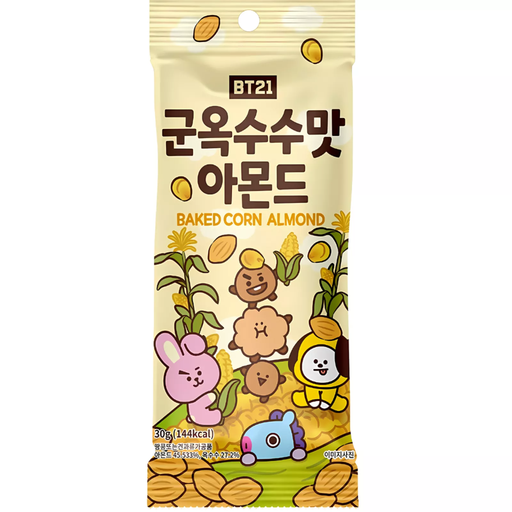 Image unavailable
BT21 Baked Corn Flavor Almond, 30 g
This 30 g pack may appeal if you’re looking for an individual portion of corn-flavoured almonds rather than plain almonds. To decide whether it’s right for your snack, check the ingredients and relate the nutrition information to the amount you’ll eat.
View on Joybuy
Frequently asked questions
Are plain almonds low in calories?
No. The products listed by Carrefour, Auchan and E.Leclerc cited here contain between 613 and 636 kcal per 100 g. To get an idea of what that means for a snack, relate the stated value to the amount you plan to eat.
How can you tell if almonds have no added ingredients?
Look for an ingredients list containing only almonds, then check the information about salt. An almond recipe may also contain oil, sugar or seasoning, so check the ingredients list for the specific product to find out.
What should you compare on the label when shopping with diabetes in mind?
Compare the ingredients and nutrition information per 100 g, particularly the energy, carbohydrates (including sugars), fibre, fat and salt. Then relate these values to your portion: the French National Health Insurance Fund reminds us that diet and portion sizes should be considered according to each person’s needs.
What should you check if you have a tree nut allergy?
Read the ingredients and any warnings about traces on the packaging you buy. In France, the DGCCRF says that allergens in prepacked foods must be declared and highlighted; some almond products also warn that they may contain traces of other tree nuts.
How should you store almonds after opening?
Follow the storage instructions on the pack you choose and reseal it after use. Instructions can vary between products, so check the packaging rather than applying guidance from another product.


