If you’re looking for a measurable amount of protein to go with your coffee, check how many whole almonds you’ll eat: the products listed by Carrefour, Monoprix Courses, E.Leclerc and Auchan contain around 21 to 23 g of protein per 100 g. For a drink, compare the figures per 100 ml instead: E.Leclerc lists 0.5 g for its VEGE drink, compared with 1.8 g for the Bjorg Amande protéines drink listed by Monoprix Courses. Almonds in a cereal mix don’t tell you how much protein is in your bowl either. Check the nutritional information for the blend, and consider your whole breakfast rather than just one product as part of your sports routine.
Who are these options for?
People who have coffee around a workout
If you want to know how much protein the almonds in your breakfast provide, start with your portion size rather than the figure per 100 g alone. The listings from Carrefour, Monoprix Courses, E.Leclerc and Auchan show around 21 to 23 g of protein per 100 g for the whole almond products featured here.
People who prefer almonds with a short ingredients list
If you want to add some crunch alongside your coffee or to a bowl, check the ingredients to see whether you’re choosing plain almonds or a product made with oil or other ingredients. It’s also worth checking any ‘may contain’ information if it’s relevant to you.
People who add almond drink to their coffee
A liquid format may be more convenient, but the word ‘almond’ doesn’t tell you how much protein it contains. The E.Leclerc and Monoprix Courses listings give 0.5 g and 1.8 g of protein per 100 ml respectively for two drinks with different recipes.
What should you check before choosing?
When choosing something to go with your morning coffee, first compare the protein content with the amount you’ll actually eat or drink. Then consider the ingredients and the format that best suits your routine.
| What matters |
What to check |
Who is it for? |
| Protein content |
Compare the protein per 100 g, then work out how much is in your portion. For almond cereals, use the figures for the whole mix. |
After a workout, I want to know what the almonds add to my breakfast, rather than relying on the word ‘protein’. Around 42% of consumers prioritise a measurable protein content. |
| Ingredients |
Read the ingredients list, including whether the product contains oil or salt, and check any ‘may contain’ information that’s relevant to you. |
With my coffee, I prefer a short ingredients list and want to spot any additions before choosing. Around 33% of consumers prioritise the ingredients. |
| Liquid format |
For a drink, compare the protein per 100 ml, the sugars and the storage instructions after opening. |
I want something I can pour straight into my coffee, without assuming an almond drink contains as much protein as whole almonds. Around 25% of consumers prefer this liquid format. |
Common misconceptions to avoid
-
Assuming every almond drink is high in protein
According to the respective listings from E.Leclerc and Monoprix Courses, the VEGE drink contains 2% almonds and 0.5 g of protein per 100 ml, while Bjorg Amande protéines contains 1.8 g per 100 ml and includes pea protein.
If you’re adding it to coffee, check the ‘protein’ figure per 100 ml, as well as the ingredients list and sugars.
-
Assuming the figure per 100 g applies to your portion
The protein listed per 100 g won’t be the amount you get from a smaller serving of almonds with your coffee.
Work out the figure for the amount you plan to eat, and look at the rest of your breakfast if you have a nutrition goal linked to sport.
-
Assuming all almonds have the same ingredients
The Profruit listing from Monoprix Courses gives raw, blanched almonds as the only ingredient, while the Bio Village roasted product listed by E.Leclerc also contains sunflower oil. Almond cereals are a different recipe again.
Choose based on the ingredients list for the specific product, and check any allergen information that’s relevant to you.
-
Confusing edible almonds with bitter apricot kernels
ANSES warns that bitter apricot kernels contain amygdalin, which can release cyanide during digestion. They are not interchangeable with the sweet edible almonds discussed in this article.
For breakfast, make sure you know exactly what you’ve bought, and don’t use bitter apricot kernels instead of edible almonds.
Brands to know
Bio Village
A product of organic roasted almonds with no added salt, listed by E.Leclerc.
- Its listing gives 23 g of protein and 0 g of salt per 100 g.
- The recipe contains 2.5% sunflower oil, so it’s not made with almonds alone.
Profruit
A 250 g bag of raw, blanched almonds, listed by Monoprix Courses.
- The listing states that it contains 100% almonds and 21.2 g of protein per 100 g.
- It may contain traces of peanuts, sesame and gluten due to cross-contamination.
Auchan
A 350 g bag of blanched almonds, listed by Auchan.
- The listing gives 21 g of protein and 0.01 g of salt per 100 g.
- It may contain traces of peanuts and other tree nuts. Reseal the bag tightly after opening.
Bjorg
An organic Amande protéines drink, designed to be poured into coffee or a bowl, among other uses, and listed by Monoprix Courses.
- Its listing gives 1.8 g of protein per 100 ml; the recipe contains pea protein.
- It also contains cane sugar and should be kept chilled and consumed within four days of opening.
Terres & Céréales Bio
Hazelnut and almond cereal listed by Carrefour, for a bowl rather than a serving of almonds on their own.
- The ingredients list includes lentil flour, whole rye and toasted almonds.
- The recipe also contains hazelnuts and rye. Check its own nutritional information to find out what’s in your bowl.
Almonds available on Joybuy
These two products are flavoured almonds to enjoy as a snack with your coffee. They’re not plain almonds or drinks to pour into your cup. Consider the recipe and portion size when choosing.
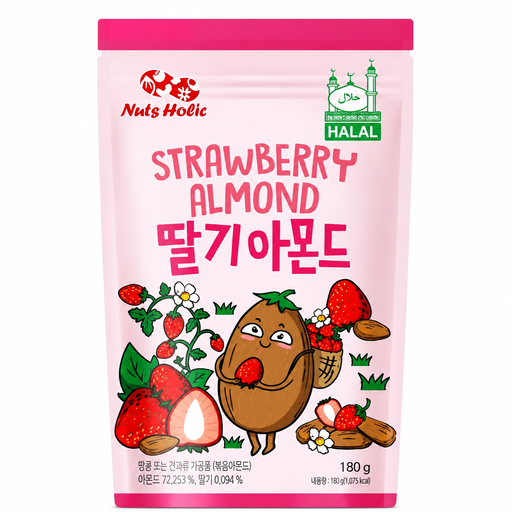 Image unavailable
Nutsholic strawberry-flavoured almonds, 180 g
Worth considering if you’d like a flavoured almond snack with your coffee. The bag contains 180 g. These coated, sweetened almonds aren’t a substitute for plain almonds. Check the sugars and allergen label, especially if milk or the stated traces are a concern for you.
View on Joybuy
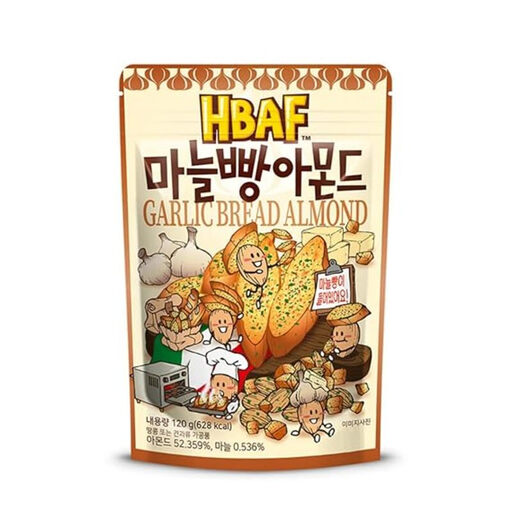 Image unavailable
HBAF garlic bread-flavoured almonds, 120 g
This 120 g bag is a savoury almond snack, rather than a plain topping for your morning coffee. If you’re watching your salt intake or need to avoid certain ingredients, check the label: the recipe includes wheat, milk and soya.
View on Joybuy
Frequently asked questions
Are almonds enough on their own for breakfast after a workout?
It depends on how much you eat, and the protein in almonds alone doesn’t tell you everything about your breakfast. The whole almond products listed by Carrefour, Monoprix Courses, E.Leclerc and Auchan contain around 21 to 23 g of protein per 100 g. Adjust this figure to your portion and consider the other foods in your meal.
Does almond drink provide as much protein as whole almonds?
Don’t assume the two formats are equivalent: figures for whole almonds are given per 100 g, while drink figures are per 100 ml. E.Leclerc lists 0.5 g of protein per 100 ml for its VEGE drink, while Monoprix Courses lists 1.8 g for Bjorg Amande protéines. Compare this with the amount you’ll actually use.
What should I check if I have concerns about allergens?
Check the ingredients list and any ‘may contain’ information for the specific product. Monoprix Courses says its Profruit almonds may contain traces of peanuts, sesame and gluten; Auchan says its almonds may contain traces of peanuts and other tree nuts.
How should I store an opened bag of almonds?
Follow the instructions on the packaging. For its blanched almonds, Auchan advises storing them away from heat and moisture and sealing the bag tightly after opening.
Can bitter apricot kernels replace breakfast almonds?
No. They’re a different product. ANSES says these kernels contain amygdalin, which can release cyanide during digestion. For breakfast, choose clearly identified sweet edible almonds.


