Parents planning a portion
A large bag is handy to keep at home, but it doesn’t determine how much you serve at lunch. If you’re taking almonds with you, put the planned portion in a separate container.


Plain and roasted almonds are not low-calorie foods: the Carrefour and Auchan product pages cited here list 579 and 632 kcal per 100 g respectively. For a school-holiday lunch, decide how much to take with you first, then check the energy, salt and allergens separately. If you’re preparing food for a young child, the form of the almonds matters too.
A large bag is handy to keep at home, but it doesn’t determine how much you serve at lunch. If you’re taking almonds with you, put the planned portion in a separate container.
Carrefour and Auchan product pages list options that are unsalted or have no added salt. This meets a preference for less salt, not a search for low-calorie almonds.
Texture and allergens matter more than choosing a handy pack size. Avoid whole nuts for children under 6 because of the risk of choking. Ground almonds mixed into a dish offer an alternative form.
When choosing almonds for lunch, start with the portion you’ll actually serve. Then check the salt and the form of the product, depending on who will be eating it.
| What matters | What to check | Who is this for? |
|---|---|---|
| Portion size and energy | Compare the energy per 100 g, then work it out for the amount you’ll pack for lunch. Auchan’s product page also lists 158 kcal per 25 g for its roasted almonds with no added salt. | When I’m preparing a snack to take with me, I want to know how much will actually be eaten rather than relying on the size of the bag. Around 46% of consumers would prioritise this kind of portion control. |
| Added salt | Look for the words “no added salt” and check the “salt” line in the nutrition information. Energy is a separate consideration. | If I want roasted almonds with no added salt, their taste and ingredients matter more to me than a promise that they’re light. This would be the main priority for around 36% of consumers. |
| Age and allergens | Check whether the almonds are whole or ground, and look at the allergens in the ingredients and any “may contain” warnings on the product you choose. | When preparing lunch for a young child, I need to choose a suitable form and read the allergen information before serving. This would be a priority for around 18% of consumers. |
Auchan’s product page for roasted almonds with no added salt lists 632 kcal per 100 g. So, no added salt tells you nothing about their energy content.
Check the “energy” and “salt” lines separately before deciding how much to serve.
The weight of the pack isn’t the same as an individual portion. Without measuring out an amount, it’s difficult to relate the nutrition values to what you’ll actually eat.
Before you leave, put the amount you want into a separate container.
Whole nuts pose a choking risk for children of this age.
Avoid serving them whole. If you offer almonds, use ground almonds mixed into a dish, and take allergens into account.
An almond recipe may contain other ingredients and carry warnings about traces of allergens. France’s Directorate-General for Competition Policy, Consumer Affairs and Fraud Control reminds shoppers that allergens in prepacked food must be highlighted on the label.
Read the ingredients and allergen information on the pack you choose, especially if someone has an allergy.
Its product pages let you browse plain or unsalted almonds, including options from Nut&me and Vico.
One option for roasted almonds with no added salt lists nutrition values per 100 g and per 25 g portion.
The product covered here is a 375 g bag of roasted almonds with no added salt.
This 30 g bag is an almond-containing snack, not a pack of plain or roasted almonds with no added salt. Check the ingredients if you’re specifically looking for either of those options.
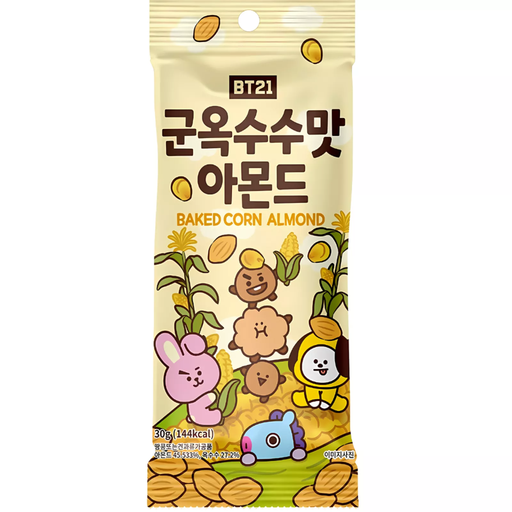 Image unavailable
The 30 g bag makes it easy to plan how much to take with you for lunch.
This is a corn-flavoured snack containing almonds, rather than plain almonds. Check the ingredients, allergens and form of the almonds on the pack, especially if the snack is for a young child.
The products reviewed here don’t support that description: Carrefour lists 579 kcal per 100 g for Nut&me natural almonds, while Auchan lists 632 kcal per 100 g for roasted almonds with no added salt. To work out the energy content of your snack, take the amount you actually serve into account.
Start by comparing the nutrition values per 100 g, then check the ingredients, salt and allergens. France’s Directorate-General for Competition Policy, Consumer Affairs and Fraud Control states that nutrition declarations for prepacked foods are given per 100 g or 100 ml. If the pack also lists values per portion, these can help you check the amount you’re planning to serve for lunch.
Avoid whole nuts for children under 6 because of the risk of choking. If you offer almonds, mixing ground almonds into a dish avoids serving them whole. Remember to check the allergen information too.
No. It tells you about added salt, but not about energy or allergens. Check the nutrition information and ingredients for the specific product, then choose how much you’ll serve.