People who prepare a snack before heading out
If you want to take plain almonds with you, a 200 or 250 g pack can be used to prepare several portions in a separate container. The pack itself isn’t a single serving.


For almonds to take with you after exercise, choose a plain or roasted variety with no added salt if you’re looking for simple ingredients. Then pick a pack that lets you portion out the amount you want. A small pack isn’t necessarily pre-portioned, so check its weight and packaging, and consider what you’re planning to eat after your session rather than relying on almonds alone.
If you want to take plain almonds with you, a 200 or 250 g pack can be used to prepare several portions in a separate container. The pack itself isn’t a single serving.
Compare plain almonds, roasted almonds with no added salt and salted snack almonds by checking the ingredients and the ‘salt’ entry in the nutrition information.
A 75 g pack is easier to slip into a bag than a 200 or 250 g pack. However, its smaller size doesn’t mean the contents are divided into separate portions.
For a post-workout snack to take with you, check the recipe, the packaging and how the almonds fit into the meal you’ll have afterwards.
| What to consider | What to check | Who is this for? |
|---|---|---|
| Ingredients and salt | Read the ingredients list, check for ‘no added salt’ and look at the salt content per 100 g. | If I want plain almonds after my session, their ingredients matter more to me than a salty flavour. Around 42% of consumers prioritise a simple recipe with no added salt. |
| Pack size and portioning | Check the net weight and see whether the pack really contains separate sachets or can be resealed. | When I pack my gym bag, I want to know how much I’m taking without having to bring the whole pack. Portioning and pack size are the main priorities for around 33% of consumers. |
| How it fits into your snack | Compare the nutrition information per 100 g with the amount you plan to eat, and think about the meal you’re having after exercise. | After a session, I want to include almonds in a snack or meal without assuming they’re enough on their own. Around 25% of consumers prioritise planning their meal this way. |
The 75 g, 200 g and 250 g products mentioned here refer to the weight of the pack. A compact pack doesn’t, by itself, mean the almonds are divided into portions.
Check how many sachets the packaging says are included. If you buy a 200 or 250 g pack, prepare the amount you want to take in a separate container.
Roasting doesn’t tell you whether the almonds are seasoned. The 75 g Monoprix product featured here contains sunflower oil and salt, unlike the no-added-salt options from E.Leclerc.
To choose according to your preference, read the ingredients and the salt content per 100 g rather than relying on the word ‘roasted’ alone.
Nutrition information describes the product, but it can’t determine on its own what’s right after a particular workout. The amount you eat and the meal that follows also matter when choosing a snack.
Decide how much to take based on the other foods or meal you have planned, and don’t assume the pack guarantees a particular recovery benefit.
E.Leclerc offers a 200 g pack of unroasted, blanched almonds with no added salt.
The product featured by E.Leclerc is a 250 g pack of dry-roasted, blanched almonds with no added salt.
Among the products reviewed, Monoprix offers a 75 g pack of whole, roasted and salted almonds.
ALDI France offers a 200 g pack of blanched almonds with no salt under this brand.
This selection is for a snack to take with you that contains almonds. The product featured is a mix of nuts and dried fruit, not a pack of almonds on their own.
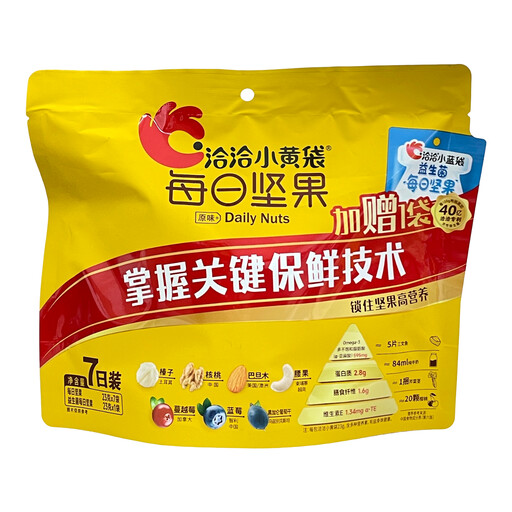 Image unavailable
The pack of seven 23 g portions is a good choice if you want to take a set amount without portioning it out from a large pack. It contains almonds along with other nuts and dried fruit, so check the ingredients and allergen information on the packaging if you’re looking for a specific recipe.
Not necessarily: 75 g is the total weight of the pack, not an indication that it contains separate portions. For the Monoprix product mentioned here, check the packaging for an explicit statement that it contains individual sachets or portions before choosing it to take with you.
Start with the ingredients, then compare the nutrition information per 100 g, particularly the protein, sugars, fat and salt. The DGCCRF states that in France, nutrition declarations for relevant pre-packed foods are given per 100 g or 100 ml. Then compare these figures with the amount you plan to eat.
It distinguishes a salted recipe from a plain or roasted one with no added salt. Manger Bouger, from Santé publique France, recommends unsalted nuts in its general advice. If you prefer a salted recipe, check its salt content per 100 g. The 75 g Monoprix pack mentioned here contains 0.64 g per 100 g.
Read the ingredients list and check the pack for any statements about possible traces. For pre-packed foods in France, the DGCCRF states that allergenic ingredients must be highlighted. The details for the Monoprix pack mentioned here also warn that it may contain traces of peanuts, other nuts, gluten and soya.