People keeping an eye on sugars and fat
You’re planning drinks or recipes for New Year’s Eve and want to compare the sugars and fat listed in the nutritional information.


For New Year’s Eve, choose your almond drink according to how you’ll use it in your recipe. If the almond flavour isn’t the main attraction, start by comparing fat and sugars on a like-for-like basis, per 100 ml or per 100 g. If you want a more pronounced almond flavour, also check the almond content and added sugars: a more concentrated formula may not fit your goal of keeping things light.
You’re planning drinks or recipes for New Year’s Eve and want to compare the sugars and fat listed in the nutritional information.
You need to decide whether the almond drink is simply a liquid base or whether its flavour should come through in the dessert. In that case, the ingredients matter just as much as the fat content.
You’re working out how much you’ll need for your recipes and the days afterwards, while checking storage instructions and availability at your chosen shop.
First decide whether you want a pronounced almond flavour or simply need the drink as an ingredient. Then compare nutritional information for the same quantity, and don’t treat a value per 100 g as equivalent to one per 100 ml.
| Criteria | What to check | Who it matters to |
|---|---|---|
| Sugars | Check the exact wording, the “of which sugars” line and the ingredients. “No added sugars” does not mean “sugar-free”. | If the other ingredients in my recipe are already sweet, I want to know how much sugar the drink contains before adding it. Around 40% of consumers put keeping sugars in check first. |
| Fat and energy | Compare fat and energy for the same quantity, taking care to use the unit shown on each pack. | For a drink served on New Year’s Eve, I prioritise fat content and also check the energy figure. Around 40% of consumers share this priority. |
| Recipe and quantities | Check the almond content, added sugars and the amount your recipe needs. Also plan how you’ll use any opened cartons. | If I want the almond flavour to come through in my dessert, I can’t choose based on fat content alone; I also need to work out how much to use. Around 20% of consumers prioritise this combination of cooking and practical needs. |
A drink with a higher almond content may also have different sugar and fat levels. Carrefour lists 7% almonds in its Bio Amande Intense drink, along with 4.1 g of fat per 100 ml.
Decide what role the almond flavour should play in your recipe, then check both the ingredients and the nutritional information.
EU rules on nutrition claims govern the wording “no added sugars”, but this claim alone doesn’t tell you the total sugar content.
Check the product name, ingredients and “of which sugars” line on the pack.
A figure per serving can’t be compared directly with one per 100 ml. Some product details also give nutritional information per 100 g rather than per 100 ml.
Use the same basis for both products and check the unit shown before choosing between them.
Once-opened storage times vary by product. The Bjorg product details published by Auchan say to keep it refrigerated and consume within four days.
Plan how much you’ll need for New Year’s Eve and the days afterwards, then follow the instructions for each opened carton.
An opened carton that isn’t used within the stated time may go to waste.
Carrefour’s product details for Alpro Roasted Almond No Sugars show a 1 L carton.
Auchan offers a 1 L carton of unsweetened almond-based plant drink.
E.Leclerc offers a 1 L carton of VEGE almond-based drink.
The range includes an Amande Intense drink to consider when the almond content matters to your recipe.
Lidl offers an organic, sugar-free almond drink under its Vemondo brand.
ALDI offers My Vay organic almond-based plant drink in a 1 L carton.
These three almond drinks suit different uses in New Year’s Eve recipes and drinks. Their names alone don’t tell you how much fat or sugar they contain, so compare the nutritional information for each product with what matters most to you.
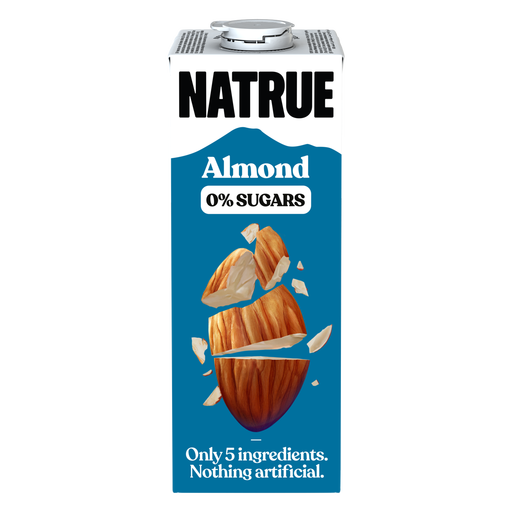 Image unavailable
If you’re making a drink or recipe where the almond flavour doesn’t need to dominate, compare this product with your recipe. The “0%” in the name is no substitute for checking the fat and sugars on the pack.
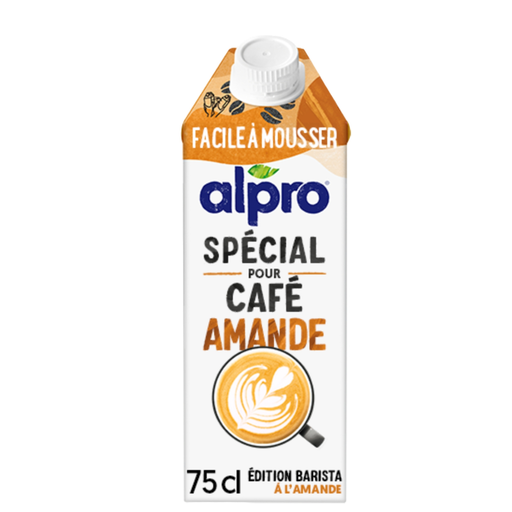 Image unavailable
If you’re planning to serve coffee on New Year’s Eve, this Barista variety may be worth comparing. If you’re also keeping an eye on sugars, check that figure and the ingredients list before choosing.
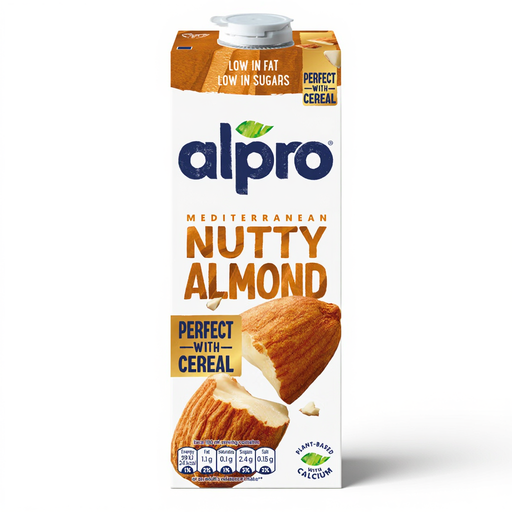 Image unavailable
For a cold drink or a recipe made with almond drink, check that this version has the flavour you’re looking for. Check its fat, sugars and after-opening storage instructions separately.
No. “No added sugars” refers to the addition of certain sugars or ingredients used to sweeten a product; it doesn’t mean the drink contains no sugars at all. EU rules govern this nutrition claim. When choosing, also check the ingredients and the “of which sugars” line.
In their respective listings, Auchan No Sugars contains 1.1 g and VEGE E.Leclerc 1.2 g of fat per 100 ml. Carrefour also lists 1.1 g for Alpro Roasted Almond No Sugars, but per 100 g. Make sure you account for the difference in units before comparing them directly.
It can work as a liquid base if your recipe doesn’t rely on a strong almond flavour. If that flavour matters, compare the almond content and sugars in each drink, then check that the recipe will work with the substitution.
Follow the storage instructions and use-by period shown on the carton. As a product-specific guide, the Bjorg product details published by Auchan say to keep it refrigerated and consume it within four days of opening.
Don’t assume an almond drink is suitable for them: the products in question contain almonds. Check the ingredients list and allergen information for the specific product before planning drinks for your guests.