People keeping an eye on sugar
If sugar content guides your choice, compare the ‘sugars’ line per 100 ml and the ingredients list. The Bio Village and Auchan product pages show that almond drink recipes don’t all have the same details.


Start with how you’ll use your almond drink. If avoiding sugar is your top priority, choose a no-sugars recipe; if you’re looking for a particular type of composition, look for a higher stated almond content. Organic is a separate consideration. At E.Leclerc, the Bio Village Intense recipe contains cane sugar, unlike the Bio Village no-sugars recipe, so check the label of the specific product before choosing.
If sugar content guides your choice, compare the ‘sugars’ line per 100 ml and the ingredients list. The Bio Village and Auchan product pages show that almond drink recipes don’t all have the same details.
If you drink it plain or use it in cooking, check the percentage of almonds and the other ingredients. E.Leclerc’s Bio Village Intense product page states a different almond content from Bio Village no-sugars, and also lists cane sugar.
If you’re starting with a particular supermarket or an organic label, compare the recipes individually. The products listed by Carrefour, E.Leclerc, Lidl and Aldi shouldn’t be treated as interchangeable.
First decide what matters most for how you’ll use it, then check the ingredients of the carton you choose. ‘No sugars’, ‘intense’ and ‘organic’ answer different questions.
| Criterion | What to check | Who is it for? |
|---|---|---|
| Sugars | The exact claim, the ‘sugars’ line per 100 ml and the ingredients. | For my cereal or recipes, I want to know the drink’s sugar content first. Around 33% of consumers put this need first. |
| Almond content | The percentage of almonds and whether the recipe contains sugar. | If I drink it plain or cook with it, I first look at how much of the recipe is made up of almonds. This would be the main criterion for around 25% of consumers. |
| Organic and ingredients | The organic label and the ingredients list for the specific product. | I’m looking for an organic recipe, but I also want to know what else it contains. For around 25% of consumers, this is the first point to weigh up. |
| Local availability | The product available at your local shop and its pack size. | I shop near home and want to find a carton suited to my usual needs. This would be the main consideration for around 17% of consumers. |
According to E.Leclerc’s product pages, Bio Village Intense contains 7% almond purée and cane sugar, while Bio Village no-sugars contains 2.8% almond purée. These claims describe different recipes, but don’t tell you everything about their ingredients.
Compare the almond content, the ‘sugars’ line per 100 ml and the ingredients according to your priorities.
The ingredients lists published by E.Leclerc and Carrefour show that organic almond drink recipes vary between products.
Read the list on the carton you’re thinking of buying, even if you already know the brand or range.
Carrefour’s product page for Bjorg no-sugars almond drink lists almonds and states that it may contain other nuts.
If you have an allergy, check the ingredients and warnings on the packaging of the product you choose.
These brands offer specific recipes you can compare. Their inclusion here doesn’t mean that all their almond drinks have the same ingredients.
Almond drinks, including a Toasted Almond product listed by Carrefour.
Two own-brand ranges to distinguish when comparing almond drinks.
E.Leclerc products that let you compare claims such as ‘no sugars’ and ‘intense’.
Own-brand products to check according to the specific drink available in your shop.
Lidl lists an organic, sugar-free almond drink under the Vemondo brand.
Aldi lists a My Vay organic almond plant drink in a 1 L carton.
These drinks include no-sugars or unsweetened recipes, an Intense version, a coffee-focused option and a classic almond drink. Compare the label of each product according to how you plan to use it.
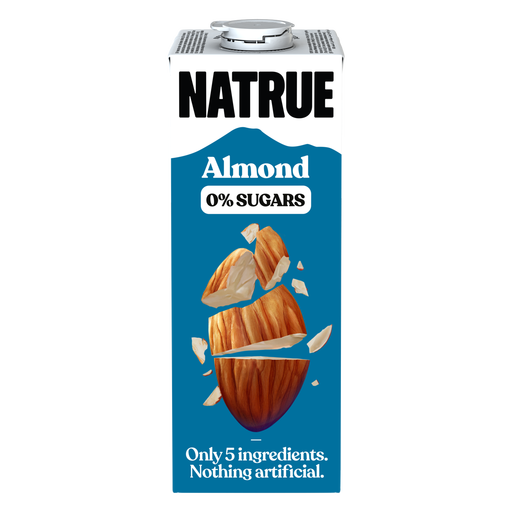 Image unavailable
Worth considering if you’re looking for an almond drink for cereal, coffee or to enjoy on its own. Compare the ‘sugars’ line and check the ingredients and allergen information on the packaging.
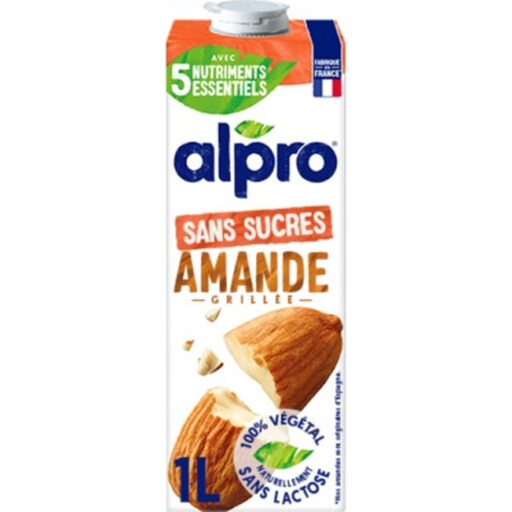 Image unavailable
Consider this option if you prefer an unsweetened almond drink for cereal, smoothies or coffee. Check the ingredients, allergen information and after-opening instructions on the carton.
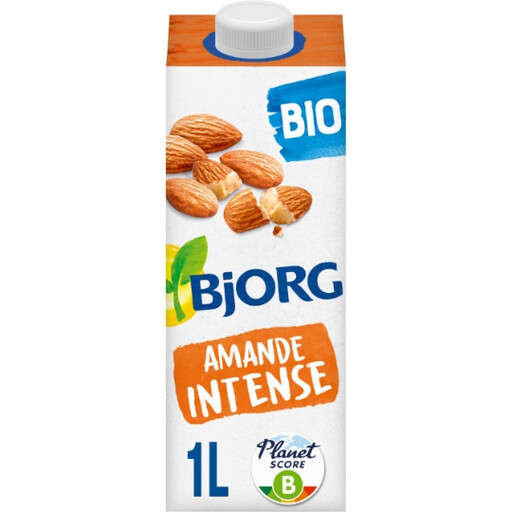 Image unavailable
Worth comparing if you’re looking for a recipe described as Intense. Don’t assume this means it’s low in sugar: check the ingredients list and nutritional values on the packaging, as well as any allergen warnings.
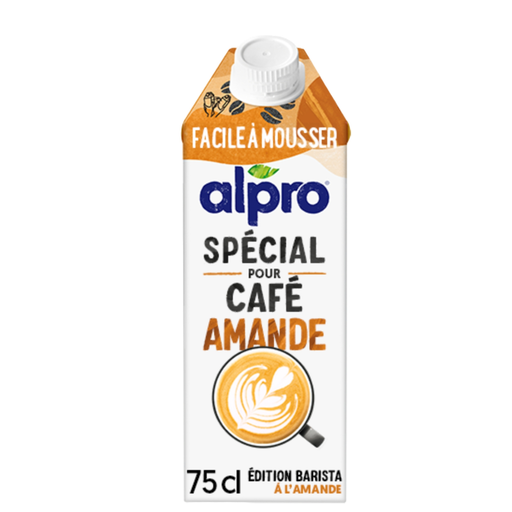 Image unavailable
A formula designed for coffee drinks, though the result may vary depending on what you make. The pack size is 75 cl. If sugar matters to you, compare the nutritional values using the same unit as for the other cartons.
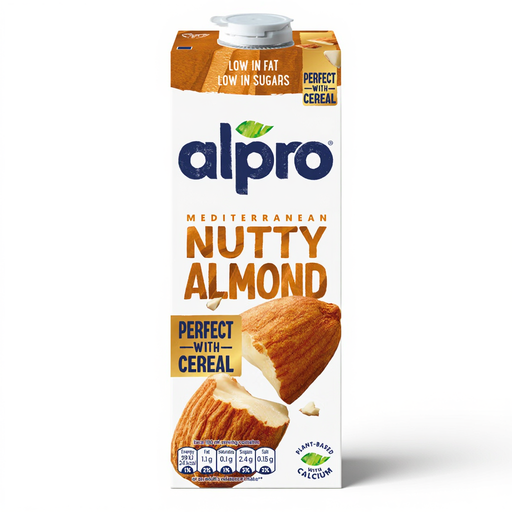 Image unavailable
Consider this almond drink for enjoying on its own, with cereal or in a recipe. To tell it apart from the Alpro unsweetened version, check the ‘sugars’ line and the ingredients. Also follow the storage instructions on the carton.
Compare their nutritional values per 100 ml, then check the percentage of almonds and the ingredients list for each product. The carton size alone doesn’t tell you whether the recipes meet the same needs.
Yes. Read the ingredients and check for any ‘may contain traces’ statements on the specific packaging you’re buying. For example, Carrefour’s product page for Bjorg no-sugars almond drink mentions that it may contain other nuts.
Follow the instructions on the carton you buy, as the storage period for one product may not apply to another. Auchan’s product page for its no-sugars almond drink says to refrigerate it and consume it within five days of opening.