For biscuits made for someone with coeliac disease, first choose an almond drink whose carton carries the ‘gluten-free’ label. In the European Union, Implementing Regulation (EU) No 828/2014 sets a maximum gluten content of 20 mg/kg for this claim. Then compare the sugar content and ingredients to suit your recipe, and remember to check the flour, raising agent and all the other biscuit ingredients too.
Who is this choice for?
People with coeliac disease and those who cook for them
The priority is to check the ‘gluten-free’ label on every drink you use. An ingredients list that appears to contain only water and almonds, or a ‘sugar-free’ claim, is no substitute for this check.
People keeping an eye on the sugar in their biscuits
If your recipe already contains sugar, chocolate or fruit, comparing the sugar content per 100 ml can help you choose which drink to add. The ingredients list also helps you tell apart different versions from the same brand.
People looking for an almond flavour in their dough
The proportion of almonds and whether the drink contains sugar or flavourings are worth comparing, but don’t assume they’ll predict the result after baking. If the biscuits are for someone with coeliac disease, check the gluten status of an ‘intense’ version too.
What should you check first?
For biscuits made for someone with coeliac disease, first check the ‘gluten-free’ label on the drink and the other ingredients. Then choose a formula based on how much sugar your recipe already contains and the flavour you’re looking for.
| Criterion | What to check | Who is it for? |
|---|
| Gluten |
The ‘gluten-free’ label on the specific carton and the information given for every other biscuit ingredient. In the European Union, Implementing Regulation (EU) No 828/2014 sets a gluten limit of 20 mg/kg for this claim. |
If I’m cooking for someone with coeliac disease, I want to be able to check the drink and the whole recipe before baking. Around 42% of consumers make this their top priority. |
| Sugars and ingredients |
The sugar content per 100 ml and the ingredients list for the version you’ve chosen, especially if the dough already contains sugar or chocolate. |
If the recipe is already sweet, I want to know what the drink adds to the dough. For around 25% of consumers, keeping track of sugars and ingredients comes first. |
| Almond profile |
The proportion of almonds, the sugar content per 100 ml and any guidance on cooking use, without assuming in advance what the biscuits’ texture will be like. |
If I’m looking for a noticeable almond flavour, I compare the formulas before adapting my recipe. This is the top priority for around 33% of consumers. |
Mistakes to avoid
-
Confusing ‘sugar-free’ with ‘gluten-free’
These claims describe two different things. For example, Bjorg displays a warning about possible traces of gluten on one of its almond drinks.
If you’re cooking for someone with coeliac disease, check the ‘gluten-free’ label on the specific drink, then check the other biscuit ingredients too.
-
Assuming another version from the same brand is the same
Ingredients and warnings can vary between versions: the product descriptions for the two Bjorg almond drinks don’t show the same information.
Check the ingredients list and warnings on the carton you buy, especially if you switch to a different version or pack size.
-
Adding an intense version without checking your recipe
According to E.Leclerc’s product descriptions for the two Bio Village products, the Intense Almond version contains 4.1 g of sugars and 4.3 g of fat per 100 ml, compared with 0.2 g and 1.5 g per 100 ml respectively for the sugar-free version. These differences alone don’t tell you how the biscuits will turn out.
Compare these figures with the ingredients already in your recipe and try a batch before changing the quantities.
-
Forgetting how to store it after opening
The Auchan product descriptions for the Auchan and Ethiquable drinks mentioned here say to refrigerate them after opening and consume within five days.
Follow the instructions on your own carton, and plan how you’ll use the rest if your recipe only needs some of it.
Almond drink brands to compare
These brands offer a starting point for comparing different versions and their labels. A brand name alone isn’t enough to establish whether a specific drink is suitable for someone with coeliac disease.
Alpro
Alpro offers, among other products, Roasted Almond and Unsweetened Roasted Almond drinks listed by Carrefour.
- Alpro uses almond drink in a banana bread recipe published under its brand.
- If the biscuits are for someone with coeliac disease, look for the ‘gluten-free’ label on the version and carton you choose.
Carrefour Bio
Carrefour Bio lists an almond drink with no added sugars in a 1 L carton.
- Carrefour’s product description lists 2.8% almonds and cassava starch, which are useful details to compare when checking ingredients.
- If the recipe is for someone with coeliac disease, check the ‘gluten-free’ label on the carton separately.
Auchan
Auchan offers an unsweetened almond-based drink in its own-brand range.
- Auchan’s product description gives an almond content of 2% and less than 0.5 g of sugars per 100 ml for this product.
- The sugar content doesn’t tell you whether it contains gluten, so check the label of the version you choose.
E.Leclerc / Bio Village
Bio Village offers an unsweetened almond drink and an Intense Almond version.
- According to their E.Leclerc product descriptions, they contain 2.8% and 7% almond purée respectively, making it easy to compare their formulas.
- Check the sugar content and the ‘gluten-free’ label on the exact product before using it for someone with coeliac disease.
Lidl / Vemondo
Lidl lists an organic Vemondo almond drink labelled ‘sugar-free’.
- You can compare this product with the other almond drink options available for baking.
- Check the ingredients and look for the ‘gluten-free’ label on the exact packaging before using it for someone with coeliac disease.
Aldi / My Vay
Aldi offers an organic My Vay almond-based drink in a 1 L carton.
- The pack size makes it easier to plan how much you need for the recipe and what to do with the rest.
- Before baking biscuits for someone with coeliac disease, check the ingredients list and the ‘gluten-free’ label on the carton.
An almond drink to consider on Joybuy
This almond drink, described as unsweetened, is one option to compare when choosing a formula for biscuits. If you’re cooking for someone with coeliac disease, check the ‘gluten-free’ label on the carton you receive before using it.
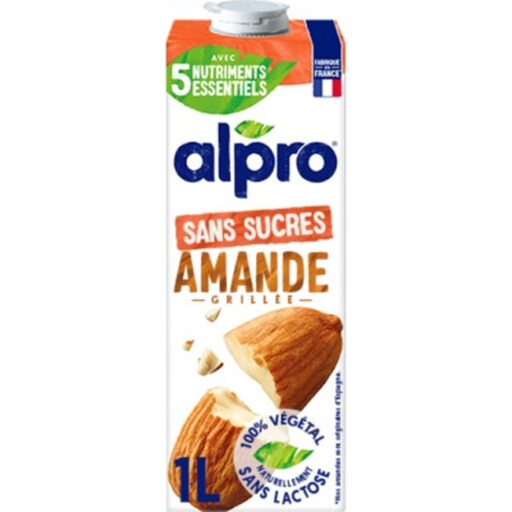 Image unavailable
Alpro Almond Unsweetened UHT 1l
If you want to control how much sugar goes into the dough, compare the sugar content per 100 ml of this drink with your recipe. If you’re cooking for someone with coeliac disease, also check the ‘gluten-free’ label on the carton and check every other ingredient.
UHT almond drink, 1l carton.
View on Joybuy
Frequently asked questions
Is an almond-based drink automatically gluten-free?
No. A plant-based drink isn’t automatically suitable for someone with coeliac disease. Look for the ‘gluten-free’ label on the specific product. In the European Union, Implementing Regulation (EU) No 828/2014 sets a maximum gluten content of 20 mg/kg for this claim.
Is a ‘sugar-free’ almond drink suitable for gluten-free biscuits?
It can help you choose how much sugar the drink adds, but ‘sugar-free’ doesn’t mean ‘gluten-free’. If the biscuits are for someone with coeliac disease, also check the ‘gluten-free’ label on that exact product and check the rest of the recipe.
Why check every version from the same brand?
Because ingredients and warnings can differ. Bjorg’s product descriptions, for example, give different information for two almond drink versions, including a warning about possible traces of gluten on one of them. So you can’t rely on one version’s label to tell you about another.
How long can you keep almond drink after opening?
Follow the storage instructions and use-by period on your carton. For the Auchan and Ethiquable products mentioned here, Auchan’s product descriptions advise keeping them in the fridge and consuming them within five days of opening.


