Anyone keeping an eye on the fat content of their drink
You want to apply the limit of 1.5 g of fat per 100 ml for the ‘low fat’ claim on a drink when choosing what to buy.


For Christmas baking where the sugar is already measured out, choose an almond drink with no more than 1.5 g of fat per 100 ml, then compare the sugar content and ingredients separately. Regulation (EC) No 1924/2006, published on EUR-Lex, sets this limit for the ‘low fat’ claim on drinks; it does not guarantee a particular taste or result in any given recipe.
You want to apply the limit of 1.5 g of fat per 100 ml for the ‘low fat’ claim on a drink when choosing what to buy.
If your cake or yule log already contains sugar, chocolate or icing, you want to know how much sugar the almond drink adds without changing the recipe quantities blindly.
You’re thinking of using an almond drink in a recipe and want to check its ingredients, including whether it contains almonds and what else is listed on the packaging.
Start with the fat content per 100 ml if this limit is important to your purchase. Then check the sugar content and ingredients against the recipe you have in mind.
| What to check | What to look for | Who is it for? |
|---|---|---|
| Fat | Compare the value per 100 ml with the limit of 1.5 g set for the ‘low fat’ claim on drinks by Regulation (EC) No 1924/2006, published on EUR-Lex. | If I want to stay within this limit in my Christmas baking, fat content comes before the other criteria; around 42% of consumers would make it their priority. |
| Sugars | Check the ‘of which sugars’ line per 100 ml and the drink’s exact product name. | If my recipe already includes sugar or icing, I want to know how much sugar the drink adds; around 33% of consumers would make keeping track of this their priority. |
| Ingredients and use | Check the ingredients list, allergens and, if shown on the product, any guidance on using it in cooking. | If I’m cooking for guests, I want to choose a product with suitable ingredients and understand how to use it; around 25% of consumers would put these points first. |
Different varieties from the same brand can have very different values. E.Leclerc’s product page for Bio Village Amande intense lists 4.3 g of fat and 4.1 g of sugars per 100 ml. This variety exceeds the limit of 1.5 g of fat per 100 ml.
Check the full name of the variety and its nutritional values per 100 ml rather than relying on the brand or the word ‘organic’.
Sugars and fat appear on separate lines in the nutritional information. A claim about sugars doesn’t tell you how much fat the drink contains.
Compare the ‘fat’ and ‘of which sugars’ lines separately, using the same 100 ml serving size.
An almond drink contains almonds; other ingredients, such as stabilisers or flavourings, vary from one product to another. Anses highlights the importance of checking the ingredients list if you have an allergy or intolerance.
Before cooking for guests, check the ingredients list and allergen information on the carton you buy.
Storage instructions after opening depend on the product. Auchan’s product page for Bjorg almond drink with no added sugars says to refrigerate it and consume it within four days of opening.
Follow the instructions on your carton and plan how to use the rest if your baking only needs a small amount.
If you don’t have another use for it within the stated time, some of the drink may go to waste.
The values below apply to the specific products named, not to every drink from each brand.
Auchan’s product page for Alpro Amande blanche sans sucres lists 1.1 g of fat and 0 g of sugars per 100 ml.
The product page for Auchan almond drink with no added sugars lists 1.1 g of fat and less than 0.5 g of sugars per 100 ml, as well as 2% almonds.
E.Leclerc’s product page for VEGE boisson amande sans sucres ajoutés lists 1.2 g of fat and 0.2 g of sugars per 100 ml.
According to E.Leclerc’s product pages, Bio Village amande sans sucres contains 1.5 g of fat per 100 ml, compared with 4.3 g for Bio Village Amande intense.
Both of these Alpro drinks contain 1.1 g of fat per 100 ml. If you’ve already measured the sugar for your Christmas baking, compare their sugar content before choosing.
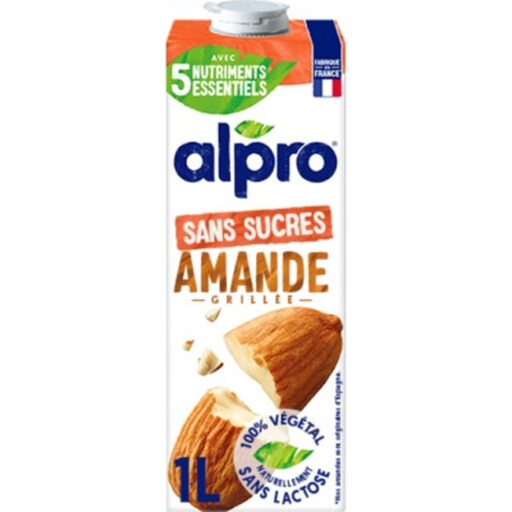 Image unavailable
Worth considering if you’re measuring the sugar in your baking separately. Joybuy’s product page lists 1.1 g of fat and 0 g of sugars per 100 ml. Check the ingredients and allergen information on the packaging before cooking for guests; the result will also depend on your recipe.
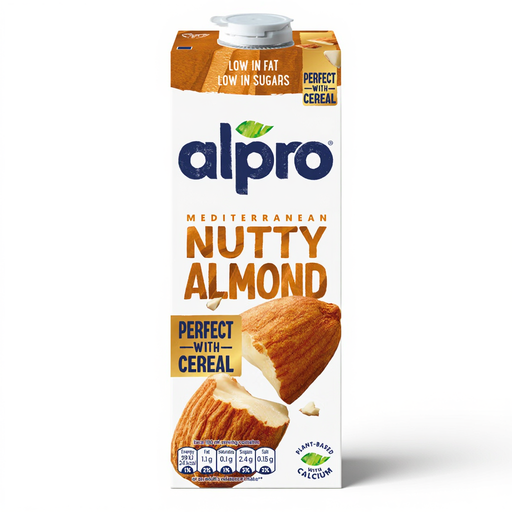 Image unavailable
Worth comparing if you’re looking for an almond drink described as suitable for sweet or savoury recipes. Its product description lists 1.1 g of fat and 3 g of sugars per 100 ml, and sugar is also among the ingredients. Bear this in mind if your baking already includes sugar; the suggested uses don’t guarantee a particular result in your recipe.
The limit is 1.5 g of fat per 100 ml of drink, under Regulation (EC) No 1924/2006, published on EUR-Lex. To check a product, look at the value per 100 ml in its nutritional information.
It may be suitable if the recipe measures the sugar separately. However, a sugar-free drink doesn’t replace the sugar specified in the recipe, so avoid changing the quantities without adjusting the method.
Follow the time limit and storage instructions on the carton you choose, as these vary by product. For example, Auchan’s product page for Bjorg almond drink with no added sugars says to refrigerate it and consume it within four days of opening.
An almond drink contains almonds, so don’t choose a carton without checking its ingredients and allergen labelling. Anses points out that the ingredients list provides important information for anyone with an allergy or intolerance.